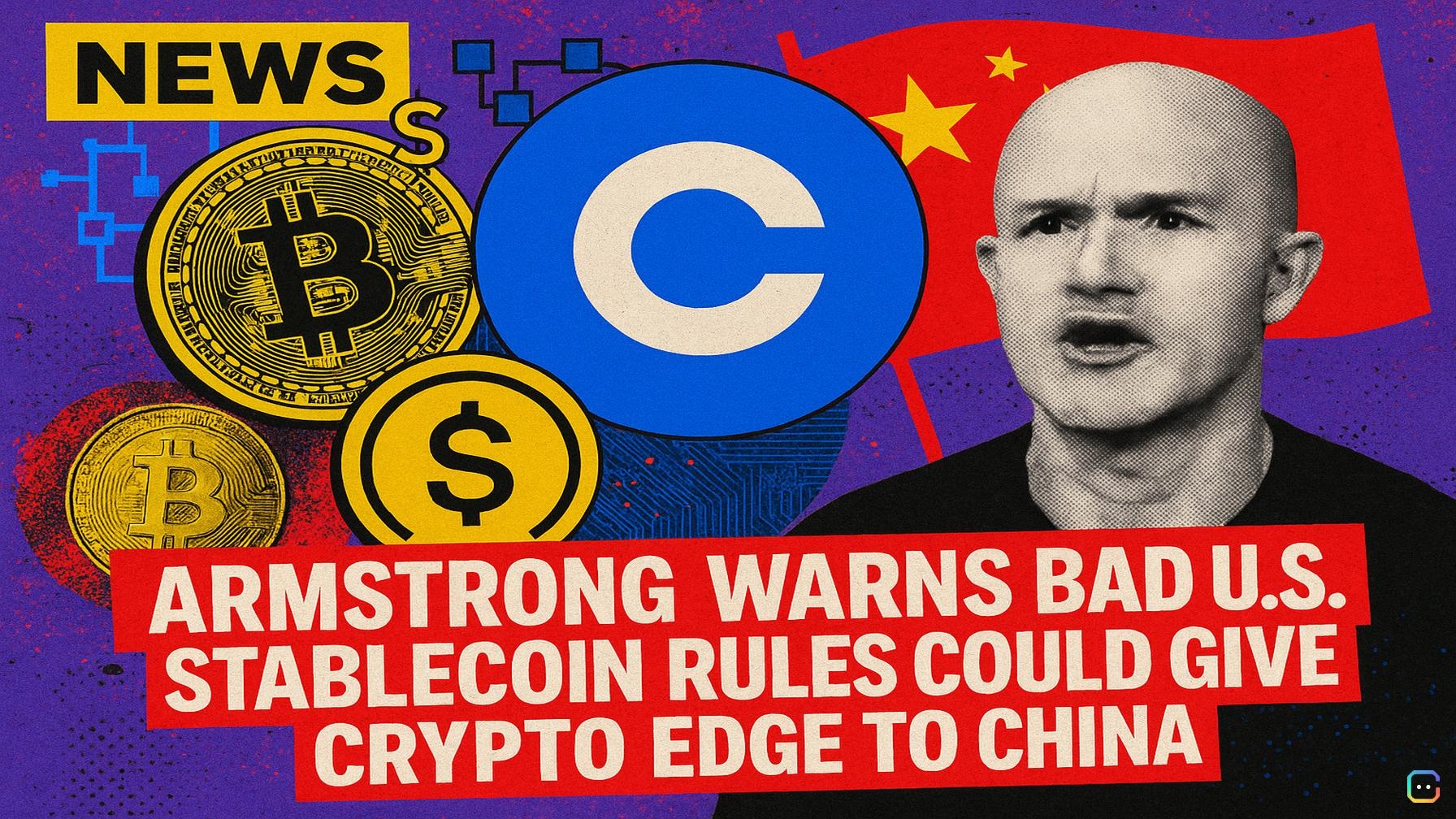
Coinbase CEO Brian Armstrong is reframing the U.S. crypto-policy fight as a matter of national competitiveness — and he’s warning lawmakers that a misstep could cede advantage to China.
Armstrong has repeatedly argued that when it comes to digital assets, regulation that pushes activity offshore would weaken the U.S. industry and strengthen rivals abroad. “Competition with China might be the best thing to happen to America since the Cold War,” he said, adding that years of U.S. dominance led to complacency and that rivalry “breeds excellence.” He’s urging Congress to treat crypto rules as part of a broader economic contest with Beijing.
A central focus of Armstrong’s warnings is stablecoin policy. He cautions that banning interest-bearing stablecoins won’t eliminate demand for yield — it would likely drive that demand to foreign issuers and bolster efforts such as China’s central bank digital currency (CBDC), putting key payment and financial infrastructure outside U.S. oversight. That argument is playing into current congressional debate over market-structure legislation for digital assets: Coinbase wants clear legal lanes that it says will keep the industry onshore and preserve U.S. leadership in global finance.
The regulatory tussle has sharpened tensions between crypto firms and traditional banks. JPMorgan CEO Jamie Dimon has publicly attacked Armstrong, reportedly calling him “full of shit.” Armstrong, in turn, accuses big banks of trying to use regulation to hobble crypto competitors instead of innovating. Coinbase argues that open crypto networks and stablecoins can modernize payment systems and the broader financial plumbing, while banks and some regulators warn that lighter oversight could increase consumer and systemic risks.
The debate has taken on broader political implications. Armstrong met with former President Donald Trump ahead of Trump’s public call for lawmakers to advance crypto legislation — a sign of how closely Coinbase has positioned itself to the current administration’s digital-asset agenda. Framing crypto policy as a geopolitical and national-security issue allows Coinbase to push beyond industry lobbying and into conversations about technology, the dollar’s future, and global financial power.
Critics warn that this approach can blur the line between public interest and private lobbying. They stress that consumer protection, financial stability, and market oversight remain critical questions, even as industry players invoke China to bolster their case.
Coinbase’s clashes with U.S. regulators are not new. The company has previously faced threats of legal action from the SEC, and Armstrong continues to press lawmakers for clearer rules rather than prolonged enforcement uncertainty.
As Congress weighs how to structure the digital-asset market, Armstrong’s message is clear: the stakes are more than industry convenience — they’re about who sets the rules for global finance in the decades ahead.
Read more AI-generated news on: undefined/news