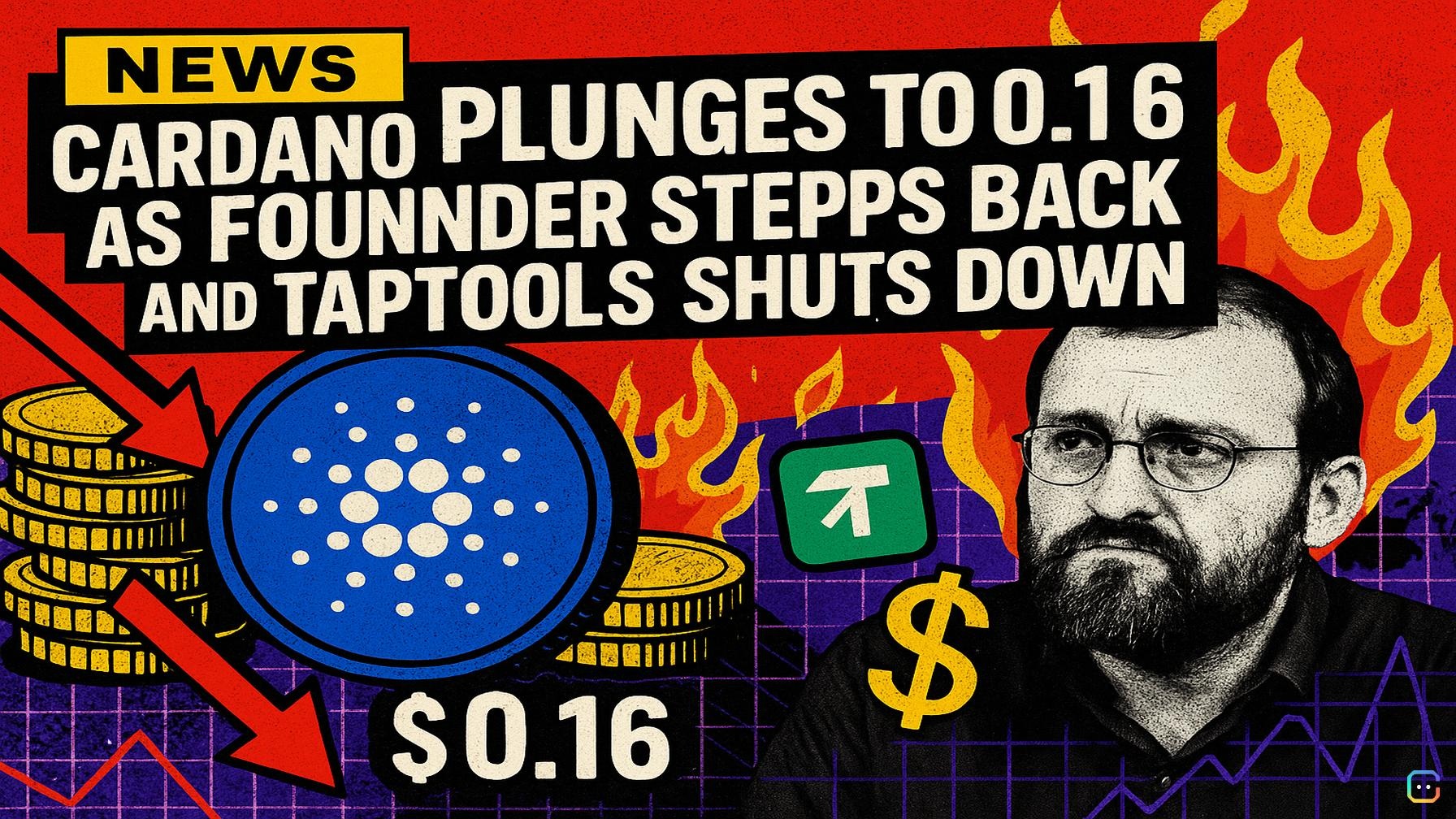
Cardano is once again in the spotlight — but for worrying reasons. ADA tumbled to roughly $0.16 on Thursday, slipping nearly 30% over the past week and more than 75% year-over-year, according to CoinDesk. The token briefly traded below $0.16, its weakest level since December 2020, turning what was once one of crypto’s largest retail communities into a prominent stress case.
The sell-off followed a string of negative developments. Founder Charles Hoskinson said he was “taking a break” after warning the network could face a “wave of failures.” That comment came amid TapTools — a popular Cardano analytics platform — announcing it would shut down after four years, and a community vote rejecting funding for Cardano’s 2026 Summit in Singapore.
Price pain has been matched by a surge in attention. Santiment reports ADA’s social dominance climbed to about 0.52% — a 2026 high — meaning more than one in every 190 crypto-related social conversations tracked focused on Cardano. Daily active addresses also jumped to 28,459, the highest level in four months, signaling users are moving funds, checking positions, or otherwise engaging with the network during the rout.
Those on-chain and social signals can be read two ways. The bullish take: Cardano’s community hasn’t abandoned the chain. Elevated engagement during a sell-off can indicate a committed base that remains active rather than checked out. But the darker interpretation is that the spike in attention reflects distress — project closures, treasury fights and the founder stepping back are not the usual triggers for sustained buying.
The core challenge is structural. Retail loyalty and heated online debate help visibility, but they don’t substitute for functioning apps, fresh capital, and a healthy developer and project ecosystem. ADA may look cheap compared with past cycles, but price alone won’t revive momentum. What Cardano needs now are demonstrable signs that projects can survive, treasury funds will be effectively deployed, and users have practical reasons to build and transact on the chain — not just defend it on social media.
Short-term watchers should monitor further project shutdowns, treasury governance outcomes, and any shifts in leadership or developer activity as the community searches for concrete catalysts to stabilize the network.
Read more AI-generated news on: undefined/news