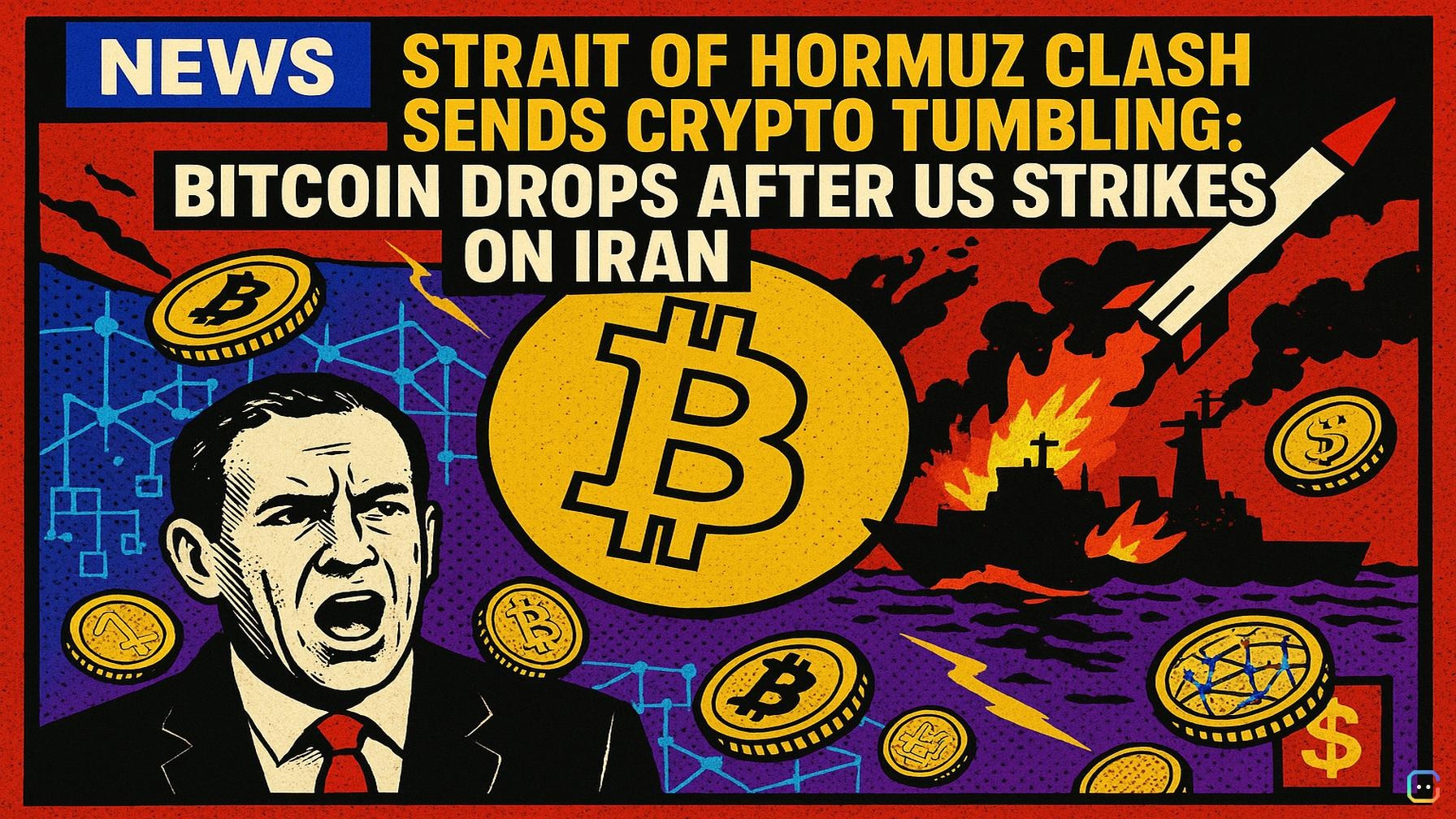
Geopolitical shockwaves out of the Strait of Hormuz sent crypto markets reeling this week as tensions between the US and Iran escalated into military action.
What happened
- Iran’s deputy foreign minister, Kazem Gharibabadi, denied Tehran intentionally shot down an American Apache helicopter, saying the incident could have been an unintended consequence of heightened regional tensions.
- Despite that denial, US President Donald Trump ordered a military response. US Central Command confirmed “self‑defense” strikes against Iranian targets at 5 p.m. ET on June 9, saying the operation was triggered by the downing of a US Army Apache near the Strait of Hormuz. Trump said on Truth Social that he had been told Iranian forces shot down the helicopter but that both pilots were safe.
Immediate crypto fallout
- Bitcoin slid amid the escalation. On Tuesday, June 8 it was trading at $61,780 — about 3% lower on the day and down from levels above $62,000 before the US action was announced.
- At the time of writing Bitcoin was trading around $61,400, a 2.5% intraday drop (Coingecko). The top crypto has lost roughly 7.6% over the past seven days as Middle East instability and ongoing US‑Iran ceasefire talks rattled markets.
- The broader crypto market turned decisively bearish after the announcement. CoinGlass recorded nearly $1.40 million in long liquidations in a single hour, and Bitcoin accounted for more than $136 million in liquidations across the prior 24 hours.
Context and outlook
- Markets were already under strain earlier in the week after separate Israeli strikes on Iran sapped investor confidence and left Bitcoin hovering near the $60,000 mark.
- With geopolitical risk still unresolved, prices remain under pressure and volatility is likely to persist as traders weigh the potential for further military or diplomatic developments.
Data and sources: Coingecko, US Central Command, CoinGlass.
Read more AI-generated news on: undefined/news