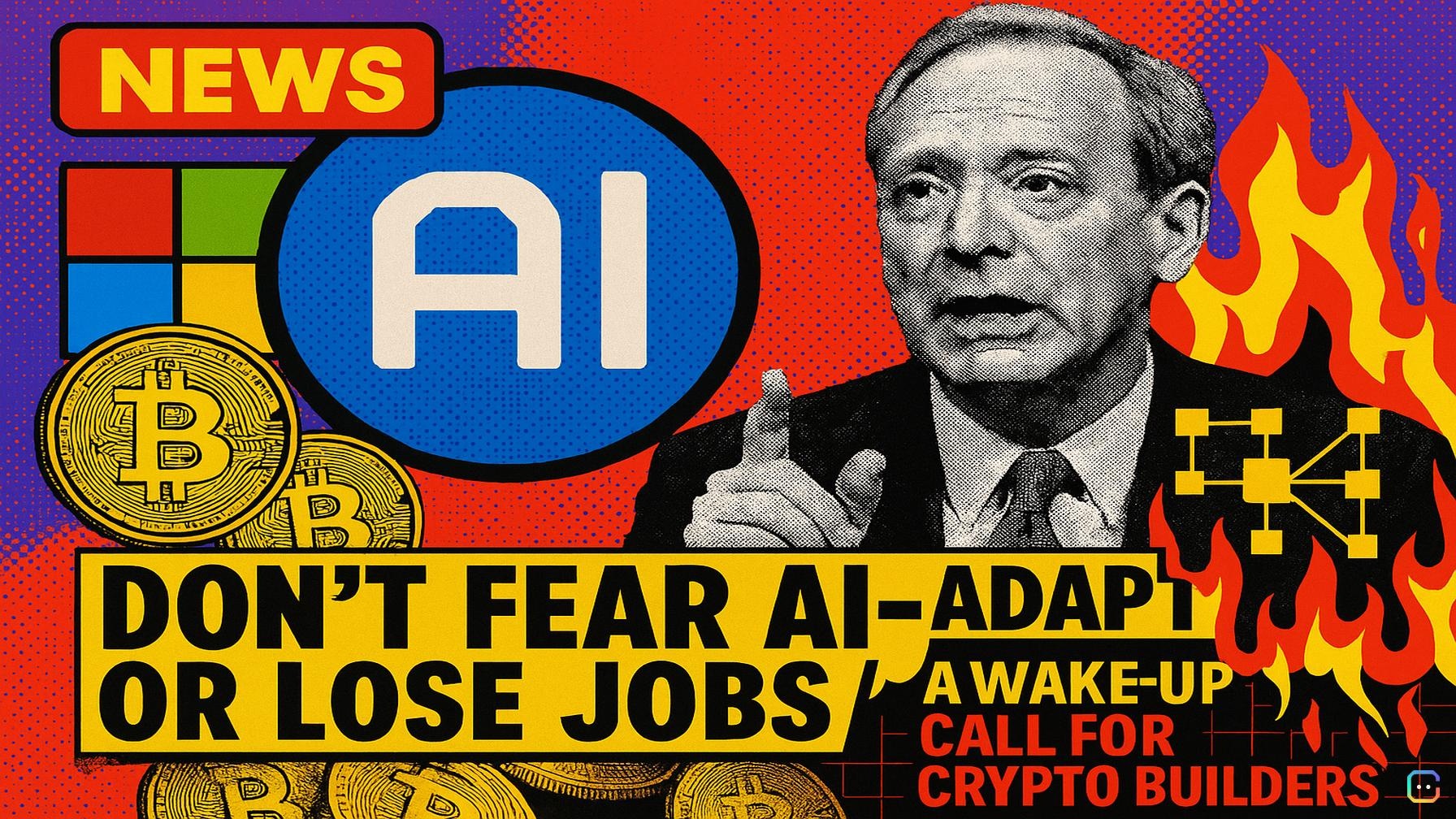
Headline: Microsoft president tells grads to stop fearing AI — and start adapting as automation reshapes jobs
Microsoft president Brad Smith has a blunt message for the class of 2026: your boos at commencement speakers aren’t the solution. This spring, graduates across the U.S. interrupted multiple commencement addresses the moment AI was mentioned — from former Google CEO Eric Schmidt at the University of Arizona to a real estate executive at the University of Central Florida — and those reactions prompted Smith to write a 3,000-word essay after returning from Princeton’s reunion weekend.
Smith frames the moment with a long view. He compares today’s panic over AI to the 19th-century reaction to early photography: when French painter Paul Delaroche saw a photograph “on a metal plate,” he declared “From today, painting is dead!” Yet photography didn’t kill art — it pushed painters toward Impressionism, Cubism and Surrealism. Smith’s point: disruptive tech forces change, and humans adapt by inventing new roles and creative forms.
But he doesn’t sugarcoat the present. Smith calls current trends a “perfect storm,” citing real risks facing recent graduates: “AI automation of tasks in current entry-level positions” and “corporate pressure to reduce headcount to help pay for AI’s enormous capital expenditures.” That’s more than rhetoric coming from Microsoft’s leadership. In February, Mustafa Suleyman, head of Microsoft’s AI unit, said many white-collar professional tasks — in law, accounting and marketing — “could be fully automated within two years.” Around the same time Smith’s essay appeared, CFO Amy Hood told investors Microsoft’s headcount fell year-over-year in its fiscal third quarter and she “expects the trend to continue.” Microsoft has said it plans roughly $80 billion in AI infrastructure spending in 2026.
Independent research underscores the stakes. A Federal Reserve study found U.S. programming job growth dropped about 50% after ChatGPT’s launch in November 2022, with researchers estimating some 500,000 developer roles that might otherwise have existed simply never materialized.
So what should workers do? Smith urges a shift in mindset. He argues the “American dream” is about more than jobs and income — it’s about purpose — and insists young people want a role in shaping how AI is used. For workers, Smith borrows a framework from LinkedIn’s “Open to Work”: stop thinking of a job as a static title and start breaking it into a “bundle of tasks” classified as (a) what AI can do, (b) what you can do with AI, and (c) what only humans can do. He also lists five “durable human skills” he believes AI can’t replace: curiosity, creativity, compassion, communications and courage.
Beyond individual choices, Smith says society needs new approaches to innovation that spread benefits more broadly, warning that the past three decades of technological and economic change have left too many behind. He didn’t specify policy fixes, but called for “shared responsibilities” to prevent widening inequality as automation accelerates.
To graduates, Smith offered a final appeal: channel your skepticism into agency. “To those in the tech sector who seemingly want to pursue a future where computers replace jobs and AI becomes more capable than people, the next generation of people has offered a compelling response: ‘not so fast,’” he wrote, urging young people to stand for “agency, ambition, dignity.”
Why this matters to crypto readers: the same forces reshaping traditional tech and developer roles will ripple into blockchain and crypto — from smart-contract development to community management. The industry’s decentralizing ideals and rapid tooling evolution could create new opportunities, but also amplify the need for adaptable skills and thoughtful governance to make sure benefits aren’t concentrated at the top. Smith’s call is simple: don’t just resist AI — decide how it should work for people.
Read more AI-generated news on: undefined/news