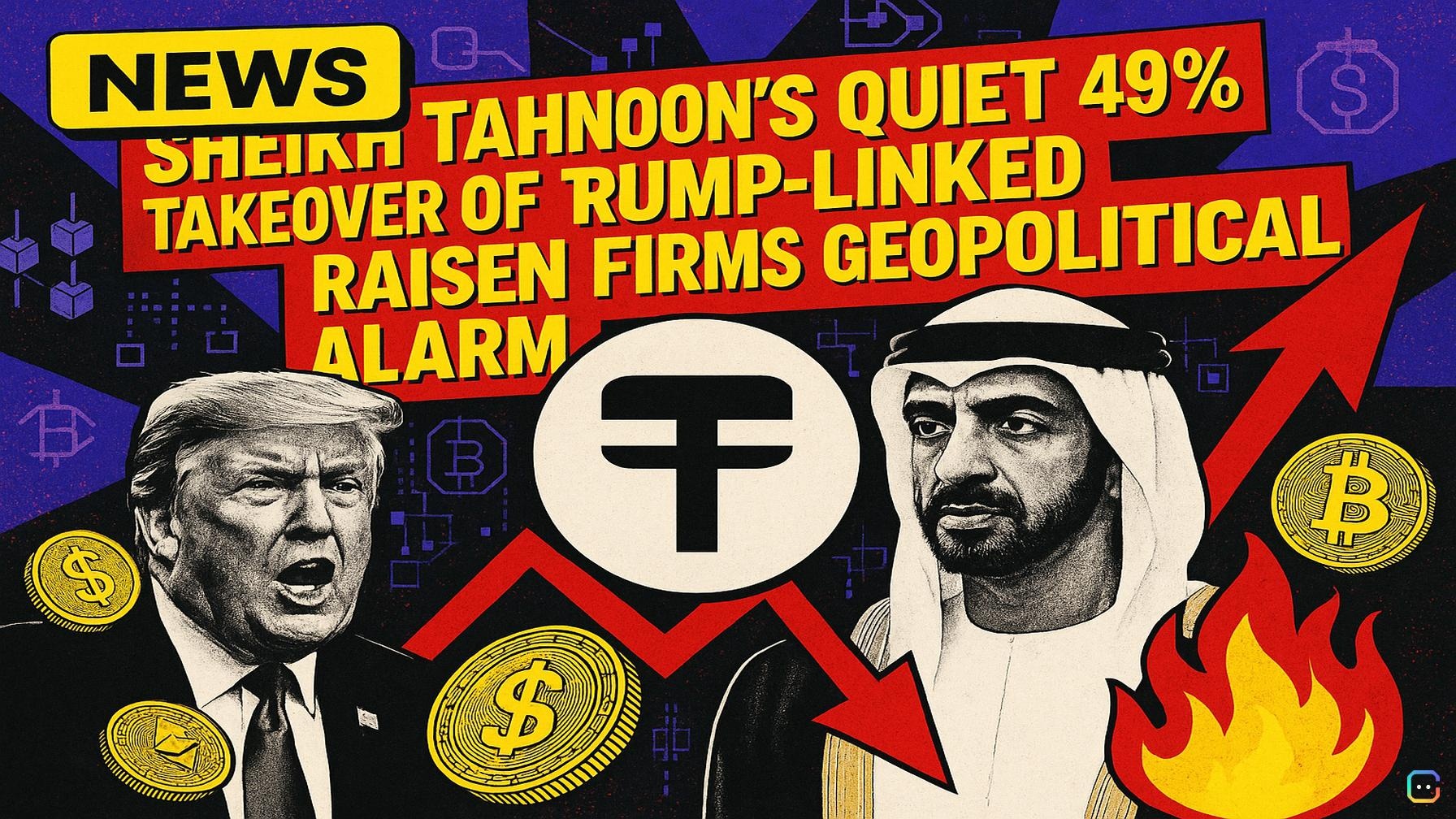
Sheikh Tahnoon’s quiet 49% takeover of Trump-linked crypto firm raises geopolitical — and regulatory — alarms
Sheikh Tahnoon bin Zayed Al Nahyan, a powerful UAE national security figure, quietly acquired a 49% stake in World Liberty Financial (WLFI), a company developing a US dollar–pegged stablecoin and payments infrastructure tied to the family of former US president Donald Trump, multiple outlets report. The deal — which reportedly routed some proceeds to entities connected to the Trump family — landed months before the US began easing export restrictions on advanced AI chips to the UAE.
Why it matters for crypto
The purchase sits at the crossroads of three hot topics for crypto markets: stablecoins and payments rails, deep-pocketed institutional backing for major exchanges, and geopolitically sensitive AI supply chains. Industry observers point to two especially consequential threads:
- AI and export policy: Sheikh Tahnoon oversees UAE intelligence operations and controls G42, the country’s largest AI holding company. G42 has been in talks with US officials about access to advanced AI hardware that had long been subject to strict export controls. The WLFI stake closed before US policy toward AI chip exports to the UAE began to shift — though no official link between the investment and that policy change has been made public.
- Binance ties and capital flows: Sheikh Tahnoon also chairs MGX, a UAE-linked investment fund that has committed substantial capital to Binance, including involvement in a reported $2 billion deal. Observers see the WLFI transaction as part of a broader, coordinated push by Middle Eastern capital into crypto infrastructure.
What WLFI is building
WLFI is working on a USD-denominated “USD1” stablecoin and broader payments infrastructure. Its high-profile political connections — and the fact that some transaction proceeds flowed to Trump-related entities — have intensified scrutiny. The firm’s plans are notable because a stablecoin backed by politically connected capital could reshape institutional access to dollar rails, depending on regulatory approvals and banking partnerships.
Questions and scrutiny ahead
So far, there’s no public evidence of illegality or policy violations tied to the deal. But the timing, the players involved, and the crossover between national security (AI chips), sovereign-linked capital, and a politically connected crypto project have prompted fresh questions for regulators and policymakers. Key issues likely to draw scrutiny include the investment’s structure, any commercial links between WLFI’s stablecoin plans and Binance-related capital commitments, and whether strategic considerations influenced the sequencing of deals and diplomatic engagement.
What analysts say
Analysts frame the transaction as emblematic of how digital-asset infrastructure is increasingly entangled with geopolitics and strategic capital. For the crypto space, that raises both opportunity and risk: large-scale institutional investment can accelerate product development and adoption, but political entanglements can also invite regulatory constraints and market volatility.
Bottom line
The Sheikh Tahnoon–WLFI deal is a reminder that stablecoin rollouts and exchange financing no longer sit in a purely financial silo. As crypto continues to intersect with state actors and strategic technologies like AI, expect closer scrutiny from regulators and heightened sensitivity in markets around politically linked investments.
Read more AI-generated news on: undefined/news