Google just made AI video generation a lot more affordable — and that matters for builders across tech, including Web3 creators who want to embed rich video into dapps, NFTs and token-gated experiences.
What launched
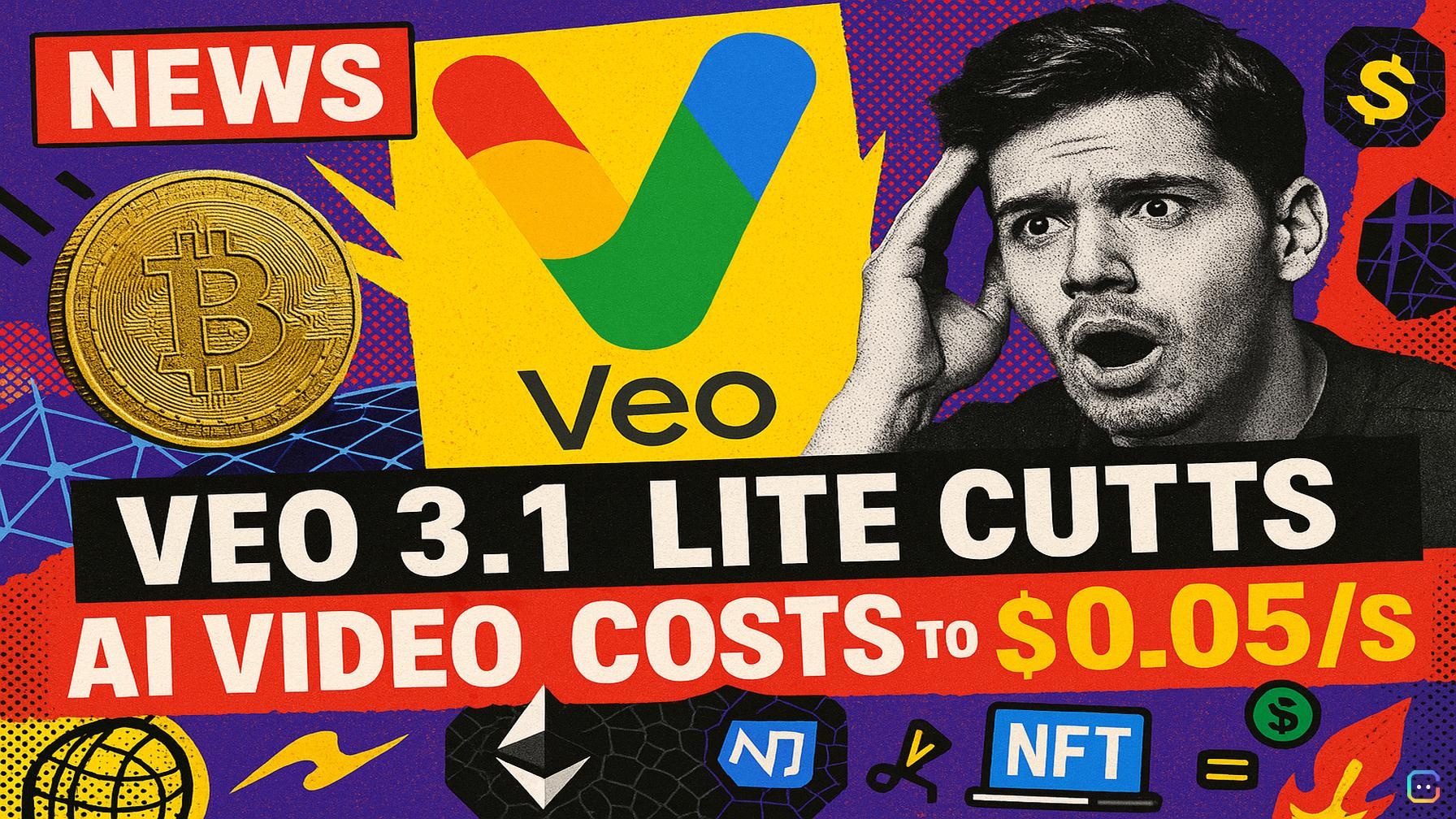
- Veo 3.1 Lite debuted this week on Google’s Gemini API as a lower-cost sibling to Veo 3.1 Fast and the original Veo 3.1.
- It supports Text-to-Video and Image-to-Video, in both landscape (16:9) and portrait (9:16), at 720p and 1080p. Videos can be 4, 6 or 8 seconds long, with pricing that scales by length and resolution.
Why the price cut matters
- Previously, the full Veo 3.1 ran about $0.40 per second for video with audio via API; Veo 3.1 Fast was around $0.15/second. Veo 3.1 Lite drops the floor to about $0.05/second for 720p — less than half the cost of the mid-tier.
- Google also announced an April 7 price cut for Veo 3.1 Fast, signaling a broader push to make AI video cheaper across the lineup.
Quick impressions
- Early tests found generation times fast (an 8‑second clip took under a minute) and quality largely intact. Prompt fidelity was good, with only small glitches (e.g., some lettering issues). The gap between Lite and Fast is smaller than the gap between Fast and the original full Veo 3.1.
Context and competitive landscape
- Veo began as Google’s flagship video model (Veo 3 launched May 2025), notable for producing complete soundtracks — ambient audio, effects and dialogue. Veo 3.1 followed in October to compete with OpenAI’s Sora 2.
- OpenAI’s Sora project struggled with enormous compute costs — reportedly burning $15 million per day — and was shut down last week as the company pivots to “world simulation research.” A reported $1 billion deal with Disney was swept up in the fallout.
- Chinese rivals have been aggressive on price and openness: Kuaishou’s Kling AI undercuts Google’s higher-tier plans, and Tencent’s Hunyuan Video even released an open-source alternative when Sora hype peaked in 2024. The Chinese market has prioritized economics as much as quality.
- On the professional side, tools like Utopai’s PAI are positioning for long-form, cinematic workflows (PAI’s pricing is heavier — e.g., $100 for 10,000 credits) aimed at creators who need consistent characters, storyboards and scene-level editing.
Where Veo 3.1 Lite fits
- Lite isn’t trying to be a cinematic pipeline like PAI or to out-price every competitor. It’s aimed squarely at developers who need to ship video features at scale without paying for premium tiers on every iteration.
- For Web3 projects, that makes a difference: cheaper per-second costs open the door to use cases such as short AI-generated previews for video NFTs, on-chain galleries that reference off-chain clips, token-gated mini-ads, and social features that lean on video as a standard app element rather than a premium add-on.
Bottom line
Google’s Veo 3.1 Lite cuts the cost barrier for programmatic video generation, and a simultaneous price trim for Veo 3.1 Fast suggests the company wants to make video a mainstream API capability. With OpenAI stepping back from Sora and cheaper regional rivals active, the market is rapidly reshaping around price and developer ergonomics — a win for creators and startups that need to scale media features without breaking the bank.
Read more AI-generated news on: undefined/news