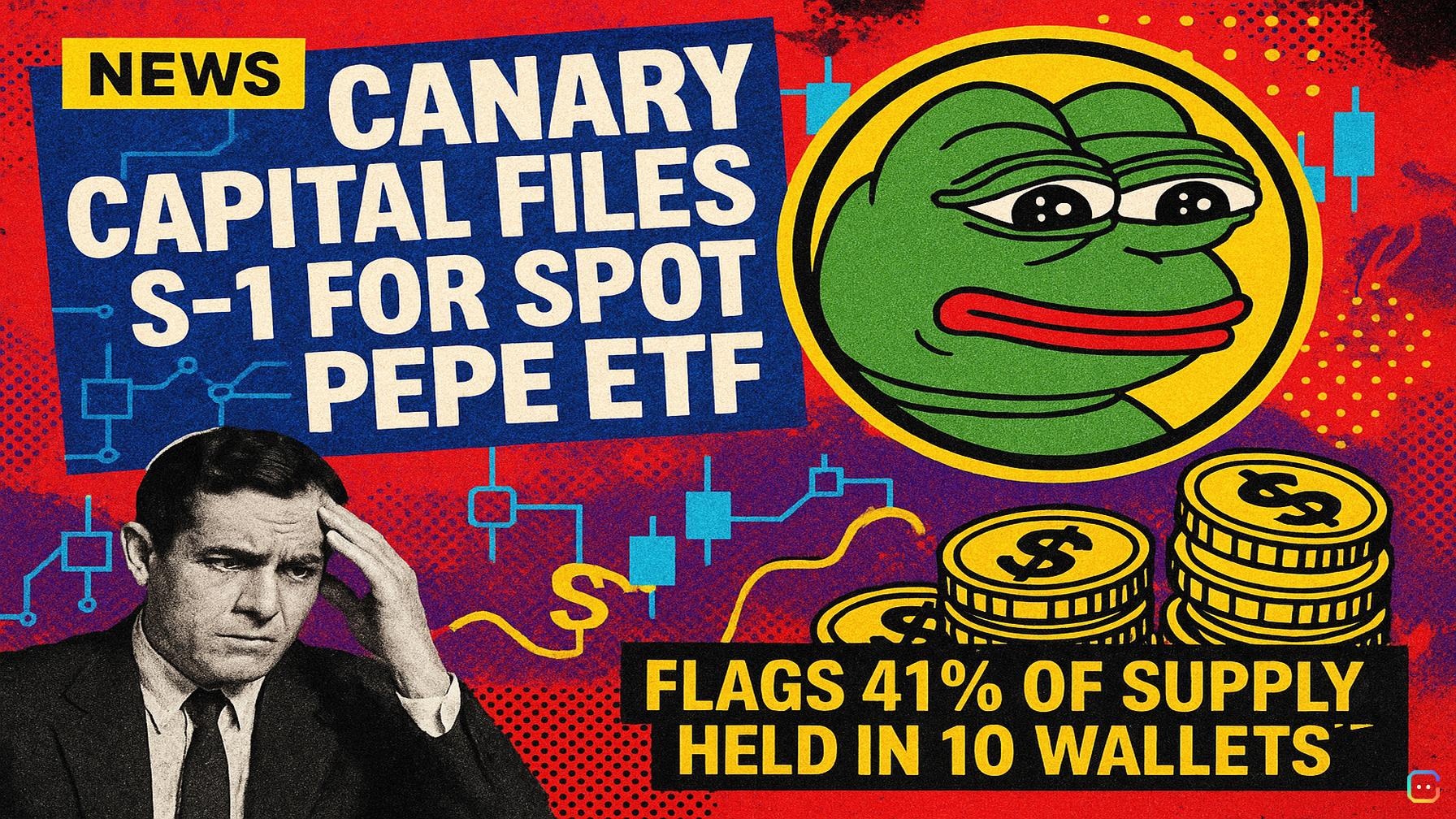
Canary Capital has taken a bold step into meme-coin territory, filing an S-1 registration with the U.S. Securities and Exchange Commission to create a spot ETF that would directly track PEPE, the frog-themed meme token.
Key details from the CANARY PEPE ETF filing
- Structure: The fund would be a spot ETF that holds the underlying PEPE tokens with a third‑party digital custodian and seeks to track the coin’s market price.
- Ether allocation: Up to 5% of the portfolio’s value could be held in Ether to cover transaction fees on the Ethereum network.
- Disclosure on concentration: The filing warns of a high concentration of supply—“As of January 2026, the ten largest PEPE wallet addresses collectively held approximately 41% of the total circulating supply.”
- Regulatory step: Canary has submitted a Form S-1 to the SEC, beginning the formal registration and review process required for a U.S.-listed fund.
Background on PEPE and market context
PEPE is a meme cryptocurrency inspired by Matt Furie’s Pepe the Frog that exploded in popularity throughout 2024 and established itself as a favorite among speculative traders. The token has built a large online following and has attracted high-profile backers, including BitMEX co-founder Arthur Hayes, who has publicly supported the coin’s potential.
On-chain data point to wide retail ownership—Etherscan shows more than 250,000 unique wallets hold PEPE—but the Canary filing signals that much of the supply is concentrated in a relatively small number of “whale” wallets, a risk the fund explicitly flags for investors.
What a PEPE ETF would mean
A spot PEPE ETF could provide new avenues for liquidity and exposure, particularly for investors who prefer regulated fund wrappers rather than direct token custody. That said, ETFs generally target institutional and retail investors who may be more cautious about meme assets, so it’s unclear how much institutional demand a PEPE fund would attract.
Meme-coin ETF precedent
So far only one meme coin has been packaged into a U.S. spot product: Grayscale’s Dogecoin vehicle, which launched as a trust and later converted to an ETF in November. That product had a slow start at launch, underscoring the uncertain appetite for meme-coin ETFs.
Canary Capital’s broader strategy
The PEPE proposal would expand Canary Capital’s crypto ETF lineup, which already includes funds tracking major altcoins such as Solana, XRP, and Litecoin. The S-1 submission marks the beginning of what could be a fast-moving story in crypto finance if the SEC advances the application.
Bottom line: Canary’s filing brings meme-driven speculation closer to mainstream fund structures, but concentration risk and uncertain institutional demand make the path forward anything but guaranteed.
Read more AI-generated news on: undefined/news