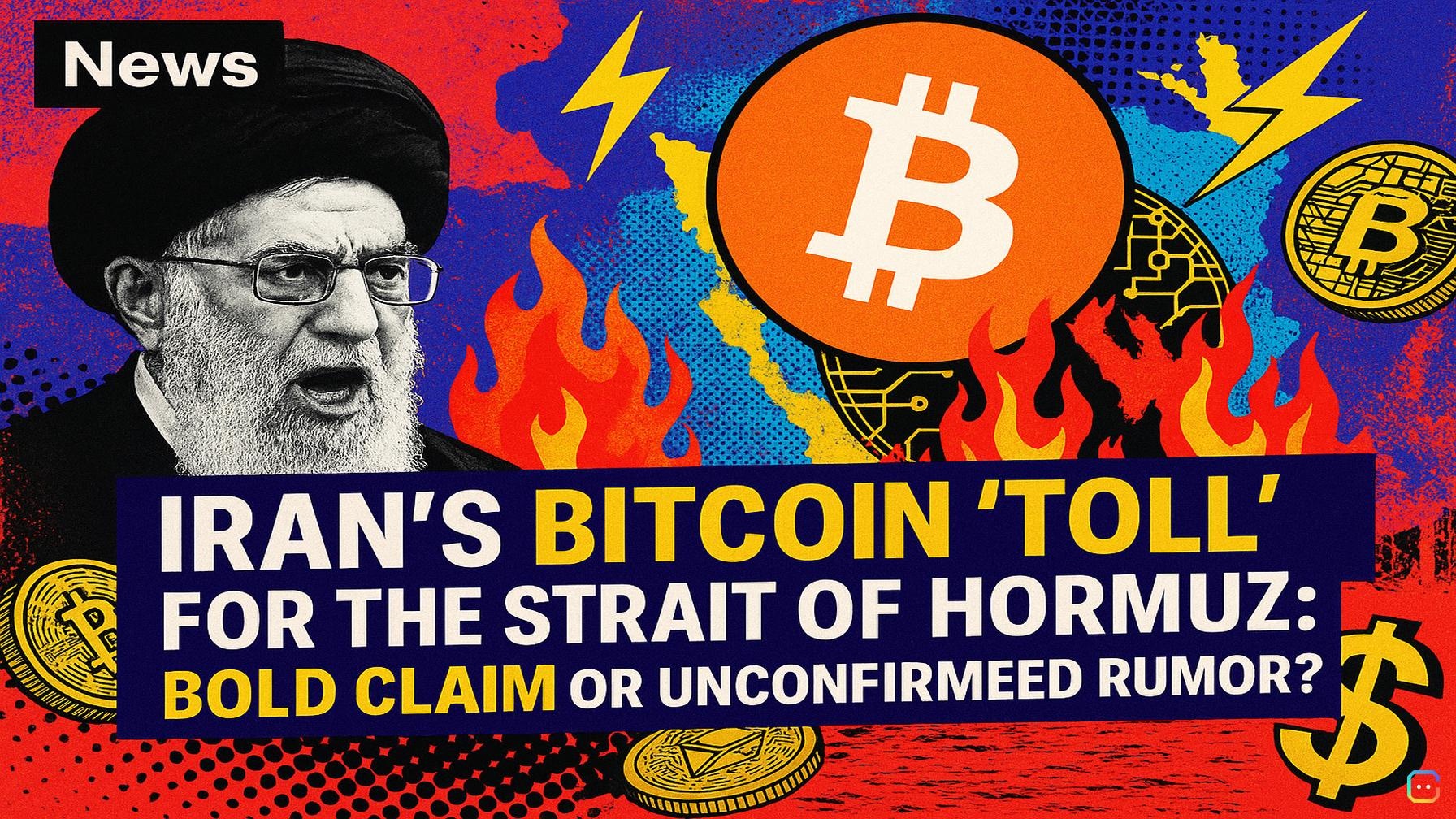
Is Iran really charging Bitcoin tolls for passage through the Strait of Hormuz — or is this a crypto rumor running ahead of the facts?
The Financial Times set the crypto world buzzing this week with a report that Iran plans to demand tolls in cryptocurrency, including Bitcoin, from ships transiting the Strait of Hormuz — the chokepoint through which roughly 20% of the world’s oil moves. The report said negotiations start at about $1 per barrel. Bitcoin supporters celebrated the idea as proof of the asset’s censorship-resistance: Strike founder Jack Mallers called it an example of Bitcoin’s “no second best” utility, and the Iranian port city Bandar Abbas was quickly added to BTC Map, a public directory of businesses that accept Bitcoin.
But blockchain sleuths and analysts are pushing back. Experts who track crypto flows tied to sanctions evasion say there’s little hard evidence that Iran is actually collecting meaningful volumes of tolls in Bitcoin right now.
“I’m also skeptical,” Ari Redbord, global head of policy and government affairs at TRM Labs, told Decrypt. Redbord said TRM Labs has not seen on-chain data showing large-scale use of crypto to pay transit tolls through the Hormuz corridor. His read is that Tehran — or actors linked to it — may be signaling openness to crypto as a payments rail, which fits a broader playbook of exploring alternative payment channels amid sanctions, rather than quietly running an operational Bitcoin toll booth.
Analyses from blockchain forensics firms underscore how sanctioned states have experimented with crypto pathways. Elliptic reported last year that Russia used about $8 billion in crypto to evade sanctions and influence elections, while Chainalysis estimated illicit addresses received some $154 billion in crypto last year — with Iran, Russia and North Korea increasing their on-chain activity. Those patterns show capability and incentive, but they don’t prove route-level tolls are being settled in Bitcoin today.
Other skeptics point to possible miscommunication in media accounts. Udi Wertheimer, a Bitcoin advocate and co-founder of Taproot Wizards (disclosure: investor in Decrypt’s parent company, Dastan), noted that the FT’s primary source, Hamid Hosseini, is a spokesperson for Iran’s Oil, Gas and Petrochemical Products Exporters’ Union — not a cabinet official. That raises the possibility the story spread via a “game of telephone,” or that Hosseini meant stablecoins or local currencies rather than on-chain Bitcoin transfers. “I haven’t seen any official saying that it's even remotely a thing,” Wertheimer told Decrypt.
Bloomberg has reported a slightly different picture: some oil tankers moving through the waterway have been using Chinese yuan and stablecoins to pay for naval escort services, according to people with direct knowledge. Stablecoins are easier to deploy for day-to-day operational payments than settlement-focused Bitcoin, and they’re sometimes preferred for this kind of work.
On the water itself, traffic through the strait remains below pre-conflict levels. Maritime historian Sal Mercogliano of Campbell University said recent ship volumes show only a modest uptick despite a reported two-week ceasefire unveiled by U.S. President Donald Trump. Prediction markets are watching closely: traders on Myriad (owned by Decrypt’s parent company Dastan) placed roughly 70–90% odds this week that a seven-day moving average of transit calls would exceed 15 by month-end, reflecting uncertainty and active speculation about shipping recovery.
Bottom line: the FT report has ignited a debate about whether Iran is embracing Bitcoin as a pragmatic payment tool or merely signaling intent while relying on other currencies and stablecoins for actual operations. On-chain data and official confirmations are still scarce, so for now the idea of a Bitcoin “Hormuz toll” looks more like a provocative development to watch than a confirmed, market-moving fact.
Read more AI-generated news on: undefined/news