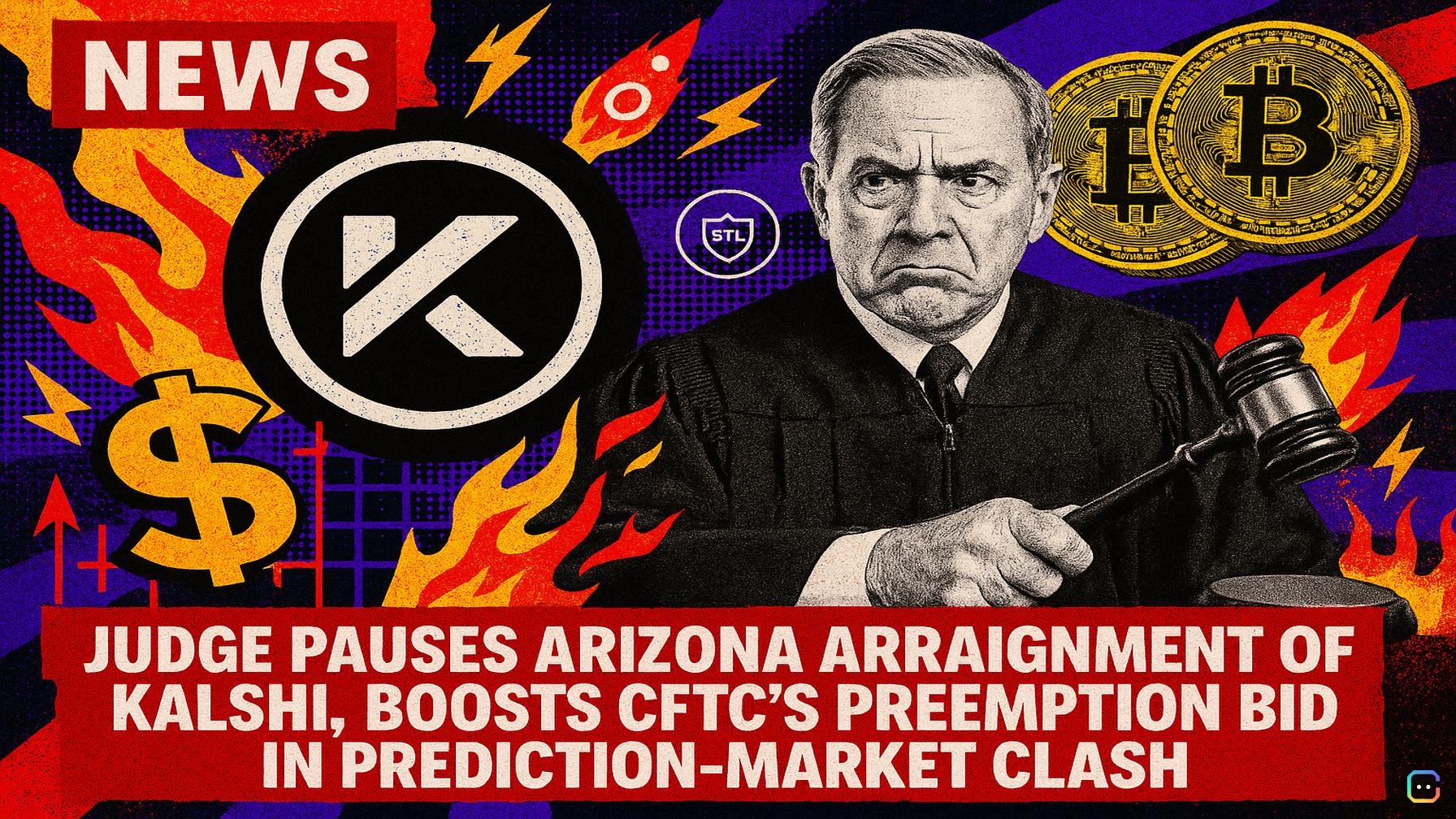
A federal judge has paused Arizona’s attempt to criminally prosecute prediction market operator Kalshi, handing a short-term win to the Commodity Futures Trading Commission (CFTC) in an escalating fight over who regulates event-based markets.
What happened
- On April 11, 2026, U.S. District Judge Michael Liburdi (District of Arizona) issued a temporary restraining order preventing Arizona from holding an arraignment for Kalshi that had been scheduled for April 13.
- Arizona had announced last month it would bring 20 criminal charges against Kalshi, alleging the company offered illegal betting products under state law.
- The court found the CFTC “has made a clear showing that it is likely to succeed on the merits” of its claim that the federal Commodity Exchange Act preempts Arizona’s gambling laws. The ruling held that a state prosecution could violate the Supremacy Clause and enjoined Arizona from enforcing its gambling laws against contracts listed on CFTC-regulated designated contract markets for two weeks.
Regulatory tug-of-war
- The CFTC sued Arizona (and two other states), arguing that prediction markets—also called event contracts—are swaps subject to federal oversight, and thus state criminal or civil enforcement is preempted.
- CFTC Chair Michael Selig praised the ruling, saying Arizona’s move “to weaponize state criminal law against companies that comply with federal law sets a dangerous precedent,” and that the court’s order sends a message against using intimidation to sidestep federal rules.
Legal patchwork and wider implications
- The litigation adds to a mixed and fast-moving body of case law. State courts have at times sided with state regulators—for example, a Nevada state court allowed the Gaming Control Board to temporarily block Kalshi earlier in the dispute.
- Federal appellate courts have been split: the Third Circuit ruled earlier this week that prediction markets fall under CFTC authority and that the agency can decide whether to permit sports-related products. The Ninth Circuit recently declined to intervene in the Nevada matter (letting the state action stand) but will hear a consolidated appeal next week that could reshape litigation over prediction markets nationwide.
- Judge Liburdi’s order came two days after he denied Kalshi’s separate motion for a preliminary injunction against Arizona; the two filings raised different legal arguments.
What’s next
- The temporary restraining order lasts two weeks while the CFTC’s motion for a preliminary injunction is pending; if the preliminary injunction is granted, the block could be extended.
- A Ninth Circuit hearing next week on the consolidated cases will be closely watched by crypto and derivatives markets, because its outcome could influence whether event contracts are governed primarily by federal or state law—an issue with material implications for operators and investors in crypto-enabled prediction markets.
Why it matters for crypto audiences
The ruling underscores growing clashes between state gambling regulators and federal derivatives oversight over innovative market products—including crypto-native prediction platforms. A federal determination that the CFTC’s authority preempts state law could clear regulatory uncertainty for market operators; conversely, state victories would preserve powerful local enforcement tools that could fragment the market.
Read more AI-generated news on: undefined/news