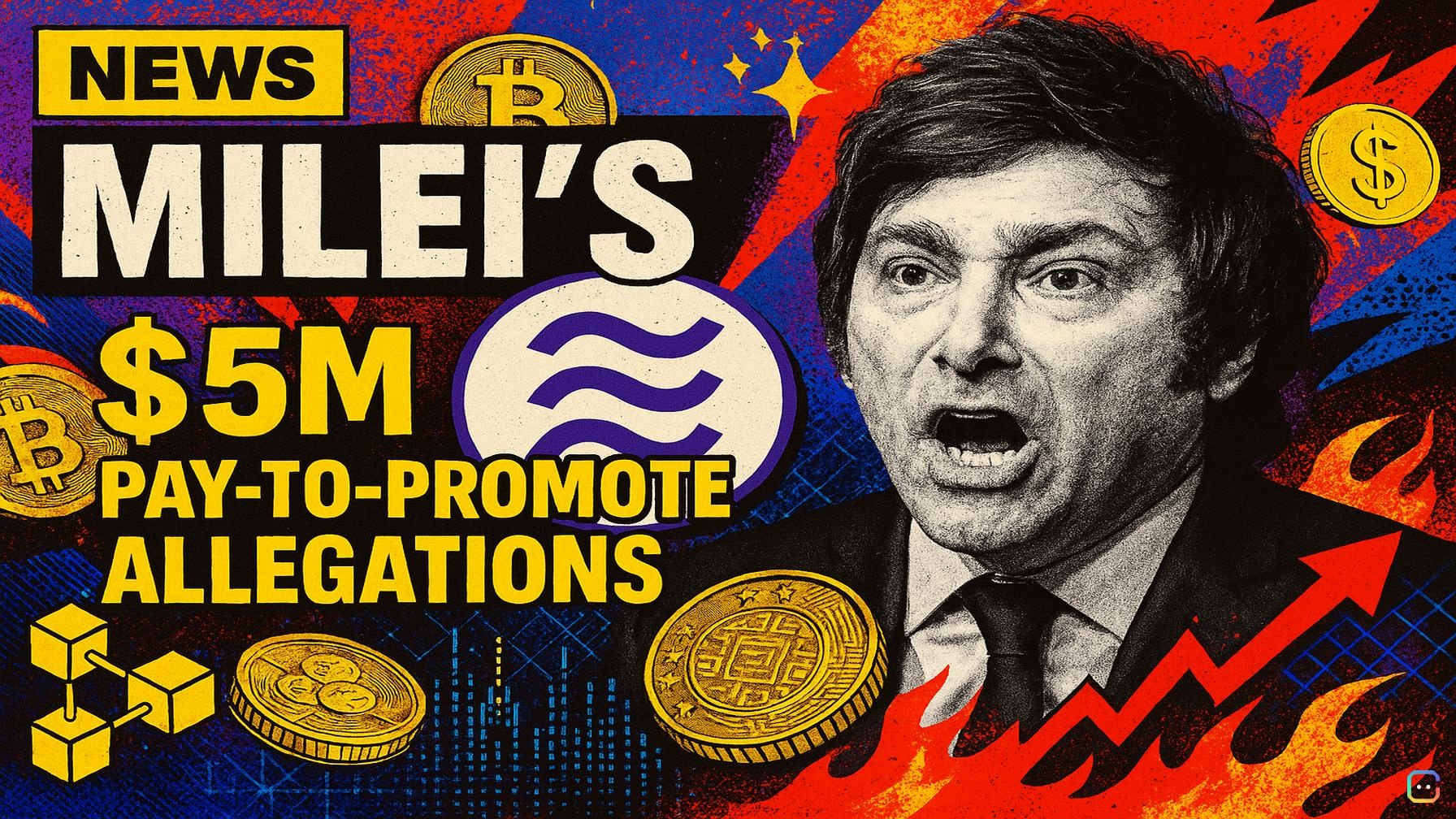
Headline: Milei’s alleged $5M pay‑to‑promote scandal dents Argentina’s crypto momentum — and risks chilling regulation and investment
Argentina’s president, Javier Milei, is facing his lowest approval ratings since taking office amid fresh allegations that a $5 million payment scheme links him to a controversial crypto token he publicly promoted. The revelations — recovered from a lobbyist’s phone and reported by local outlets including El Destape and La Nación — have shaken public confidence in crypto in a country that had been fertile ground for digital‑asset adoption.
What happened
- On 14 February 2025 Milei tweeted his endorsement of $Libra, a niche token pitched as “boosting the growth of the Argentinian economy.”
- $Libra spiked to about $5 immediately after the endorsement, then crashed to under $1, erasing roughly $250 million across 13,000 token holders.
- Investigators recovered a financial agreement from crypto lobbyist Mauricio Novelli’s cellphone allegedly detailing three payments — $1.5M, $1.5M and $2M — to entities connected to Milei.
- Call logs reported by La Nación show Milei spoke with Novelli several times in the minutes before his $Libra post. At the time, Novelli was in Texas with members of the $Libra team, including an American crypto entrepreneur Milei had allegedly agreed to appoint as an adviser under the arrangement.
Why it matters for crypto in Argentina
- Market and reputation hit: The $Libra implosion and the bribery allegations have damaged crypto’s public image just as industry advocates were pushing to integrate digital assets into mainstream finance and regulation.
- Regulatory pause and uncertainty: Some regulators retreated from rule‑making discussions after the February scandal. Although many returned by the time Argentina hosted Devconnect in November 2025, the latest tranche of evidence has again slowed momentum. Argentina’s central bank had been preparing to allow banks to offer crypto services in April (status currently unclear).
- Mixed signals from authorities: On 7 April (date reported), Argentina’s securities regulator did recognize certain cryptocurrencies — including ether — as counting toward investors’ personal net worth, effectively enabling some investors to qualify for more sophisticated products. Still, the political fallout complicates regulatory outreach and public trust.
Industry response and attempts at recovery
- Crypto advocates, entrepreneurs and educators had argued that better public education and clearer regulation would reduce scams and build investor confidence. Those efforts now face a tougher environment with crypto’s image linked to alleged presidential corruption.
- Ethereum founder Vitalik Buterin publicly urged Milei to use education as a response and welcomed the idea of hosting Devconnect in Argentina as an opportunity to “show the best of what crypto can offer.” Milei welcomed the convention on social media; the Ethereum Foundation did not comment publicly.
- Devconnect, hosted in Buenos Aires in November 2025, attracted more than 17,000 attendees. Organizers and local groups such as Crecimiento — established in 2024 to lobby for business‑friendly crypto policy — had hoped the conference would demonstrate the sector’s constructive side and encourage regulators to reengage.
- Local push: In the run‑up to Devconnect, platforms encouraged merchants to accept crypto and promoted Buenos Aires as a crypto‑friendly destination. Some regulatory progress followed: Argentina’s securities regulator launched a regulatory sandbox for crypto and fintech startups and began recognizing qualified crypto investors.
Voices on the ground
- Maria Milagros Santamaria, formerly of Crecimiento, summarized Argentina’s crypto trajectory as three milestones: the $Libra fallout in February 2025, a recovery and regulator reengagement by Devconnect in November, and the newest evidence that has again undermined momentum.
- Santamaria said entrepreneurs feel “disbelief and disappointment” but are still “trying to build on top of [the scandal] and keep showing what we can do.”
- Industry insiders warn the scandal could make policymakers more cautious and slow the rollout of bank‑level crypto services — even if a total freeze is unlikely because Argentina often follows U.S. regulatory trends.
Political and economic backdrop
- Milei’s libertarian, pro‑crypto presidency followed a 2023 election. His austerity measures aimed at reining in runaway inflation have been politically painful and left many Argentinians struggling amid a recession.
- The country’s high rate of crypto usage — driven in part by currency instability and dollarization pressures — had made Argentina an attractive market for crypto projects and investors. That appeal is now clouded by scandal and the risk of political contagion.
What investors and observers should watch next
- Any official findings or formal investigation into the alleged payments and Milei’s ties to $Libra.
- The status of the central bank’s plan to let banks offer crypto services, and whether the April rollout will proceed.
- Further regulatory measures from Argentina’s securities regulator and whether the regulatory sandbox expands.
- Market and adoption metrics (merchant acceptance, on‑chain flows, local exchange volumes) for signs of renewed or waning confidence.
Bottom line
The $Libra affair has turned a promising case study of crypto adoption into a cautionary tale about political risk. For proponents who saw Argentina as a “perfect storm” for crypto growth, the scandal underscores how quickly reputational damage can stall regulatory progress and investor appetite — even as parts of the industry continue to push forward with education, conferences and policy engagement.
Read more AI-generated news on: undefined/news