Morning Minute — Tyler Warner: Relentless sellers and war jitters keep Bitcoin subdued
Tyler Warner’s Morning Minute is a daily note on crypto markets and policy — his views only. Also: catch our new ~5-minute daily news show on Apple Podcasts or Spotify.
Quick take
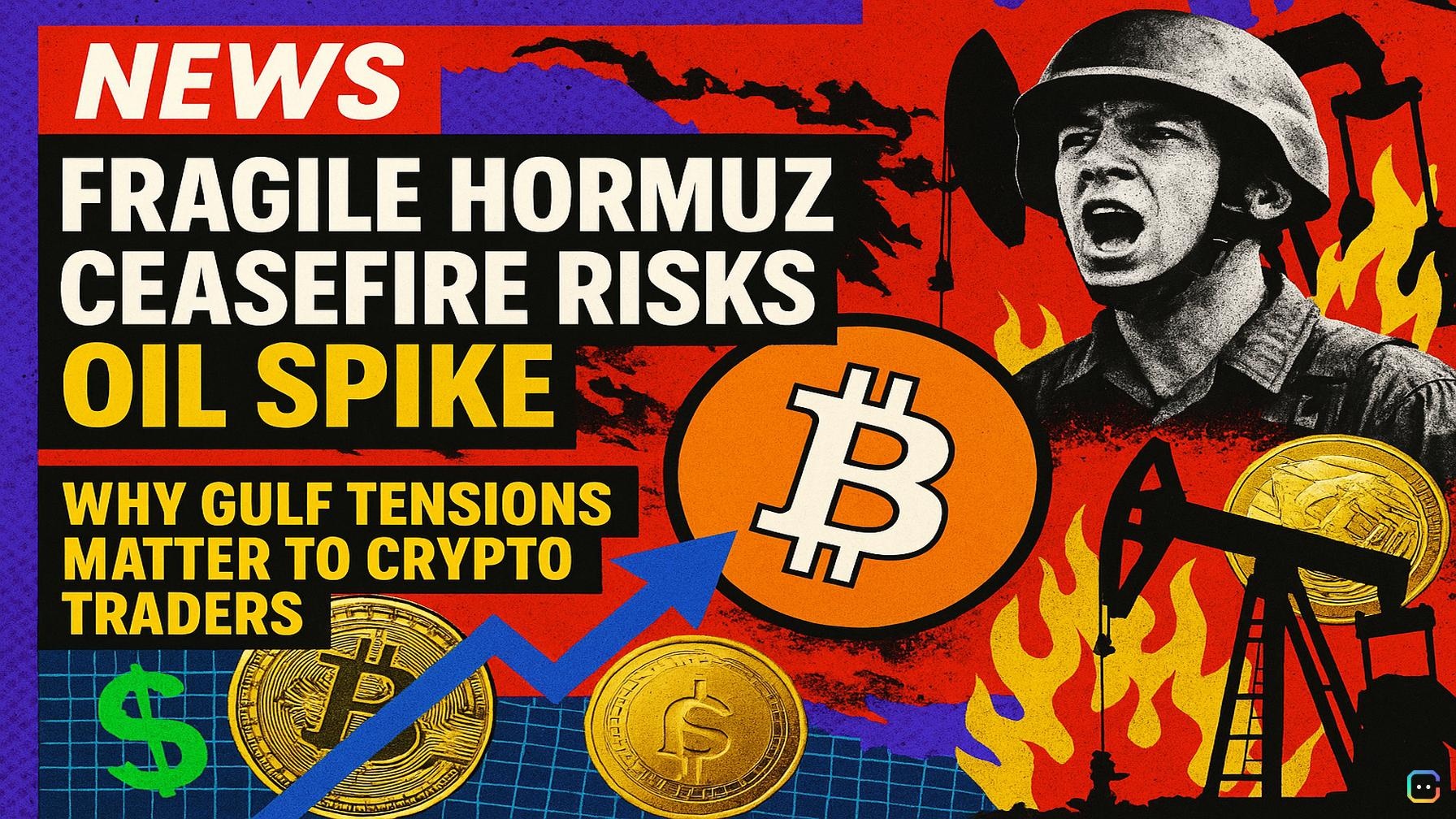
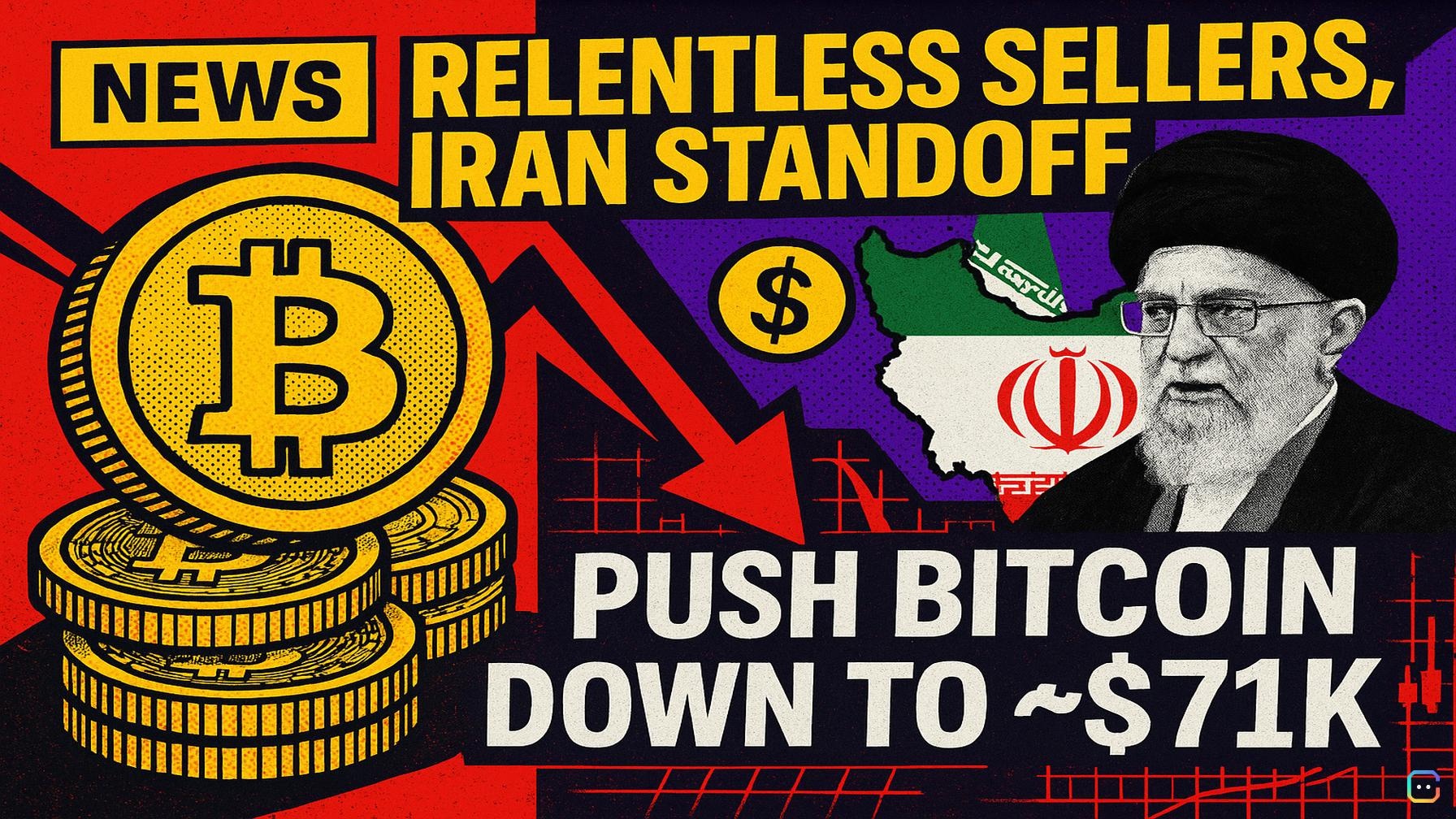
Risk-off sentiment from a tense diplomatic standoff and ongoing profit-taking from large Bitcoin holders knocked crypto prices lower today. BTC slid from the mid-$70K range to around $71K, ETH fell below $2,200, and oil jumped ~7% to about $97 on fresh fears of a blockade in the Strait of Hormuz.
What happened
- Diplomacy falters, markets wobble: Reports that the initial Iran peace talks went poorly triggered sharp market moves. Vice President J.D. Vance reportedly walked out Saturday night without a deal, and President Trump quickly announced the U.S. Navy would begin “BLOCKADING any and all ships trying to enter, or leave, the Strait of Hormuz—effective immediately.” That escalation sent risky assets down and safe-haven flows and oil prices up.
- Sellers piling in above $70K: Glassnode data shows roughly $20 million in Bitcoin profit is being realized every hour while BTC trades above $70K — evidence that large holders are actively selling into recent strength. That persistent supply is likely to make the race toward $80K a protracted one.
Deeper reads — markets and products
- Morgan Stanley pushes beyond an ETF: MSBT, Morgan Stanley’s Bitcoin ETF, launched last week — and the bank is already plotting the next moves. Amy Oldenburg, head of digital-asset strategy, told Decrypt the firm views tokenized money-market funds as “definitely a path forward,” following BlackRock’s BUIDL product ($2.3B) into yield-bearing tokens. Morgan Stanley plans to use Parametric (a subsidiary) for crypto tax-loss harvesting and is building Bitcoin yield and lending services in-house rather than relying solely on third-party tech. Expect tokenized MMFs, tax-loss tools, and on-balance-sheet yield and lending to be priorities.
- A no-fork quantum workaround for Bitcoin: StarkWare researcher Avihu Mordechai Levy published a proposal called QSB that aims to make Bitcoin transactions more quantum-resistant without a soft fork. It uses hash-based puzzles and Lamport signatures so users pre-solve an off-chain puzzle (roughly a ~70 trillion-attempt challenge solvable with GPU work for a few hundred dollars), then broadcast a transaction that proves the work. Advantages: no consensus change required. Downsides: it’s a workaround, not a permanent fix — transactions are non-standard (sent straight to mining pools), Grover’s algorithm still poses a theoretical risk, the approach is costly for users, and it won’t scale well. Still, it’s an inventive stopgap worth watching.
Policy wave — prediction markets
- CFTC digs in on prediction-market jurisdiction: CFTC Chair Mike Selig told CoinDesk the agency will keep defending its “exclusive regulatory authority” over prediction markets, regardless of whether contracts reference sports, politics, or other events. The CFTC got a boost April 6 when the Third Circuit held that the Commodity Exchange Act gives the agency exclusive jurisdiction over trades on designated contract markets — a ruling that undercuts state gaming regulators. A consolidated Ninth Circuit case (which includes Nevada, where some states won injunctions against Kalshi) is set for next week. Selig signaled more states could be targeted; this marks a reversal from two years ago when the CFTC looked like it might be curbing prediction markets — now it’s suing states to keep them operational.
Drama — Justin Sun and World Liberty Financial
- Backdoor allegations, token collateral and a legal threat: Justin Sun says he invested $75 million in World Liberty Financial (WLFI) last year and publicly accused the project of embedding a “backdoor blacklisting function” in its token contract that could let the team freeze or confiscate holder funds without notice. The controversy flared after WLFI deposited 5 billion WLFI tokens as collateral on Dolomite (a DeFi protocol co-founded by a WLFI adviser) and borrowed $75 million in stablecoins — a move critics called a disguised sell. Sun urged the team to unlock remaining tokens and be transparent; WLFI replied it has evidence and is ready to meet Sun in court. This saga is still developing.
Bottom line
Geopolitical shocks and aggressive profit-taking from big wallets are keeping near-term volatility elevated for Bitcoin. Meanwhile, institutional players and researchers are accelerating product innovation — tokenized money funds, on‑balance-sheet yield and lending, and experimental quantum-resistance schemes — all of which will shape markets and infrastructure in the months ahead. Corporate treasuries, ETFs, and regulatory fights remain core themes to watch.
Read more AI-generated news on: undefined/news