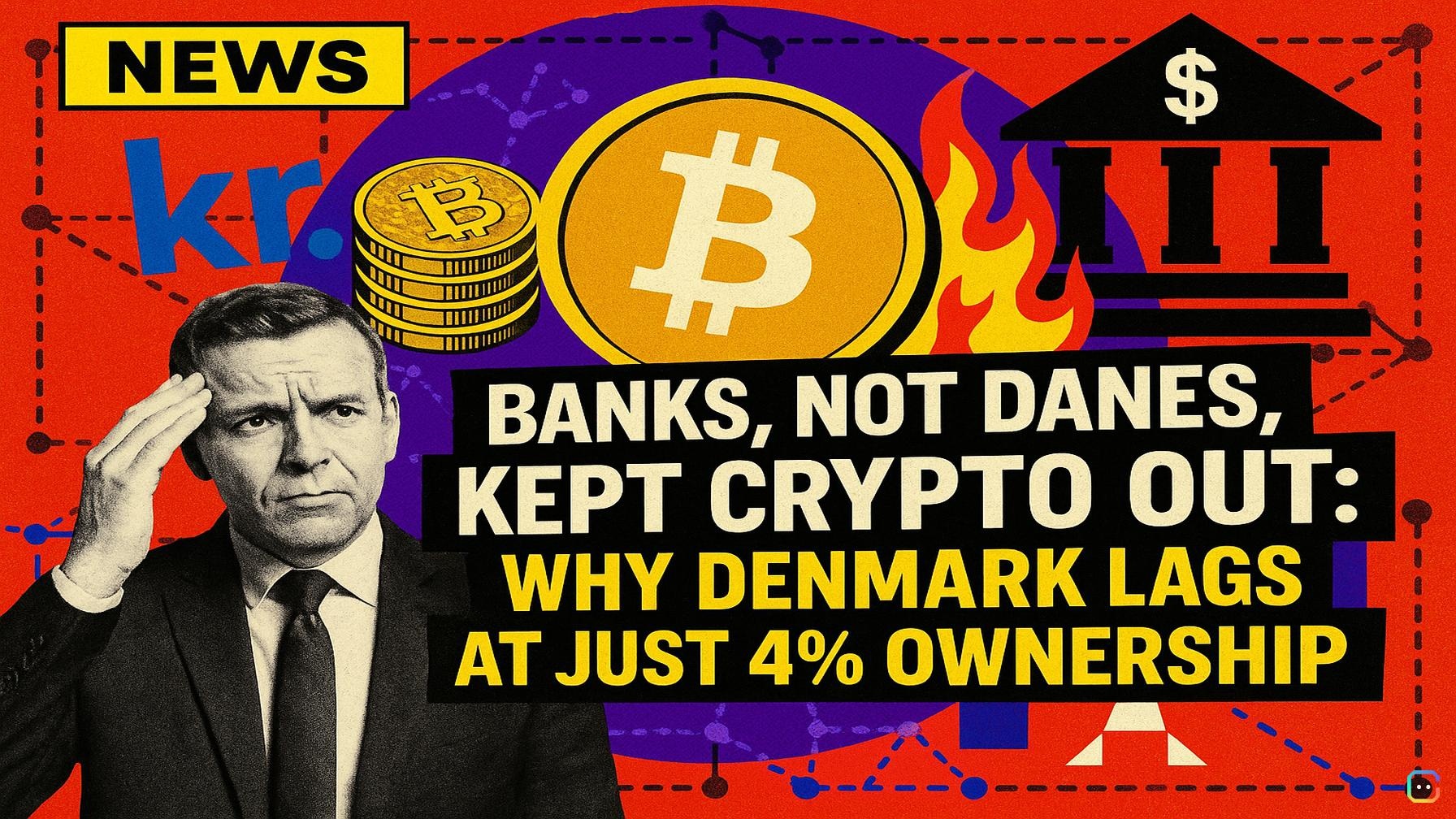
Denmark’s crypto adoption lags far behind its neighbors — and the reason may be less about public apathy than bank behavior.
A new staff paper from Danmarks Nationalbank finds just 4% of Danes hold cryptocurrency, a share that hasn’t budged since 2023 even as ownership rose across much of Europe. By comparison, Norway, Finland and the U.K. report crypto ownership rates north of 10%. The gap reflects a long period in which Danish banks largely shut the door on retail access to digital assets and often warned customers they were too risky, while an uneven tax framework added extra deterrents.
The figures come from an Epinion survey run between October and November 2025 that polled more than 3,000 Danes aged 15 and up via the country’s Digital Post system; results were weighted to match national demographics. Key takeaways:
- Crypto ownership is small and shallow: most holders report positions below 10,000 DKK (roughly $1,570). Nationwide crypto holdings are estimated between $317 million and $847 million.
- Indirect exposure — holdings through crypto-linked stocks and exchange-traded products (ETPs) — has ticked up since 2023 but remains limited, about $211 million, or roughly 0.4% of Denmark’s total equity holdings.
- Use as money is rare: most holders treat crypto as an investment rather than a payment medium.
- Custody habits favor providers: roughly 70–75% keep assets with crypto service firms; only 20–30% self-custody.
- Demographics skew young and affluent: ownership is concentrated among younger, higher-income Danes and falls sharply for those over 60.
There are early signs the institutional barrier is easing. Earlier in 2026, Danske Bank — Denmark’s largest lender — began offering customers exposure to Bitcoin and Ether through exchange-traded products, saying investor demand for crypto in diversified portfolios is rising and that the EU’s Markets in Crypto-Assets Regulation (MiCA) provided a clearer regulatory foundation for the move.
Whether improved access through mainstream banks will push Denmark’s ownership rate above its stagnant 4% remains unclear. For now, the figure looks less like proof of national disinterest and more like the legacy of a banking and tax environment that kept crypto on the margins for much of the past decade.
Read more AI-generated news on: undefined/news