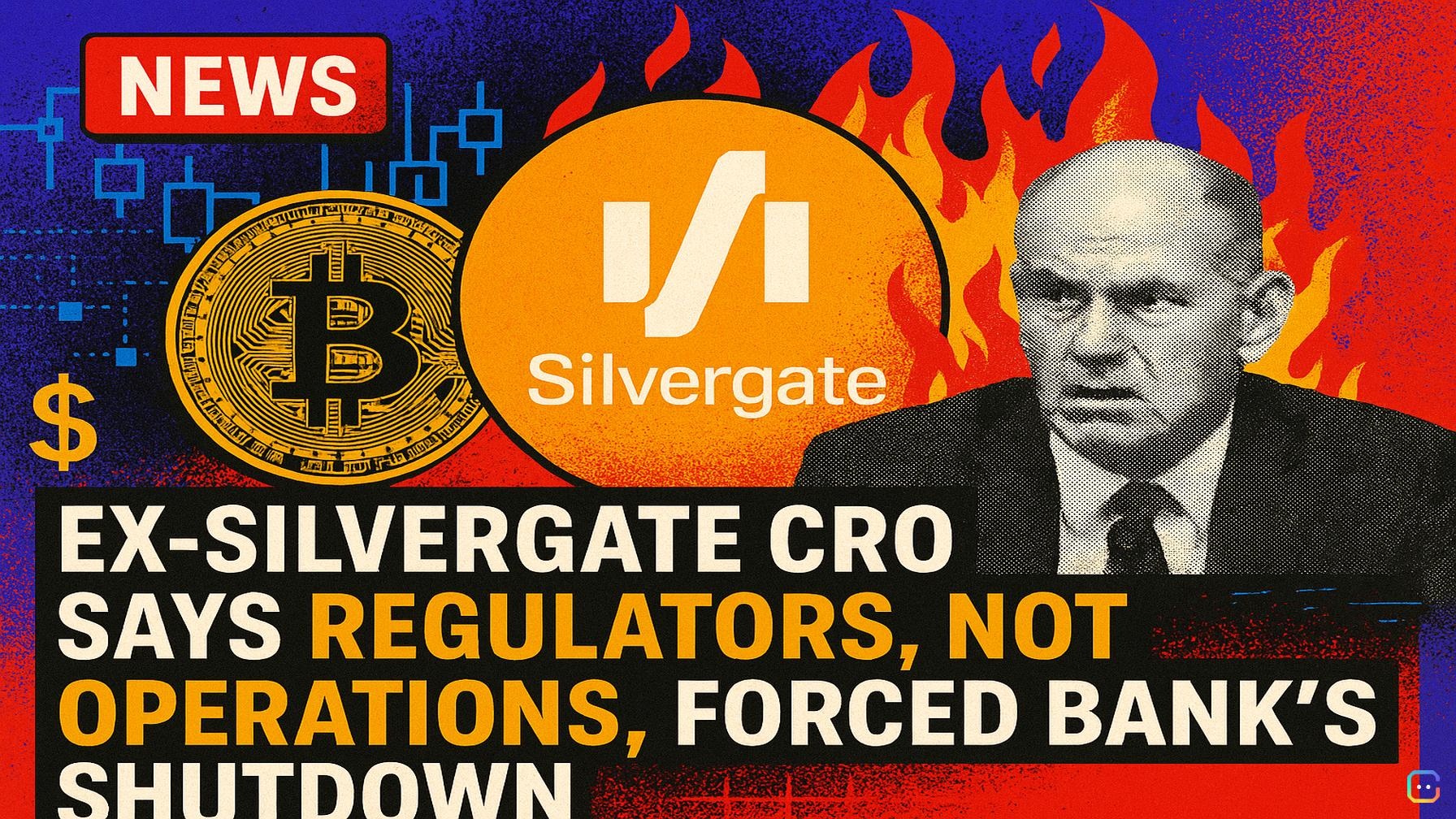
Former Silvergate Bank chief risk officer Kate Fraher has broken her silence, saying regulatory pressure — not operational failure — was the real force that pushed the crypto-friendly lender to shut down.
Fraher told reporters Wednesday that she settled with the U.S. Securities and Exchange Commission in 2024 to avoid a “multi-year battle” after the agency alleged that Silvergate executives misled investors about the bank’s Bank Secrecy Act and anti-money-laundering (AML) controls for crypto clients including FTX. She insists the SEC never proved Silvergate’s AML systems failed.
Her comments followed a landmark change at the SEC: under Chair Paul Atkins the agency rescinded its decades-old “no deny” settlement policy, a rule dating to 1972 that prevented defendants from publicly disputing allegations after settling. Fraher said the policy shift finally let her speak openly about the case. “The process itself is designed to apply maximum pressure, and the human costs are real,” she said, adding that she was “personally de-banked” and had credit lines abruptly closed during the investigation.
Timeline and settlements
- In July 2024 the SEC sued Silvergate Capital, former CEO Alan Lane, and Fraher, alleging they misled investors about how the bank monitored suspicious transactions and complied with AML obligations. SEC enforcement director Gurbir Grewal said at the time Silvergate failed to detect roughly $9 billion in suspicious transfers tied to FTX-related entities.
- Silvergate later agreed to pay a $50 million civil penalty without admitting or denying wrongdoing. Lane settled for $1 million. Fraher paid $250,000 and accepted a five-year ban from serving as a public company officer or director. Former CFO Antonio Martino declined to settle and continues to contest the allegations in court.
Operational stability, regulatory pressure
Fraher disputes the narrative that Silvergate collapsed purely due to FTX’s fall. She says the bank restructured its business in early 2023, maintained “appropriate capital levels,” and continued operating safely even after suffering about a 70% deposit outflow following the FTX bankruptcy. According to Fraher, it was mounting scrutiny and informal regulatory pressure — not market fundamentals alone — that made the business impossible to continue.
Her account echoes charges from across the crypto ecosystem that regulators mounted a campaign to squeeze crypto banking relationships — a theme that’s been dubbed “Operation Chokepoint 2.0.” Prominent crypto commentator and venture capitalist Nic Carter wrote in September 2024 that unnamed Silvergate insiders described pressure to reduce crypto-related deposits to roughly 15% of total liabilities. Carter argued Silvergate’s choice to voluntarily liquidate rather than enter FDIC receivership suggested supervisory pressure, not insolvency, pushed the bank toward closure.
Wider fallout and debate
Carter and others have also linked the fallout from Silvergate to the broader regional banking turmoil of 2023 — pointing to heightened regulatory scrutiny after FTX’s collapse as a factor in the subsequent failures of Signature Bank and Silicon Valley Bank. Fraher and her supporters note that direct criminal wrongdoing tied to Silvergate’s relationship with FTX has not been proven.
Fraher praised the SEC’s decision to drop the “no deny” policy, calling it unconstitutional, and welcomed Commissioner Hester Peirce’s long-standing criticism of settlement gag provisions. Peirce has argued such restrictions weaken transparency and do little to protect investors; she said both regulators and defendants should be free to publicly discuss enforcement matters after reaching settlements.
Why it matters for crypto
Fraher’s public push-back adds fuel to ongoing debates about how U.S. regulators handle enforcement in the crypto sector and whether supervisory tactics — formal or informal — can push healthy firms out of the market. For crypto companies that rely on stable banking relationships, the episode underscores the political and compliance risks that can emerge when regulators turn a spotlight on a single sector.
As enforcement practices evolve and the SEC’s settlement rules change, Fraher’s account will likely be cited by industry advocates arguing for clearer rules and protections for banks that serve crypto clients — and by regulators defending the intensity of their post-FTX scrutiny.
Read more AI-generated news on: undefined/news