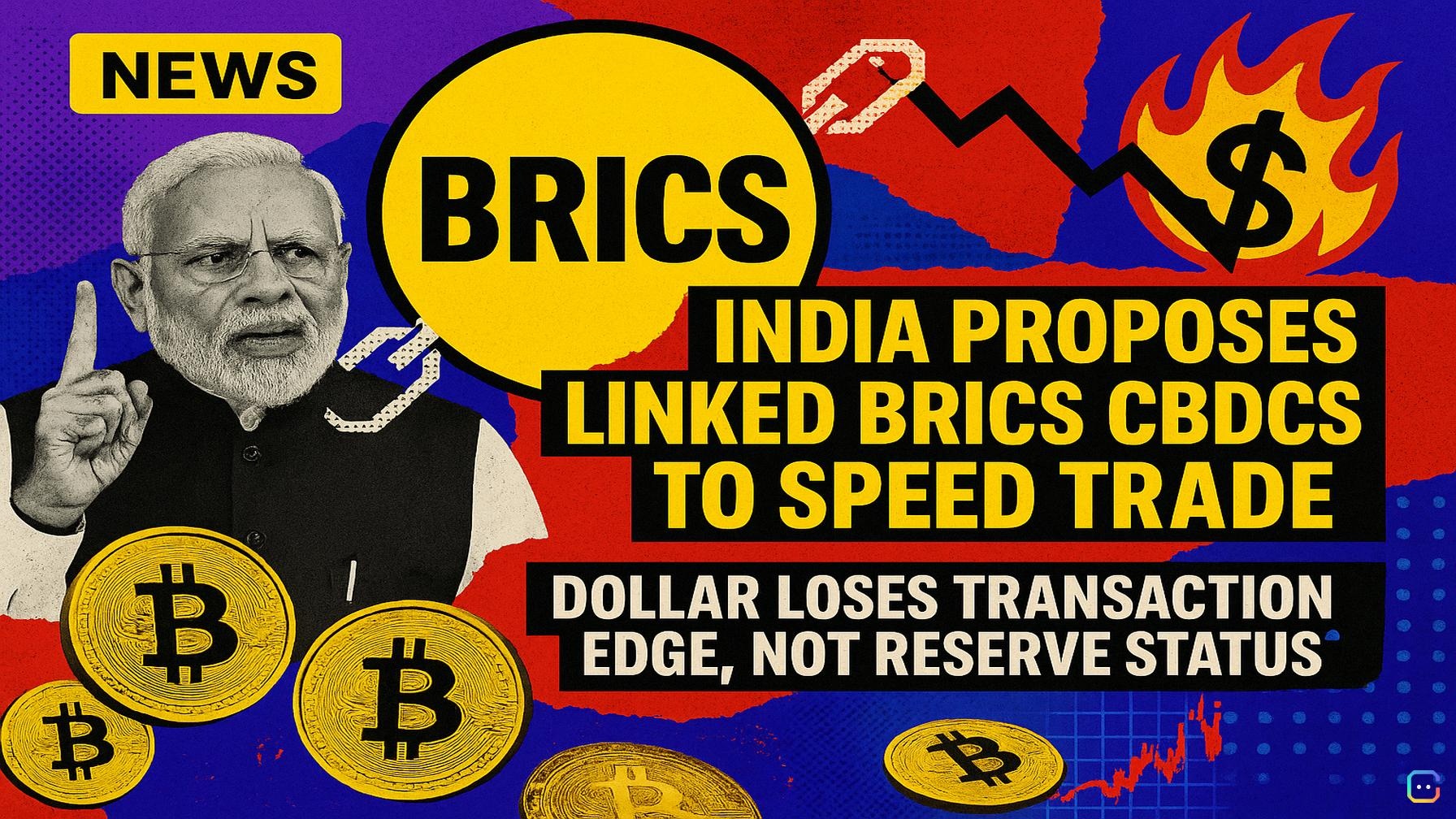
The Reserve Bank of India has proposed linking BRICS central bank digital currencies (CBDCs) to facilitate trade—an idea that gained renewed attention this week. With India set to host the 2026 BRICS summit in New Delhi, the Modi government appears committed to advancing the plan and could push it onto the summit agenda next year.
What this could mean for the dollar
- The US dollar is unlikely to collapse if BRICS members start settling trade in linked CBDCs.
- However, the dollar’s role would likely shift: it may lose some transactional dominance in cross-border payments while retaining its status as the world’s primary reserve currency and a safe haven for investors.
Potential benefits for BRICS trade
- Using CBDCs directly could speed up settlements and reduce currency conversion costs.
- The expanded BRICS bloc (reported as a 10-member group) could save significant sums by bypassing the traditional dollar-clearing mechanism.
- That, in turn, could encourage pricing and settlement of commodities—oil, gas and others—in BRICS CBDCs rather than dollars.
Why the dollar won’t disappear
- Foreign exchange reserves are unlikely to see dramatic shifts because trust in the dollar remains strong.
- The greenback benefits from deep liquidity and an established global financial infrastructure that makes it easier to buy, sell and hedge large positions.
Limitations and risks for BRICS CBDCs
- A CBDC’s effectiveness depends heavily on the underlying financial system and liquidity of its currency.
- Compared with the dollar, CBDCs tied to less-liquid national currencies could be harder to liquidate quickly and may offer limited hedging options.
- Trust issues—especially around currencies like the ruble, yuan and rupee in certain markets—could deter third parties from holding large balances in BRICS CBDCs.
Bottom line
Linking BRICS CBDCs for trade could deliver faster, cheaper cross-border settlements and reduce reliance on the dollar for transactional flows, particularly for intra-bloc commodity trade. But structural constraints—liquidity, hedging, and international trust—make it unlikely that the dollar will lose its dominant reserve role in the near term. The proposal marks a meaningful step toward payments diversification, but its real-world impact will depend on implementation, market confidence, and broader financial infrastructure.
Read more AI-generated news on: undefined/news