When Canadian Prime Minister Mark Carney told a Davos crowd in early 2026 that the “rules-based liberal international order” had become a farce — selectively applied against weaker states — Western elites applauded. Scholarship at the same time pointed out the irony: as Marta Fernández and Maria Elena Rodriguez have observed, those critiques have long been voiced across the Global South and largely ignored. BRICS expansion is where those long-standing critiques have finally been turned into coordinated political and financial action.
What BRICS looks like now
- The bloc now accounts for more than 35% of global GDP and roughly 45% of the world’s population.
- Twenty-three countries have active membership applications.
- 2026’s expansion represents a pivot from rhetoric to concrete financial infrastructure — not just a geopolitical talking point.
Why this matters for money and markets
The most consequential strand of BRICS growth is de‑dollarization. Several developments signal a real shift in how member states settle trade and finance:
- Russia and China now settle about 90% of their bilateral trade in rubles and yuan.
- The mBridge platform — a cross‑border settlement project linking central banks in China, Hong Kong, UAE and Thailand — operates outside SWIFT.
- The New Development Bank has shifted roughly a third of its loan book into local currencies.
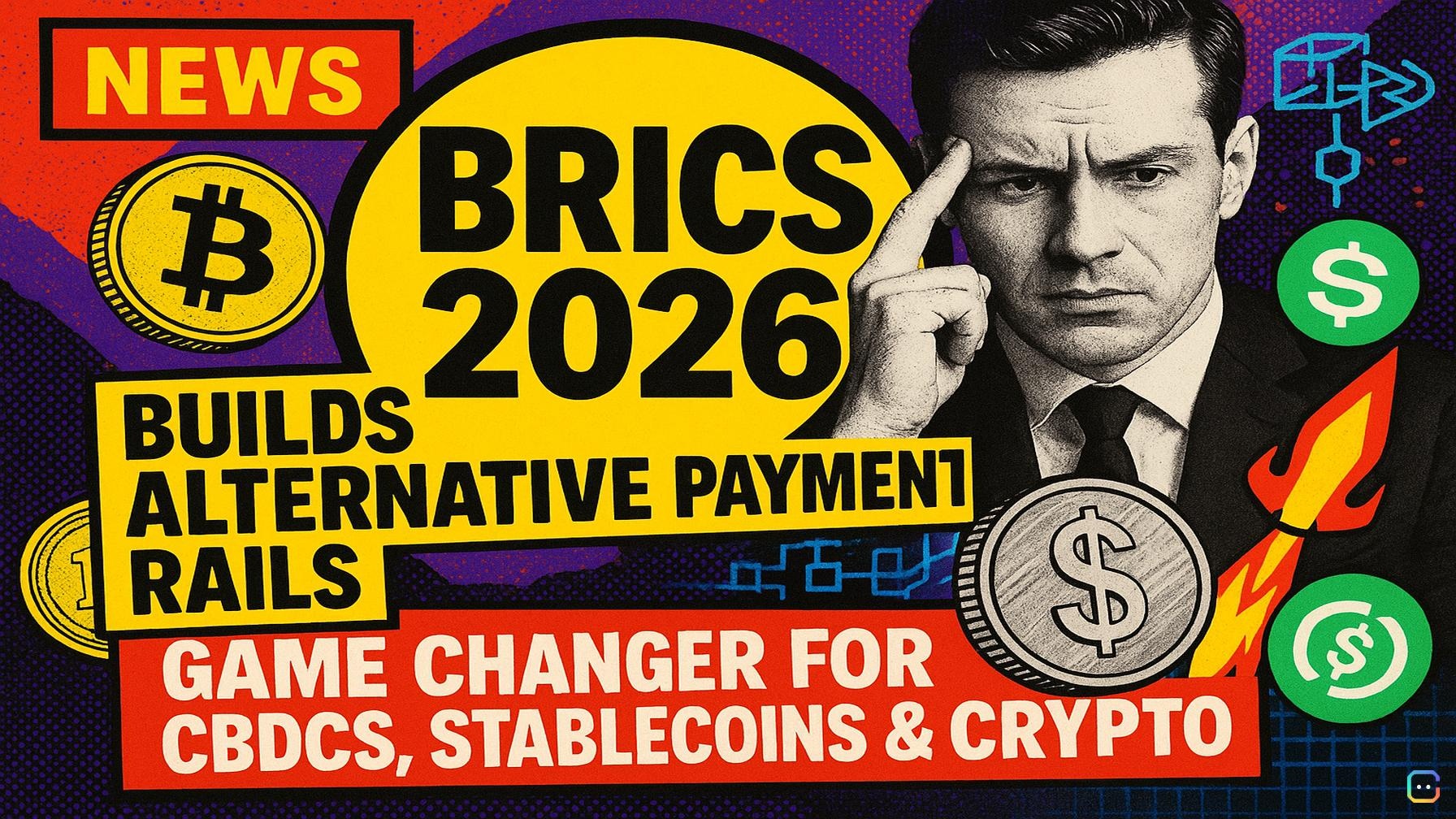
Taken together, these moves build alternative payment rails and reserve strategies that are meaningful for global liquidity, cross‑border settlement, and the future of reserve asset hierarchies.
Political reactions and internal divides
The push away from the dollar has drawn sharp, public comment:
- Vladimir Putin framed it pragmatically: “We are not refusing, not fighting the dollar, but if they don’t let us work with it, what can we do? We then have to look for other alternatives, which is happening.”
- Donald Trump bluntly told his cabinet in July 2025: “BRICS was set up to hurt us, BRICS was set up to degenerate our dollar and take our dollar off as the standard.”
Not all BRICS members see de‑dollarization as an urgent goal. India’s external affairs minister S. Jaishankar has been cautious: “I do not believe we have any policy to have a replacement to the dollar. Global economic stability is pegged on the dollar as the reserve currency, and currently, the last thing we want in our world is less economic stability.” That internal heterogeneity makes the bloc harder to dismiss: BRICS doesn’t need unanimous agreement to make strategic moves — it only needs momentum in key areas.
A different model of institution-building
Western analysts long measured BRICS against institutions like the EU and found it wanting — limited institutional density, no common governance model, no binding obligations. But those absences are, in many ways, intentional. As the article argues, BRICS architecture is designed to resist external interference and to enable issue‑by‑issue coordination. The bloc operates at whatever level of agreement members can accept, then proceeds — a flexible, multi‑alignment approach that the Global South has refined over decades.
An ironic catch-up
Some of the strategies now favored in Western policy circles — flexible coalitions, issue‑based partnerships, and non‑binding value alignment — are essentially the playbook the Global South has long used. As the article notes, the West is now adopting similar tactics, albeit without acknowledging their origins. BRICS, meanwhile, has survived repeated forecasts of imminent collapse and continues to grow.
What crypto and digital-asset watchers should watch
For crypto and digital finance platforms, the story is simple: BRICS expansion is becoming a financial infrastructure story, not just geopolitics. Alternative rails like mBridge, increased local‑currency lending, and shifting settlement practices can redistribute demand for FX reserves, settlement systems, and cross‑border rails — areas where CBDCs, tokenized assets, and stablecoins could play roles. Keep an eye on:
- CBDC and cross‑border settlement projects tied to BRICS members,
- Local‑currency finance flows via institutions like the New Development Bank,
- How reduced reliance on SWIFT‑based settlement might open space for alternative rails and digital solutions.
Bottom line: BRICS’ 2026 expansion marks a turning point from critique to concrete infrastructure-building. That evolution has implications for currency dominance, cross‑border payment rails, and the digital‑asset ecosystem — and it’s something global markets and crypto participants should be watching closely.
Read more AI-generated news on: undefined/news