Headline: South Korean Police Uncover Crypto‑Paid “Revenge‑for‑Hire” Ring — Harassment Jobs Sold on Telegram, Paid in Crypto
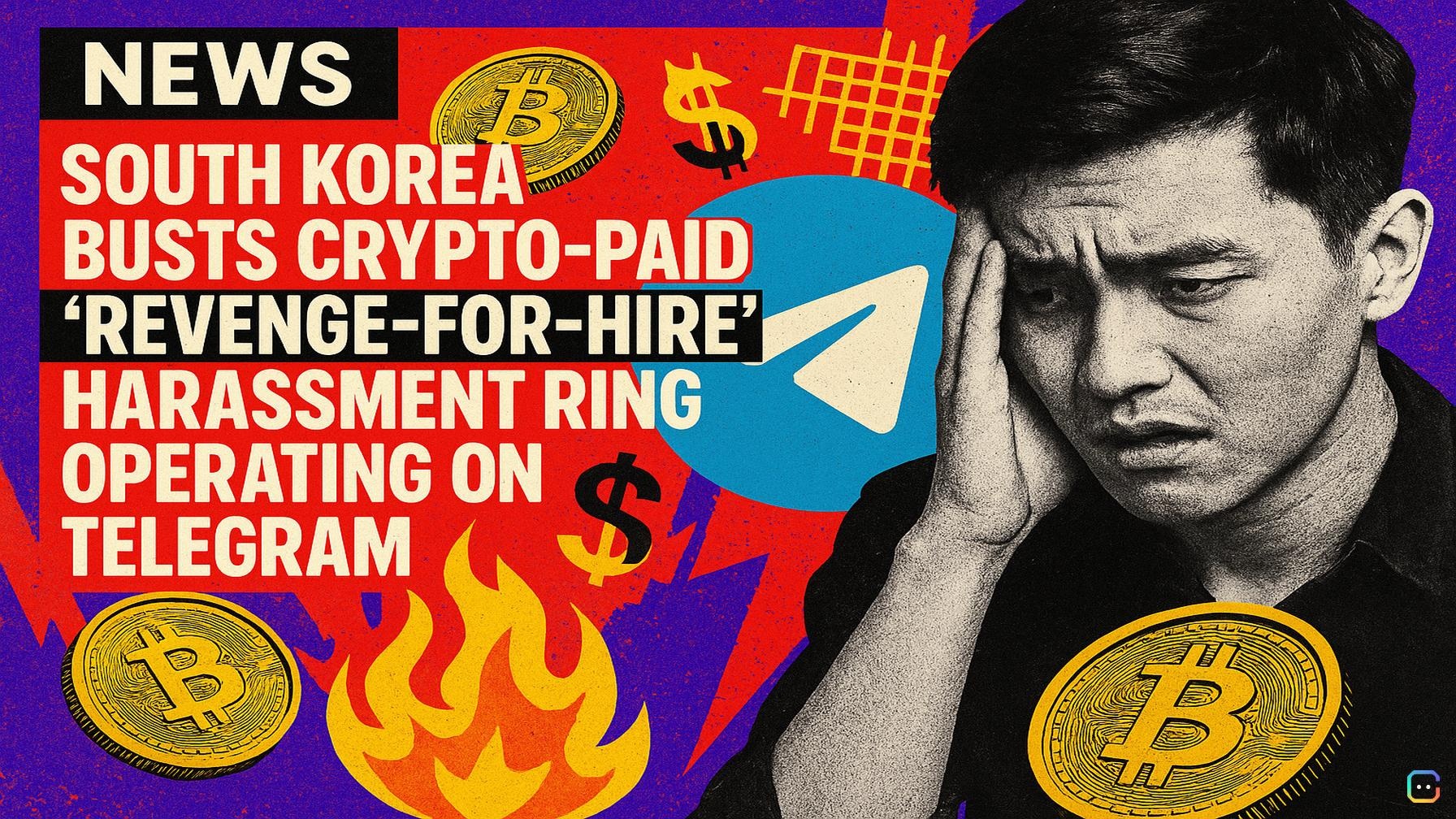
Lead: South Korean police say they’ve dismantled an organized “revenge‑for‑hire” network that offered personalized harassment services for cryptocurrency payments. The attacks — ranging from defamatory leaflets to smearing human waste on apartment doors — were commissioned through private Telegram channels and advertised on X, according to multiple Korean outlets.
What police found
- Gyeonggi Southern Provincial Police Agency has linked at least six similar incidents across Hwaseong, Uiwang, Gunpo, Pyeongtaek and Paju. None have been reported inside Seoul, the police said.
- Services were marketed via disappearing‑message Telegram groups and social posts on X with copy such as: “We will take care of even your most unspeakable problems…from bank‑account blackmail and infidelity to school bullying offenders and scam victims.”
- Price points reported: roughly $325 in crypto to distribute defamatory flyers (e.g., falsely branding men as child sex offenders or women as prostitutes); up to about $1,300 for more extreme harassment — smearing human waste, gluing locks, aggressive graffiti.
Arrests and methods
- In February, police arrested two men in their 20s, who confessed to entering multi‑unit dwellings, scattering food waste and feces on apartment doors, spray‑painting walls and posting threatening flyers after being paid 600,000–800,000 won in cryptocurrency by an anonymous “boss” they met on Telegram (Dong-A Ilbo).
- In January, investigators arrested a four‑person crew, including a ringleader in his 30s. That group allegedly recruited an employee in his 40s at a Baedal Minjok outsourcing firm under the guise of consulting; he reportedly accessed personal data for more than 1,000 people and passed it to the ring for use in attacks.
- Members allegedly did not know real identities of others in the chain. Handlers provided targets’ addresses, common building codes and step‑by‑step instructions. Attacks were typically carried out at dawn, with perpetrators masking faces and avoiding CCTV, then sending “proof” photos back to organizers.
What reporters uncovered
- Journalists Kim Jeong‑jae and Han Chan‑woo contacted operators who described the offered tactics: fabricating criminal allegations, cutting off financial access, wrecking reputations, staging accidents that could cause bodily harm — with claims they could push false cases far enough to secure fines or prison terms.
- Reporter Kim Kang‑woo (Kiho Ilbo) detailed recruitment methods: attackers lured with “high‑paying part‑time jobs,” received logistical details from handlers, and executed attacks to minimize traces.
Crypto context and wider implications
- South Korea is not alone in facing crypto‑linked criminality. High‑profile cases such as the Silk Road marketplace and state‑linked groups laundering stolen funds through cryptocurrency networks are commonly cited as precedents.
- While the dollar amounts involved in these revenge jobs are relatively small, investigators and politicians say the incidents reinforce calls for tougher controls on self‑custody wallets, mixers and privacy tools. Every high‑profile example of crypto funding illicit activity can strengthen arguments for stricter travel‑rule enforcement, enhanced exchange surveillance and heavier penalties for non‑compliant platforms.
- For market participants, this is a regulatory and sentiment signal: increased scrutiny and potential policy tightening can affect liquidity, on‑ramps and volatility even if the direct economic scale of these crimes is limited.
What’s next
- Police continue to hunt for the anonymous masterminds and brokers who organized the Telegram channels and accepted crypto payments. The case is likely to feature in ongoing domestic debates over balancing privacy, self‑custody and law enforcement access in crypto.
(Image: Perplexity; BTCUSD chart: TradingView)
Read more AI-generated news on: undefined/news