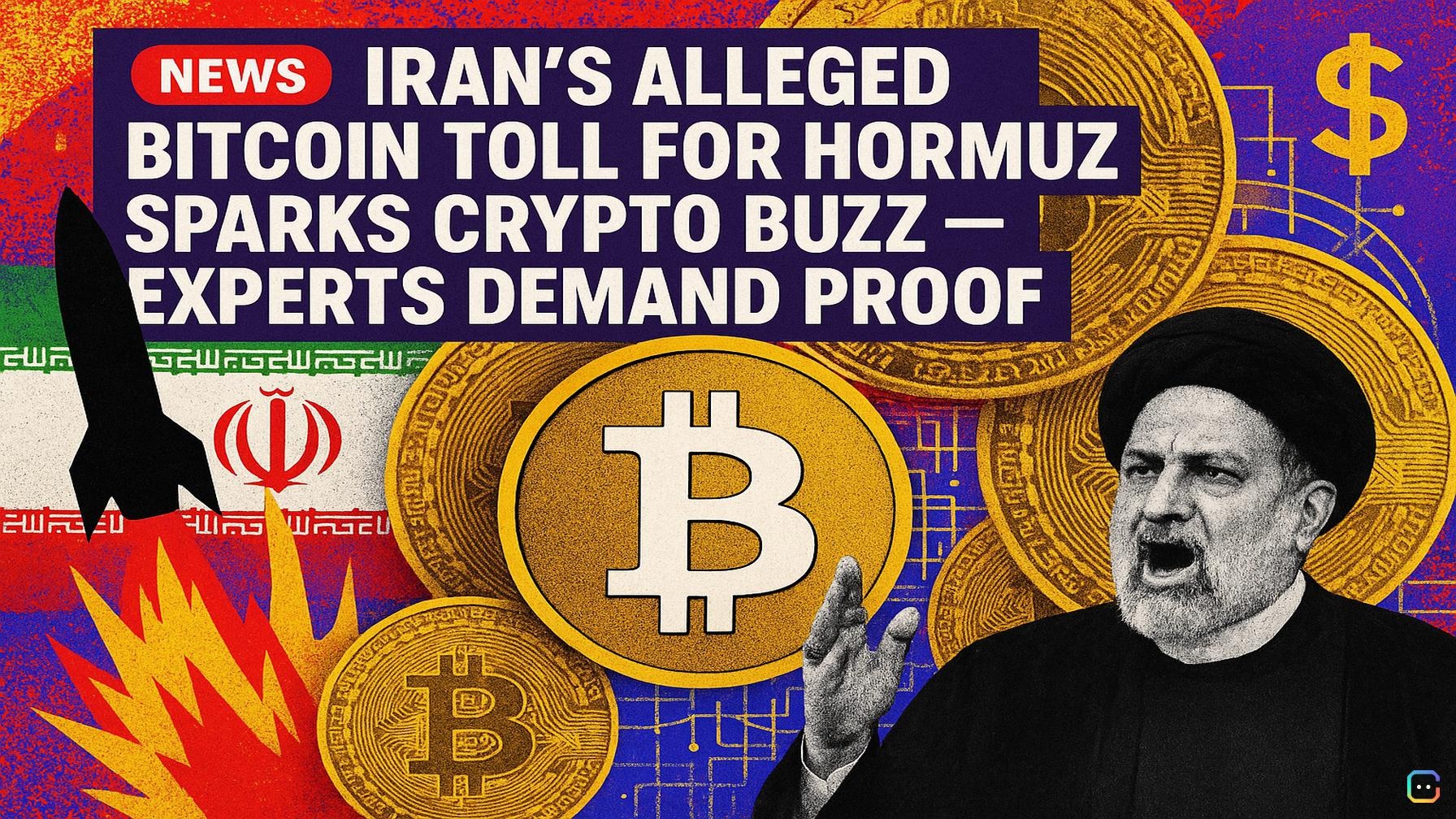
Is Iran really taking Hormuz tolls in Bitcoin? The short answer: maybe — but experts say it’s far from proven.
What sparked the frenzy
The Financial Times reported this week that Iran plans to demand payment in cryptocurrency — including Bitcoin — for safe passage through the Strait of Hormuz, the strategic chokepoint that handles roughly 20% of global oil flows. Negotiations were said to start at about $1 per barrel. The story immediately energized parts of the crypto community, with proponents pointing to Bitcoin’s censorship-resistant properties and cheering what would be a high-profile, real-world use case.
Early enthusiasm
Prominent Bitcoin advocates reacted quickly. Strike founder Jack Mallers hailed the move on X as vindication of Bitcoin’s censorship resistance. Open-source mapping projects already label the Iranian port city Bandar Abbas as Bitcoin-friendly, and community comments ranged from amused to optimistic about “sailing again” with BTC payments.
Why experts are skeptical
Blockchain-intelligence specialists urge caution. Ari Redbord, global head of policy and government affairs at TRM Labs, told Decrypt he’s skeptical that meaningful volumes of Bitcoin are being used to pay transit tolls through the Strait of Hormuz. “We don’t have data at this point indicating that crypto is being used at scale for something like transit tolls,” he said, suggesting the publicity may reflect signaling or openness to using crypto rails rather than confirmed, widespread payments.
Context matters: sanctions and crypto
The debate sits against a broader pattern of sanctioned states using crypto to move value. Last year Elliptic reported Russia had used around $8 billion in crypto in sanctions-evasion and influence campaigns, and Chainalysis documented that illicit addresses collectively received about $154 billion, noting increased crypto activity from Iran, Russia, North Korea and others. That history makes the possibility plausible — but not proof.
Possible miscommunication
Some observers point out the original source could be overstating official backing. Decrypt noted that the FT cited Hamid Hosseini, a spokesperson for Iran’s Oil, Gas and Petrochemical Products Exporters’ Union — an industry body that works with the government — rather than a formal government announcement. Bitcoin advocate Udi Wertheimer suggested the story might be a “game of telephone,” with confusion between Bitcoin and other digital assets like stablecoins.
What we do know about payments now
Bloomberg has separately reported that some oil tankers have been using Chinese yuan and crypto stablecoins to pay for naval escort services through the waterway. But even with reported payments, maritime traffic through the Strait remains well below pre-conflict levels: maritime historian Sal Mercogliano said recent upticks are “minor” and far from a return to normal.
Market sentiment and next steps
Prediction markets briefly priced in a strong chance of increased transit activity later in the month, underscoring how rapidly traders and observers are trying to read on-the-ground signals. For the crypto world, a confirmed, sustained pattern of Bitcoin toll payments would be a significant test of BTC’s utility as a censorship-resistant payment rail — and would raise fresh questions about enforcement, traceability and sanctions policy. For now, analysts say we should watch for on-chain evidence or an official Iranian government statement before declaring a new chapter in state-level crypto adoption.
Read more AI-generated news on: undefined/news