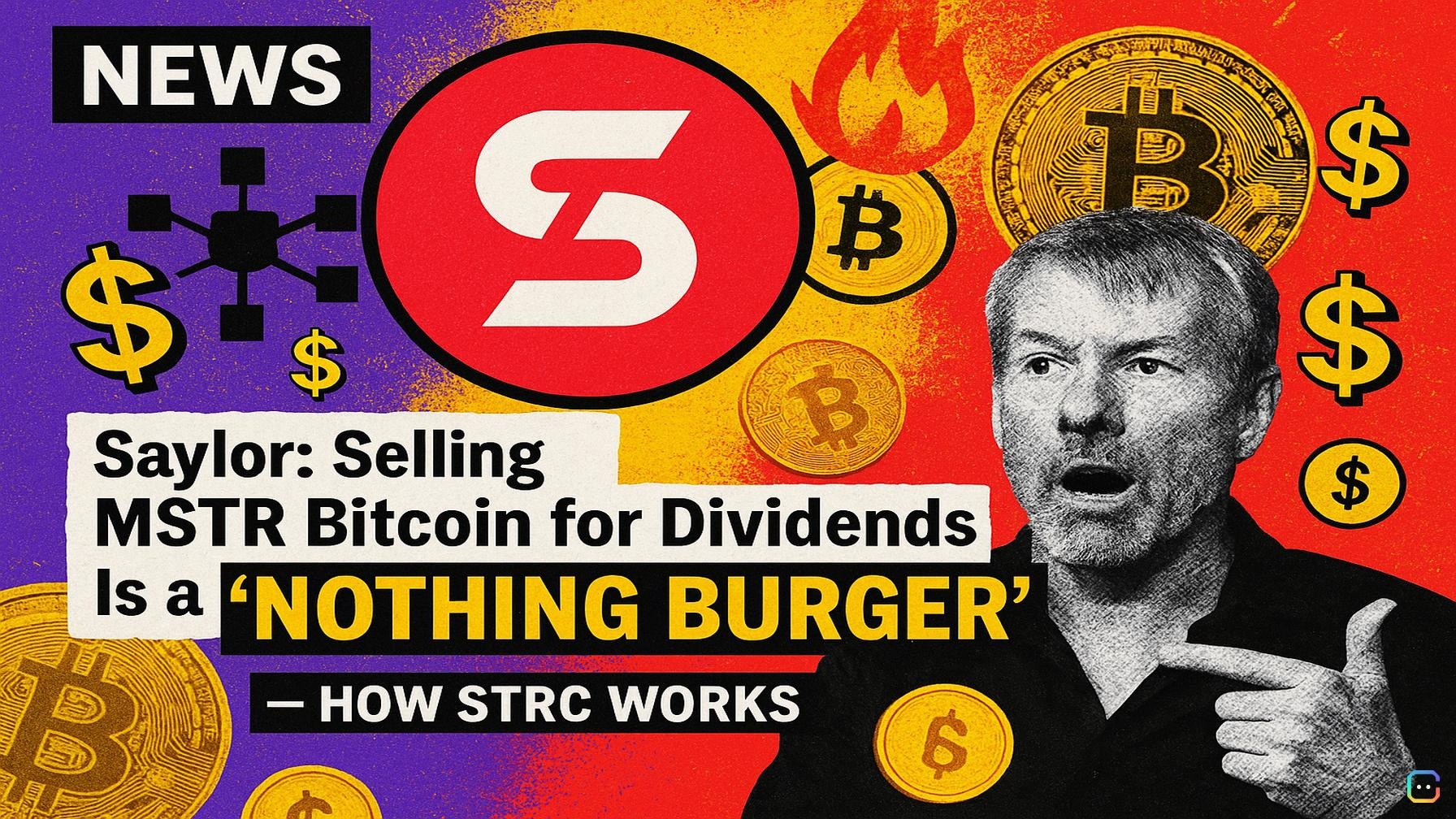
When Strategy (MSTR) hinted during its earnings call that it might sell some of its bitcoin to help fund dividend obligations, investors and crypto observers sounded alarms. At Consensus in Miami, Strategy’s executive chairman Michael Saylor told CoinDesk senior analyst James Van Straten the move is largely “inconsequential” — “a big nothing burger” — and walked through how the company thinks about trading, dividends, and its breakout product, Stretch (STRC). This interview has been edited for brevity and clarity. It’s the first installment in a series on CoinDesk’s conversation with Saylor.
Why the dividend-sell announcement didn’t change much
Saylor argued that selling bitcoin to fund dividends would have almost no economic or market impact. He says that if Strategy funded all dividends by selling bitcoin over the next year, the company would buy roughly 20 bitcoin for every one it sold — “so it’s no different than buying 20 bitcoin and selling no bitcoin.” From a market-liquidity perspective, he noted, bitcoin today has between $20 billion and $50 billion of liquidity; using bitcoin to fund dividends would amount to “maybe $3 million” of activity, which he called “immeasurable” and “really inconsequential.”
How Strategy decides between buying bitcoin, retiring debt, or buying back stock
Saylor says Strategy evaluates opportunities using two core metrics:
- BTC yield: Does the move benefit common equity shareholders (accretive), leave them neutral, or dilute them (negative yield)?
- Credit impact: What does the move do to the balance sheet and the company’s risk profile?
He explained that trades are prioritized by how many additional bitcoin they create per share — for example, a trade that produces 10x more bitcoin per share would take precedence. Trades that are equity-positive but credit-negative can be acceptable if the company’s credit position is strong; if credit is weak, they’ll avoid such moves. Decisions are made dynamically — week to week, day to day — and Strategy won’t telegraph specific timing.
Tax credits, convertible mispricing and optionality
Saylor reiterated that Strategy has options on the table: capturing up to $2.2 billion in tax credits, exploiting perceived mispricing in its convertible bonds, or acquiring bitcoin via various trades. The value of those opportunities changes constantly, so the company evaluates them in real time and balances equity upside against credit implications.
Responding to critics: “we pick the top” of both markets — deliberately
Critics on X have accused Strategy of always buying at the weekly bitcoin high. Saylor called that criticism “ignorant” and explained the mechanics: when Strategy uses equity swaps to acquire bitcoin, it tends to do so during periods when the company’s stock rallies and an equity premium expands. Essentially, they swap MSTR shares for bitcoin when the equity market is strong, sometimes raising large amounts of swap funding in brief windows — he gave an example of raising roughly $250 million in swaps during three hours of market rally in a week. That timing makes these swaps more profitable because the equity premium is higher; buying at the “top” of bitcoin often coincides with the “top” of Strategy’s equity market, producing what Saylor described as outsized returns for shareholders with limited additional risk.
What Stretch (STRC) actually is
Saylor positioned Stretch as a robust, perpetual preferred instrument built to attract institutional liquidity. Key features:
- It’s a perpetual preferred that never matures — there is no redemption, liquidation, or put right.
- Stretch obligates Strategy to pay SOFR plus a credit spread indefinitely, while investors provide capital “forever.”
- Liquidity is supplied by market participants (hedge funds and market-makers), which allows rapid trading without Strategy having to absorb large short-term cash flows.
Addressing recent STRC market behavior
STRC has traded slightly below par and has taken longer to chew through selling pressure after dividend dates. Saylor pointed to rapid issuance and growth as the cause: Strategy sold about $3.2 billion of STRC in a matter of weeks against a prior base of roughly $5 billion — a dramatic expansion that needed time for the market to absorb. Some holders may have bought temporarily to capture a dividend and then sold back, he said, but recent volatility has narrowed: STRC has been oscillating within a few cents of the $100 reference, which Saylor described as “comfortable.” He used an airplane-wing metaphor — the instrument is designed to flex under stress rather than snap.
Disclosure
The author of the original story owns shares of Strategy (MSTR).
Read more: This interview is the first part of a CoinDesk series. A subsequent piece examines Saylor’s latest tax strategy, which echoes Strategy’s 2022 bitcoin sale.
Read more AI-generated news on: undefined/news