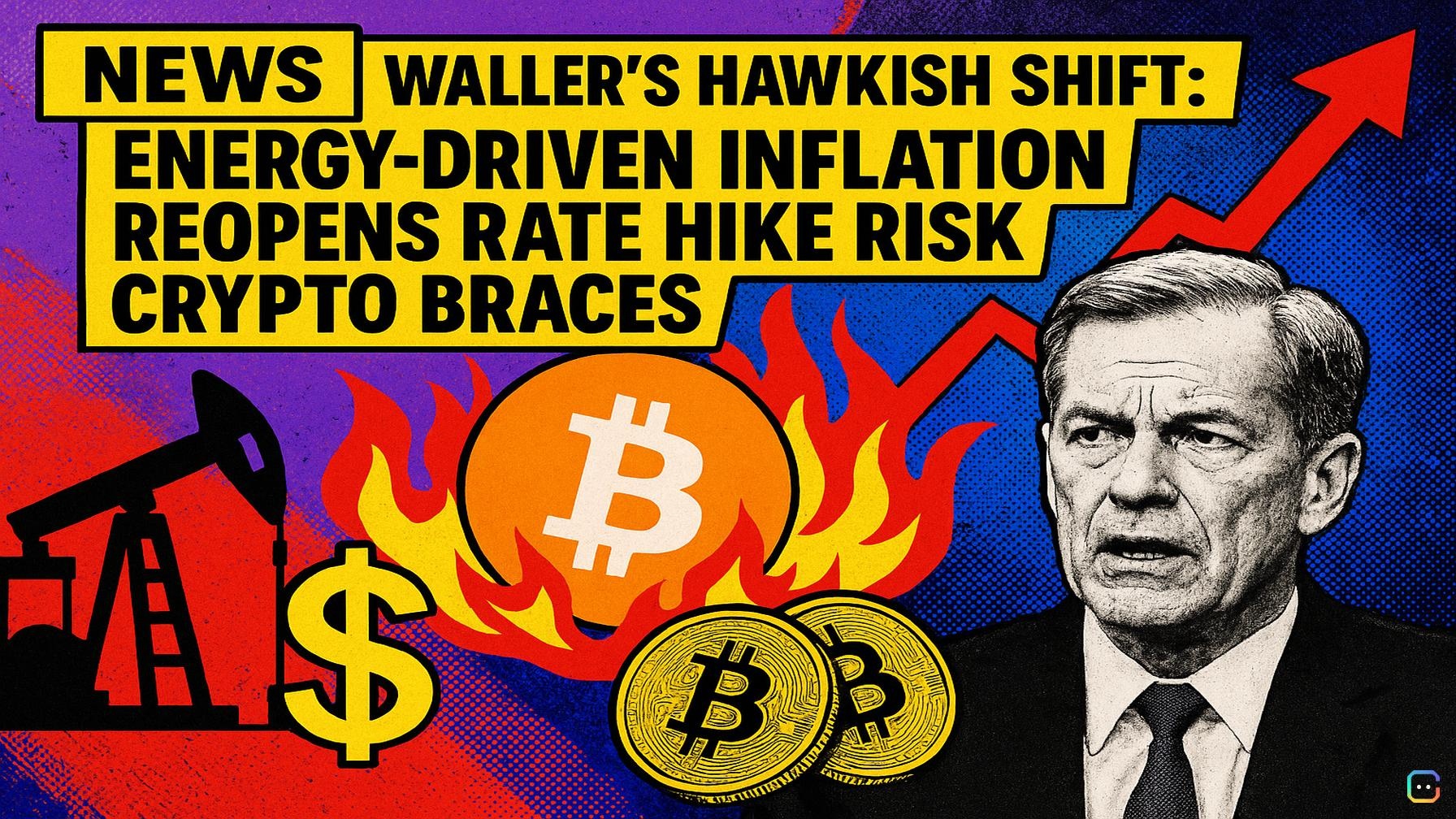
Federal Reserve Governor Christopher Waller signaled a hawkish shift this week, warning that stubborn inflation and a surge in energy costs — driven in part by Middle East tensions — have pushed the Fed back toward the possibility of more rate hikes. His comments jolted markets that had been leaning toward rate cuts and sent fresh ripples through crypto markets that have been riding every twist in the macro story.
What Waller said and why it matters
- Waller warned “inflation is not headed in the right direction,” pointing to April’s 3.8% year‑on‑year CPI and a 17.9% jump in energy prices. He tied rising fuel costs to conflicts in the Middle East that have pushed oil above $100 a barrel and increased transport and production costs across the economy.
- On the Fed’s preferred inflation gauge, core PCE, Waller noted inflation has climbed to 3.3% — the highest in more than two years — even as unemployment sits near 4.3% and real GDP growth is around 2%.
- Given these moves, he said he would support removing the Fed’s “easing bias” language from policy statements so that a rate cut is “no more likely in the future than a rate increase.” He stopped short of calling for an immediate hike, saying he does not think hikes should be considered in the very near term, but made clear they are back on the table if inflation proves persistent.
Market takeaways
- Wall Street interpreters described the speech as hawkish and argue markets may still be underpricing the risk that higher energy costs remain persistent. That repricing pushes up real yields and strengthens the dollar — conditions that typically weigh on risk assets.
- For crypto, this is especially consequential. Bitcoin and other digital assets have been trading largely on expectations around the Fed’s path: “higher for longer” yields and a stronger dollar tend to pressure crypto, while expectations of rate cuts and geopolitical calm have fuelled rallies.
Why crypto traders should care
- Earlier this spring, Bitcoin surged back above $70,000 amid hopes for policy easing and a temporary de‑escalation in Middle East tensions. Since then every headline tied to US‑Iran tensions, the Strait of Hormuz and oil market tightness has fed directly into bets on inflation, interest rates and risk appetite — and crypto has followed.
- If markets accept Waller’s view and lean toward another hike, higher real yields and a firmer dollar are likely to create downward pressure on both gold and crypto. Conversely, persistent inflation reinforces the narrative of Bitcoin as a hedge against policy slippage, a theme that helped drive BTC strength when ceasefire hopes briefly eased risk premia.
- The immediate outlook is for greater volatility: macro desks will reprice the Fed curve into year‑end, and algorithmic/derivative flows tend to amplify intraday swings in spot Bitcoin, leveraged crypto products and correlated tokens whenever Fed officials pivot.
Bottom line
Waller’s comments moved the needle away from dovish expectations and reminded markets that the Fed’s toolkit still includes rate hikes if inflation doesn’t cool. For crypto investors, that means a period of heightened sensitivity to macro data, energy headlines and Fed speak — a mix that can produce sharp rallies and equally sharp drops as traders price in a less certain path for rates.
Read more AI-generated news on: undefined/news