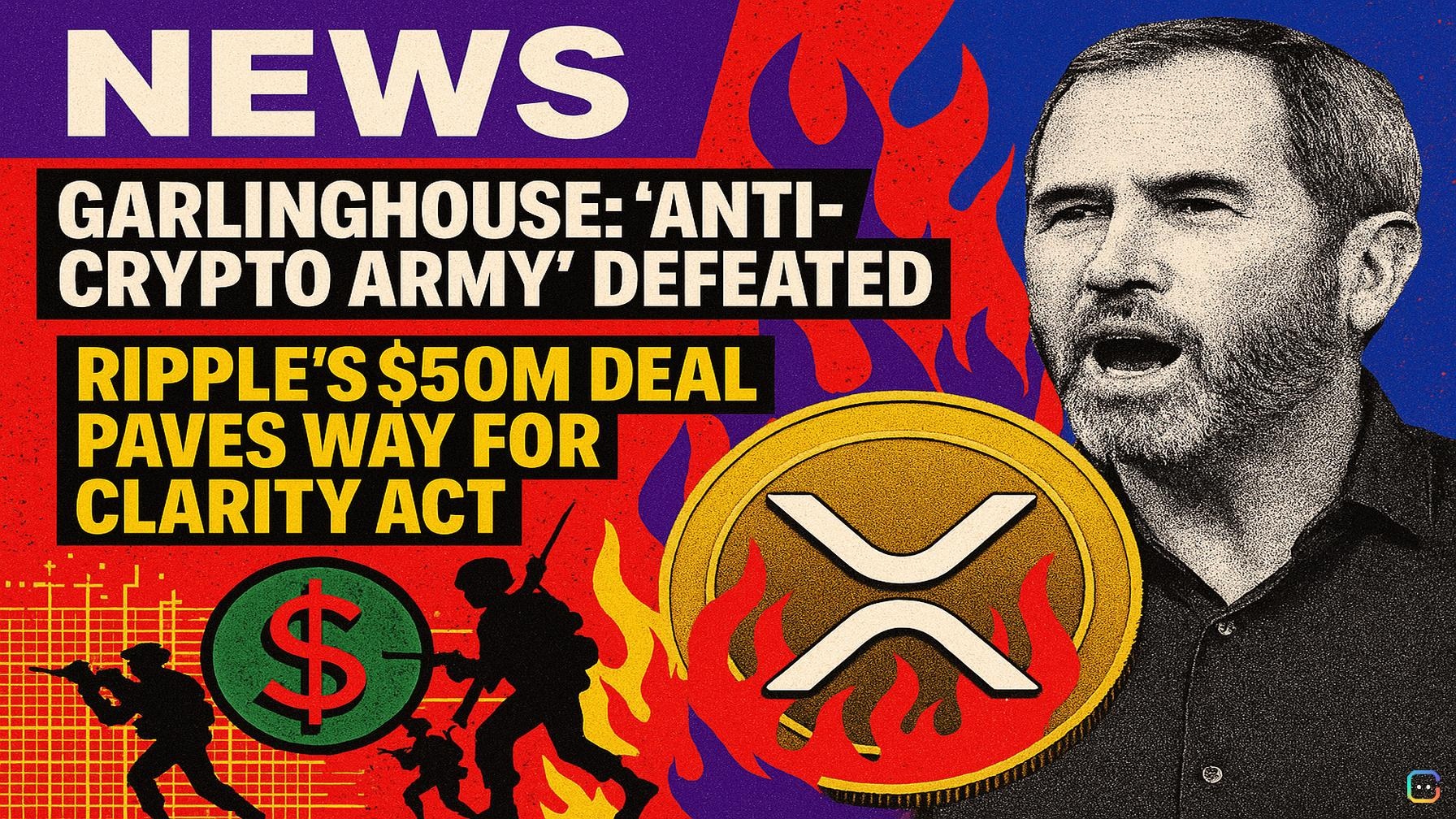
Ripple CEO Brad Garlinghouse on Monday took a victory lap, saying the so‑called “anti‑crypto army” has been beaten back “by the courts… by the voters. And by Trump.” His message captures how closely woven legal rulings, politics and market moves have become for crypto — and why industry leaders see the last year as a turning point.
The immediate spark for Garlinghouse’s declaration was the end of a more than four‑year fight with the U.S. Securities and Exchange Commission. The SEC agreed to drop its appeal in the long‑running XRP case after Ripple agreed to pay a $50 million civil penalty (down from an earlier $125 million figure) and the agency moved to lift an “obey the law” injunction that had hung over the company. Garlinghouse called the settlement a “historic victory—for Ripple, our employees and customers, and for the entire crypto industry,” pointing back to Judge Analisa Torres’s 2023 finding that XRP “in and of itself was not a security,” which undercut the SEC’s central theory.
That legal reversal came against the backdrop of a major political shift. After Donald Trump’s 2024 election win, crypto‑friendly super PACs and donors claimed they helped flip key swing states, and industry advocates began promoting the idea of a powerful “crypto voter” bloc that punished candidates aligned with Senator Elizabeth Warren’s so‑called “anti‑crypto army.” Garlinghouse has leaned into that narrative, publicly thanking Trump as XRP rallied; crypto news outlets linked the token’s strong performance in late 2024 and early 2025 to both the election outcome and Ripple’s settlement.
But the industry’s next battleground is legislative, not just a single court ruling or Oval Office photo. Republicans including Senator Bernie Moreno are pushing structural crypto bills, and the White House has reportedly put new pressure on Congress to advance the Digital Asset Market Clarity Act — commonly called the CLARITY Act — on an accelerated timeline. One widely circulated briefing suggested an informal March 1, 2026 deadline to line up votes, with Treasury Secretary Scott Bessent — according to the briefing — arguing that clear federal rules are “exactly what we need” to steady markets and unlock institutional capital.
Closed‑door meetings between regulators and firms like Ripple and Coinbase have left Garlinghouse publicly estimating a 90% chance the CLARITY Act could pass by April, which would codify much of the court‑driven progress and set clearer rules for how assets such as XRP are treated under U.S. securities law.
For XRP holders and other crypto believers, Garlinghouse’s message is both vindication and a call to arms: courts and voters delivered important wins, but the future hinges on Congress turning those wins into durable law. Whether the administration translates political momentum into a coherent regulatory framework — rather than slogans — remains an open question. For now, Garlinghouse is already framing the story as an industry comeback, riding a rare alignment of courtroom wins, electoral shifts and a potential new legal framework.
Read more AI-generated news on: undefined/news