Ripple’s push for full banking status is fast becoming the dominant storyline in the XRP ecosystem — and for good reason. A combination of regulatory progress, a large XRP treasury and growing institutional infrastructure has fired up speculation that XRP could reach price levels it has never seen. Some bullish voices have even set targets as high as $25 per coin. Here’s what’s actually happening and what it could mean.
What happened: a conditional national bank charter
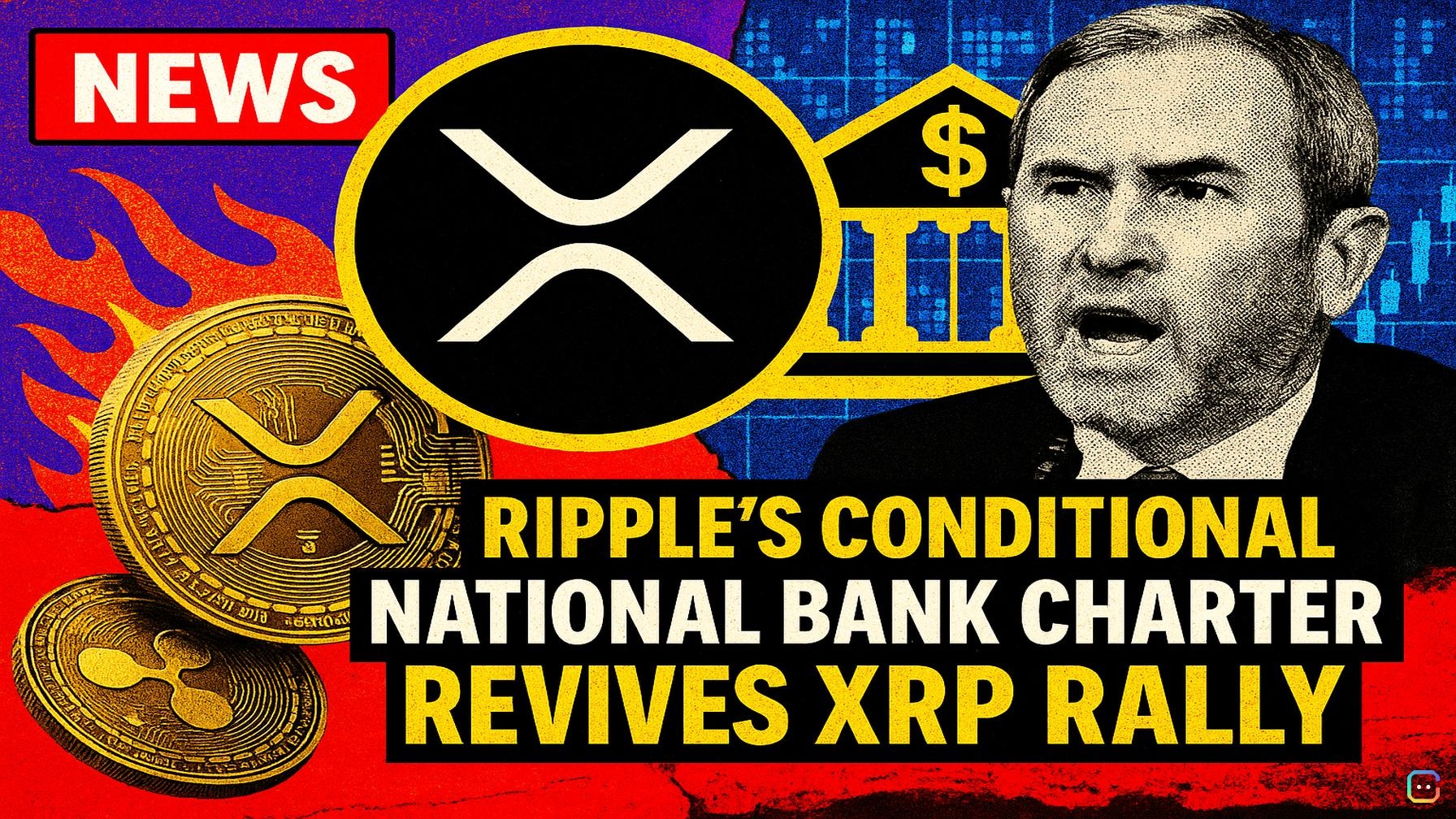
In December 2025 the Office of the Comptroller of the Currency (OCC) gave Ripple conditional approval to form a national bank charter — an unprecedented step for a crypto-native company. The charter is intended to clear the way for Ripple National Trust Bank, which Ripple says will custody and manage reserves for its RLUSD stablecoin. That conditional approval alone is a meaningful regulatory milestone, but it is not the whole story.
The Fed master account: the missing piece
Ripple has also applied for a Federal Reserve master account. If approved, that account would allow Ripple National Trust Bank to plug directly into FedWire and FedNow and to hold dollar reserves at the Federal Reserve — effectively placing Ripple inside the U.S. payments system’s core plumbing. That additional access, if granted, is the feature many market participants see as a potential game-changer; it remains pending.
The balance sheet and the math behind big price targets
Ripple’s last widely reported private valuation was roughly $40 billion following a $500 million strategic investment round. The company also holds a substantial XRP position: estimates put Ripple’s total XRP ownership at about 42 billion coins. Of that total, roughly 4.5–6.4 billion XRP are held in company wallets and roughly 33 billion XRP are locked in cryptographic escrow.
To illustrate how holdings feed price speculation: if Ripple controls about 40 billion XRP and the token were trading at $3, those XRP would be worth roughly $120 billion on paper. A move to $25 would require much broader adoption beyond headline-driven momentum — at today’s circulating supply of about 61.9 billion XRP, $25 per coin would imply a market capitalization north of $1.5 trillion. Some social-media commentators, like the XRP account KingXRP, have extrapolated that such a price move could push Ripple’s balance sheet beyond $240 billion and place the company among the world’s largest banks — claims that capture enthusiasm but omit important context and caveats.
Infrastructure and real-world adoption
For XRP to sustain materially higher prices, regulatory progress would need to translate into real usage and integration. On that front, infrastructure is being built on the XRP Ledger. One concrete example: RealFi Payment Solutions recently announced a partnership with Shopify to develop an XRP Ledger-powered payments rewards application for global e-commerce — a sign that payments and merchant integrations are being explored.
Bottom line
The OCC’s conditional charter is an uncommon regulatory win for a crypto company and a logical catalyst for renewed interest in XRP. But it’s only one step. A Fed master account, broader adoption of XRP-based rails and meaningful on-ramps for fiat reserves would be necessary to turn regulatory progress into the sort of sustained demand that could support much higher prices. Enthusiastic price calls reflect that potential, but they should be weighed against the many operational, regulatory and market hurdles that remain.
Read more AI-generated news on: undefined/news