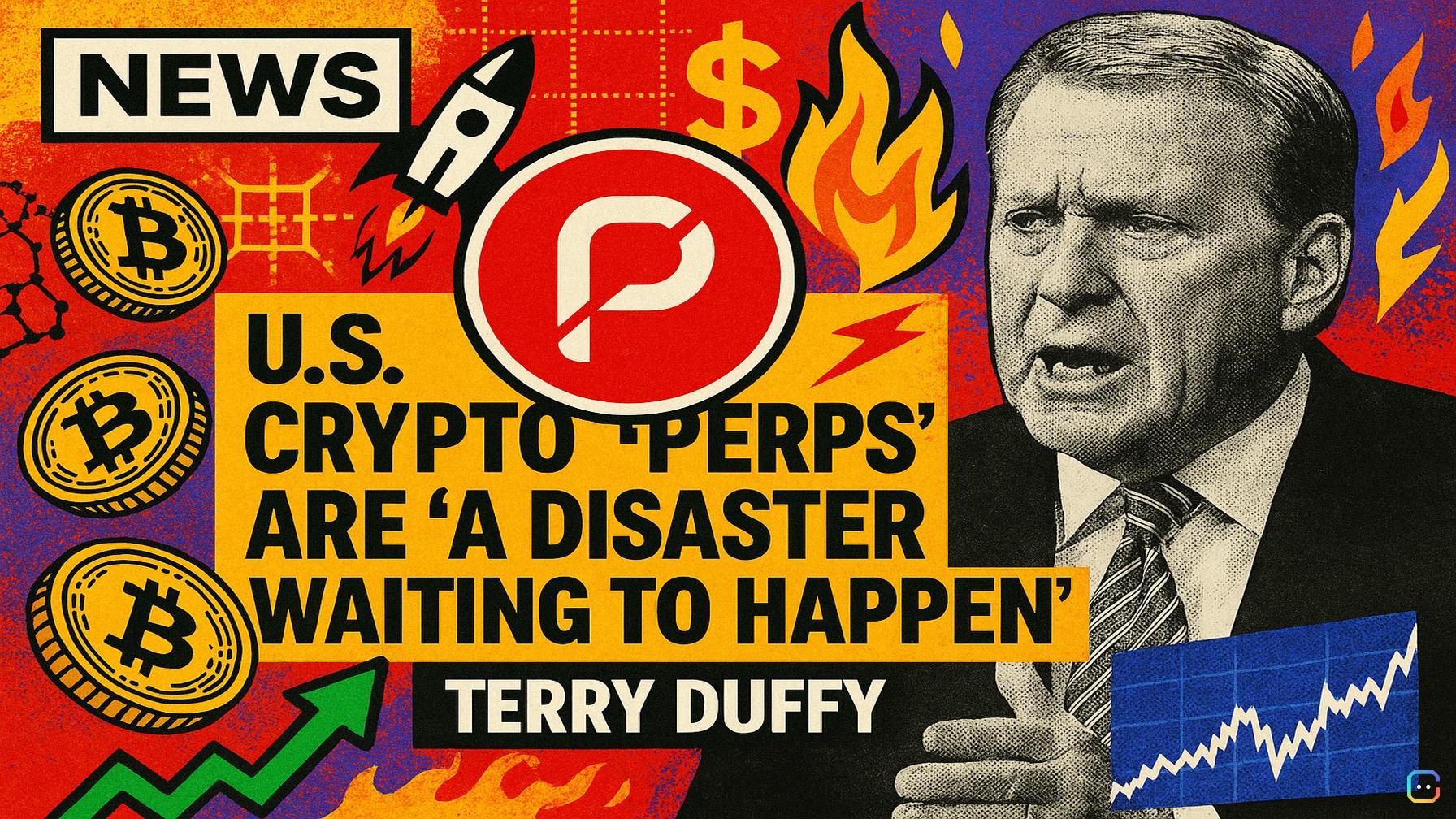
CME chief calls U.S. crypto “perps” a “disaster waiting to happen,” warns of system risks
CME Group CEO Terry Duffy fired a stark warning this week about the recent U.S. approval of regulated cryptocurrency perpetual futures, saying the products could pose major dangers to investors and the broader financial system. Speaking at Piper Sandler’s Global Exchange & Fintech conference on June 4, Duffy described the arrival of so‑called “perps” as “a disaster waiting to happen.”
Why perps worry incumbents
Perpetual futures differ from traditional futures because they have no expiration date, letting traders hold positions indefinitely. They also commonly offer high leverage—often up to 50x—paired with automatic liquidation mechanics and recurring funding‑rate payments that can quickly amplify losses for underinformed traders.
Duffy argued those features make perps especially risky for retail investors, who may underestimate funding costs and the potential for rapid, forced unwinds. He said the combination of leverage and automatic liquidations could create outsized losses and questioned whether the new instruments serve long‑term investor interests or simply encourage speculation at the expense of traditional market functions.
Regulatory shift and market moves
The concerns come amid one of the biggest regulatory changes to the U.S. crypto derivatives market in years. On May 29, the Commodity Futures Trading Commission approved the first regulated crypto perpetual futures for U.S. participants—opening a market that previously lived largely offshore.
Industry players moved fast. Prediction‑market operator Kalshi launched Bitcoin perpetual futures days after the approval and followed with Ether perpetual futures on June 4, 2026. A further slate of 11 crypto contracts, including Solana and Dogecoin, has been submitted for case‑by‑case CFTC review but is not yet live.
At roughly the same time, Coinbase Financial Markets received regulatory guidance enabling eligible U.S. institutional clients to access perpetual futures and options listed on Deribit—the derivatives exchange Coinbase acquired in 2025. Kraken has also announced plans to launch regulated Bitcoin perpetual futures via Bitnomial Exchange, acquired earlier this year by parent Payward.
Industry and market fallout
The rapid roll‑out has forced a rethink about the competitive landscape for exchanges. Shares of major traditional derivatives venues—including CME Group, Cboe Global Markets and Intercontinental Exchange—came under pressure this week as some investors fear regulated crypto perps could siphon trading activity away from legacy futures markets.
Duffy downplayed that threat to CME’s core business, saying 85–90% of the company’s trading volume comes from institutional participants and that analysts do not view perpetual futures as a meaningful replacement for the futures products used by professional traders. But he also criticized the CFTC for moving too quickly in approving what he called a “novel and complex” product, arguing regulators bypassed the kind of thorough review typically applied to leveraged derivatives.
What’s next
As exchanges race to establish market share in the newly opened U.S. perps market, Duffy urged greater scrutiny and caution—especially before versions of these high‑leverage products become widely accessible to retail traders. With more contracts pending approval and multiple operators already live or preparing launches, the debate over how to balance innovation and investor protection is likely to intensify.
Read more AI-generated news on: undefined/news