A fresh escalation between the U.S. and Iran sent crypto markets sliding this week, with Bitcoin tumbling as traders reacted to military developments in the Gulf.
What happened
- The immediate trigger was the downing of a U.S. Army Apache helicopter near the Strait of Hormuz. U.S. Central Command said American forces carried out “self-defense” strikes at 5 p.m. ET on June 9, citing that incident. President Donald Trump posted on Truth Social that Iranian forces had shot down “one of our highly sophisticated Apache Helicopters” while it was on patrol and said the U.S. had to respond; both pilots were reportedly safe and uninjured.
- Tehran pushed back. Iran’s deputy foreign minister, Kazem Gharibabadi, denied any deliberate role in bringing down the helicopter, saying the incident could have been an unintended consequence of heightened regional tensions.
- The confrontation follows earlier strikes and exchanges that had already rattled markets and investors, including Israeli strikes on Iran earlier in the week.
How crypto reacted
- Bitcoin fell from levels above $62,000 to around $61,780 on Tuesday, June 8 — a roughly 3% decline that day. At the time of writing, CoinGecko shows Bitcoin trading around $61,400, down about 2.5%.
- The top crypto has lost roughly 7.6% over the past seven days amid the growing geopolitical uncertainty as the U.S. and Iran grapple with ceasefire efforts and tit-for-tat responses.
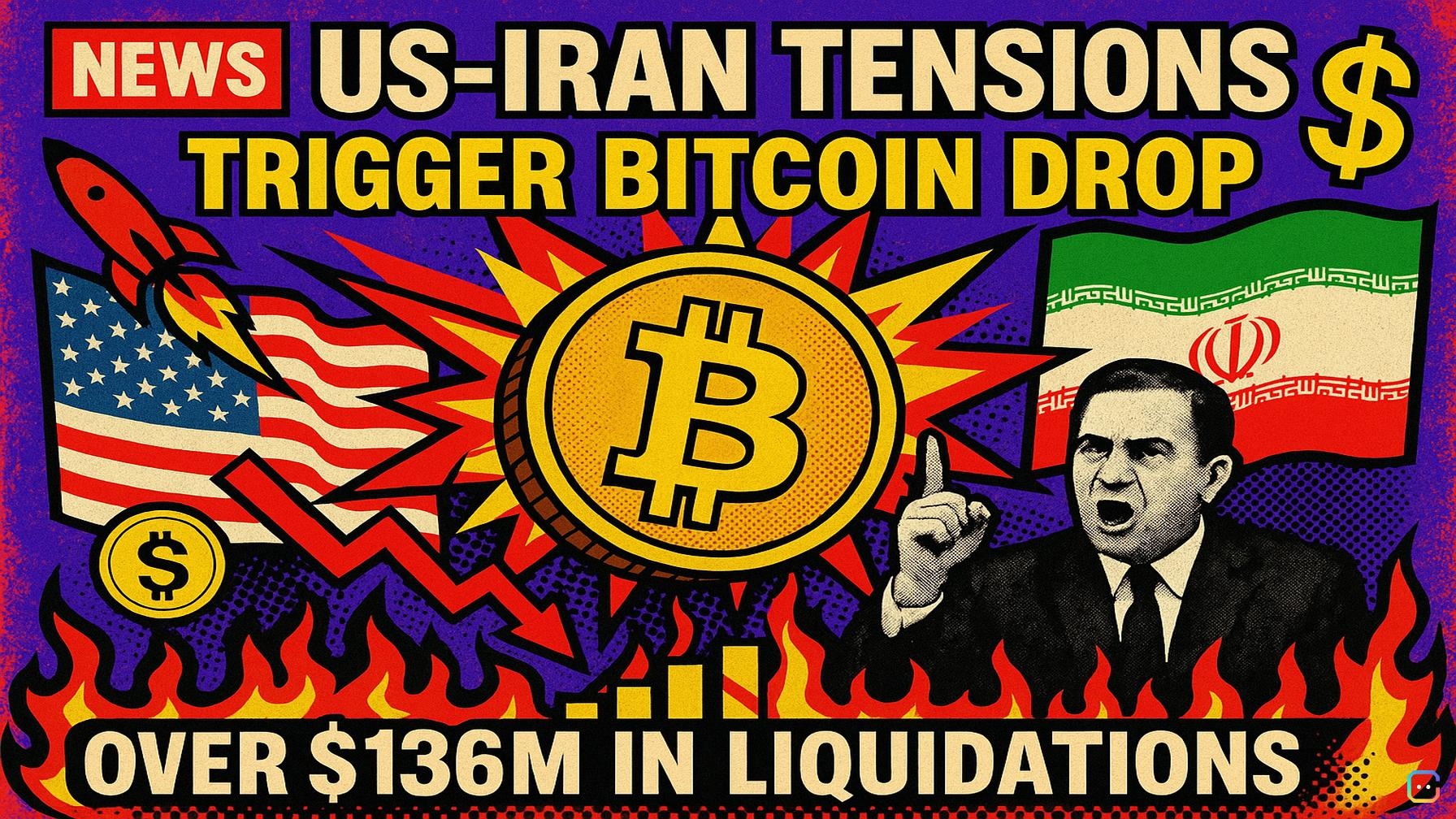
- Volatility hit leveraged traders hard: CoinGlass data recorded nearly $1.40 million in long liquidations in a single hour, while Bitcoin accounted for more than $136 million in liquidations over the prior 24 hours.
Why it matters for crypto
Geopolitical shocks often drive short-term swings in risk assets, and crypto — with a large concentration of leveraged positions — is especially prone to rapid moves and liquidation cascades. Traders will be watching for signs of de-escalation or further military action; absent clarity, price pressure and volatility are likely to continue.
Image credit: Atlantic Council. Chart: TradingView.
Read more AI-generated news on: undefined/news