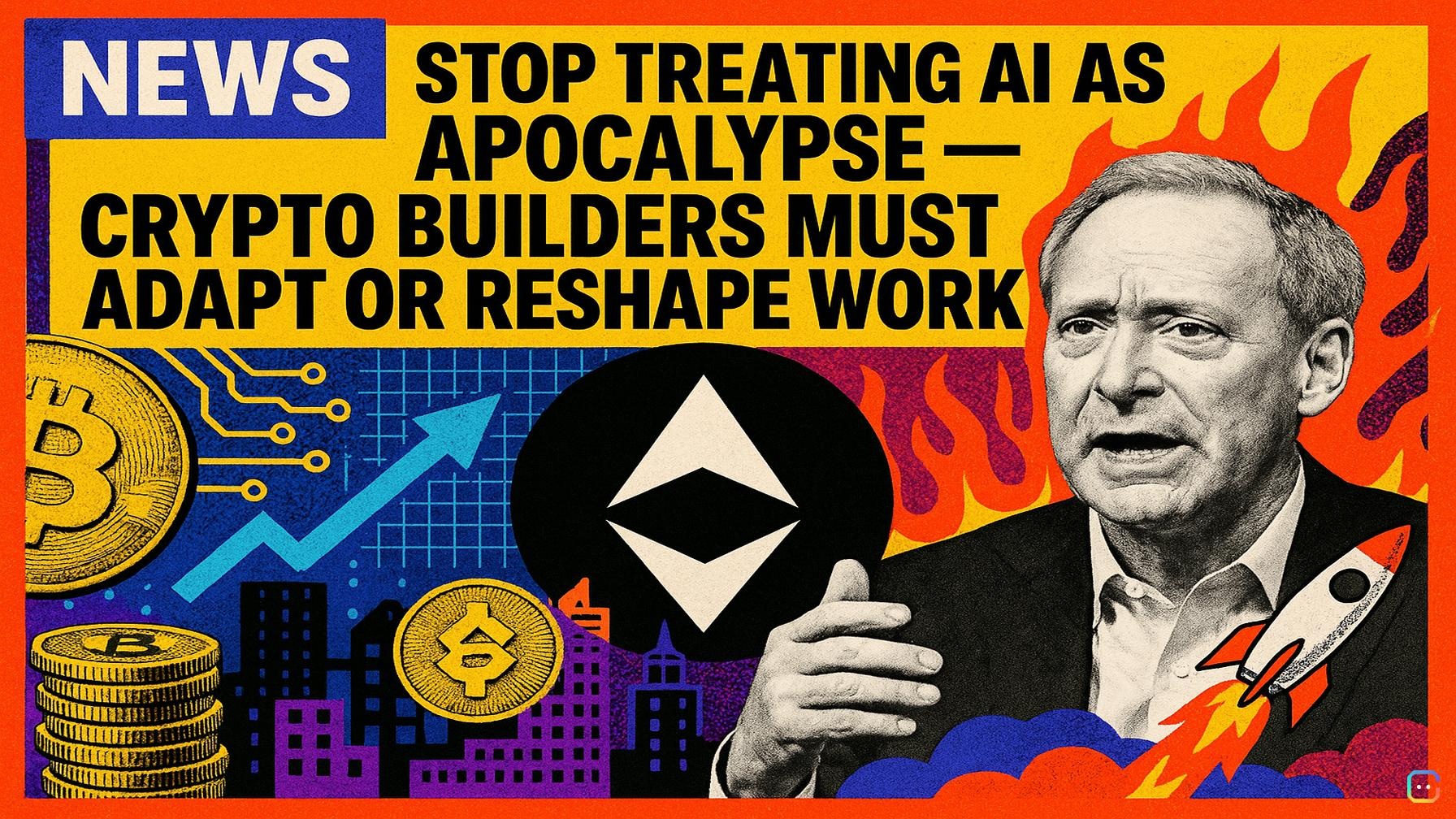
Microsoft president Brad Smith has a blunt message for the class of 2026: stop treating AI like an uninvited apocalypse and start figuring out how to live with it. His provocation follows a spring of visible student backlash — graduation audiences across the U.S. interrupted speakers the moment AI was mentioned, booing figures from former Google CEO Eric Schmidt at the University of Arizona to a real estate executive at the University of Central Florida.
That reaction prompted Smith to return from Princeton reunion weekend and publish a 3,000-word blog post aimed squarely at tech leaders and young workers. He opens with a historical analogy: when French painter Paul Delaroche first saw a photograph in 1838 he reportedly declared “From today, painting is dead.” Photography didn’t kill art; it pushed it in new directions. Smith’s takeaway: disruptive technology forces change, and people eventually adapt and invent anew.
But Smith doesn’t sugarcoat the immediate fallout. He calls the present moment a “perfect storm,” pointing to "AI automation of tasks in current entry-level positions" and “corporate pressure to reduce headcount to help pay for AI's enormous capital expenditures.” Those concerns have real corporate and macroeconomic traction: Microsoft’s own AI chief Mustafa Suleyman told a conference in February that many white-collar tasks could be automated within two years, and CFO Amy Hood recently reported year-over-year headcount declines and said she expects the trend to continue. Microsoft plans to spend roughly $80 billion on AI infrastructure in 2026. Meanwhile, a Federal Reserve study found U.S. programming job growth dropped about 50% after ChatGPT’s November 2022 launch, estimating roughly 500,000 developer roles that would have existed did not materialize.
Smith frames the debate beyond jobs and wages. He argues the American dream has always been about more than “a better job and greater economic opportunity”—it’s also about purpose. He applauds students’ pushback as a demand to be part of deciding how AI is used, not merely to accept its effects. Yet he also insists AI adoption is inevitable and that society must invent new policies and shared responsibilities to prevent widening inequality as automation advances. He acknowledges the need for novel solutions but doesn’t prescribe specific policy fixes in the post.
Practically, Smith urges workers to stop thinking of a job as a fixed title and instead see it as a “bundle of tasks.” He recommends using a framework borrowed from a LinkedIn leadership book—sort tasks into what AI can do, what you can do with AI, and what only humans can do. He highlights five durable human skills AI can’t replace: curiosity, creativity, compassion, communications, and courage. He ends with an appeal to young people to channel their skepticism into agency, ambition, and dignity.
For crypto and blockchain communities, Smith’s message lands with particular urgency. The industry already prizes rapid technical change and alternative organizational models; the rise of AI accelerates the need to rethink roles, reskill teams, and experiment with decentralized or automated structures that preserve meaningful work and purpose. Whether through new tools, token-based incentives, or governance experiments, builders in crypto will face the same choice Smith describes: resist, fear, or adapt and shape the future.
Read more AI-generated news on: undefined/news