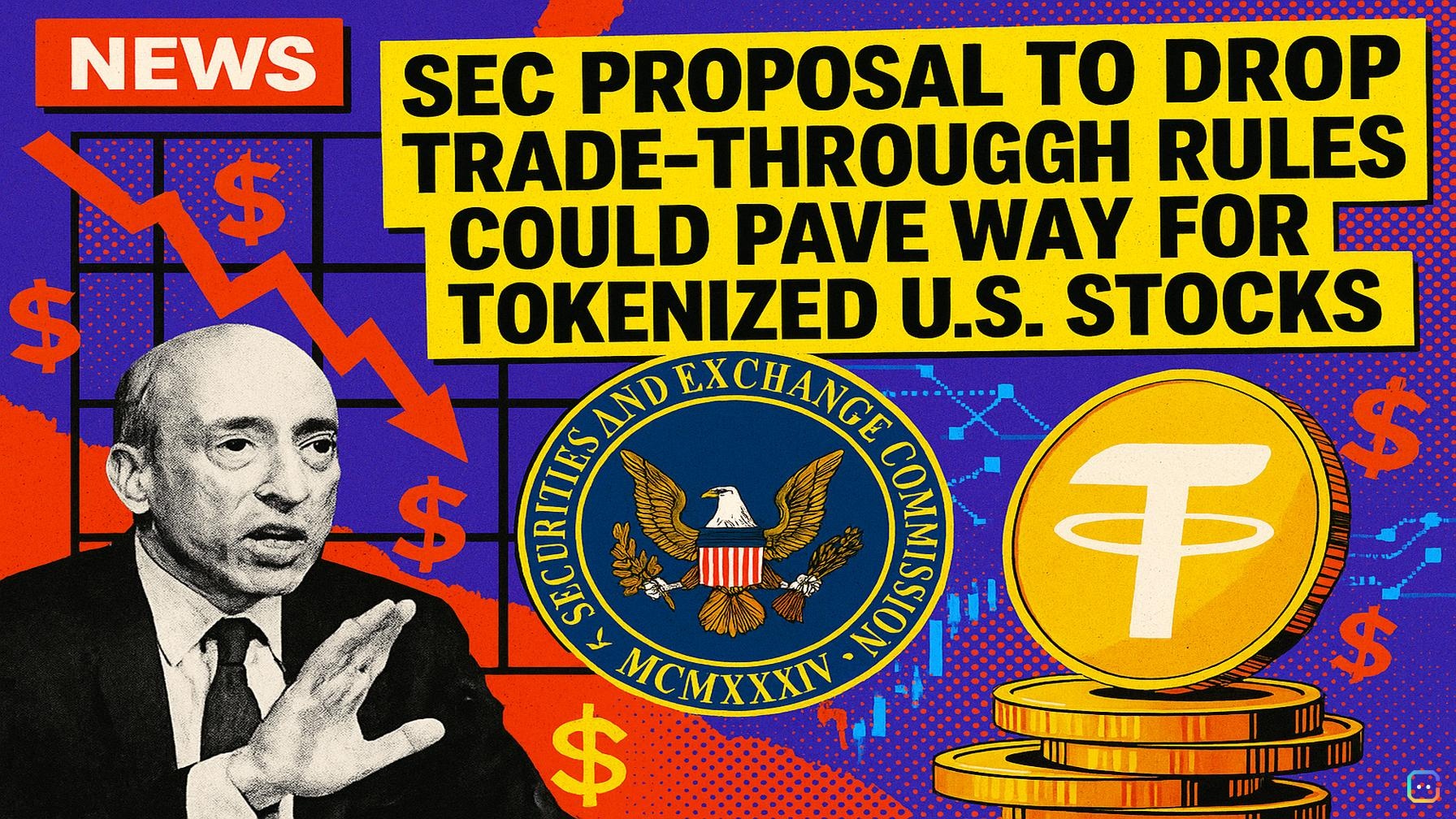
The SEC’s recent proposal to roll back two long-standing market rules could clear a major hurdle for tokenized U.S. stocks to trade in decentralized finance — but it’s far from an automatic green light.
What changed
- On June 11 the U.S. Securities and Exchange Commission proposed rescinding Rules 611 and 610(e) of Regulation NMS, which have governed U.S. equity trading since 2005. The proposal would also remove related definitions in Rule 600 and make conforming edits.
- Rule 611 bars “trade-throughs,” meaning a trading venue can’t execute a trade at a worse price when a better protected quote exists on another venue. Rule 610(e) prevents trading centers from posting quotes that lock or cross the national best bid and offer.
- The public will have 60 days to comment after the proposal is published in the Federal Register.
Why it matters for tokenized stocks and DeFi
These rules were designed for an era of matching engines and centralized order routing. DeFi’s dominant liquidity model—automated market makers (AMMs) that trade against bonding curves and liquidity pools—doesn’t easily fit that framework.
Alex Thorn of Galaxy Digital argues this mismatch is a core reason tokenized U.S. equities have struggled in DeFi. “An AMM cannot comply with 611 by construction. It executes against a bonding curve at whatever the pool price is, with slippage, at block-time granularity,” Thorn wrote, noting AMMs can’t monitor every exchange quote in real time or route orders the way traditional systems do. He said Rule 610(e) creates similar friction because AMM prices move with flow and can lock or cross displayed quotes.
What could replace the guardrails?
If the SEC removes these rules, market observers say broker-level duties like FINRA Rule 5310 — which obliges brokers to seek the best available terms for customer orders — may take on more importance. That kind of best-execution framework could be a better fit for tokenized markets than a trade-by-trade protected-quote regime.
But non-market-structure hurdles remain
Even if trade-through and locked-quote rules are rescinded, tokenized stocks will still face regulatory and operational challenges: exchange registration, alternative trading system (ATS) requirements, clearing and settlement mechanics, and ensuring tokenized shares carry investor rights such as dividends and voting.
Related SEC work and limits
Separately, the SEC has been exploring an innovation exemption that could explicitly allow tokenized public stocks to trade on blockchain platforms — potentially conditioned on tokens carrying the same shareholder rights as ordinary shares. Commissioner Hester Peirce has cautioned any exemption is likely to be narrow, focused on tokenized versions of existing public equities rather than synthetic tokens that lack shareholder rights.
Bottom line
The proposal doesn’t authorize tokenized-stock trading on its own; it launches a rulemaking process and invites public comment. It could remove a significant market-structure barrier for DeFi-based trading of U.S. equities, but final outcomes will depend on the comment period and subsequent SEC action — and tokenized shares will still need to clear considerable legal and operational hurdles before they become mainstream.
Read more AI-generated news on: undefined/news