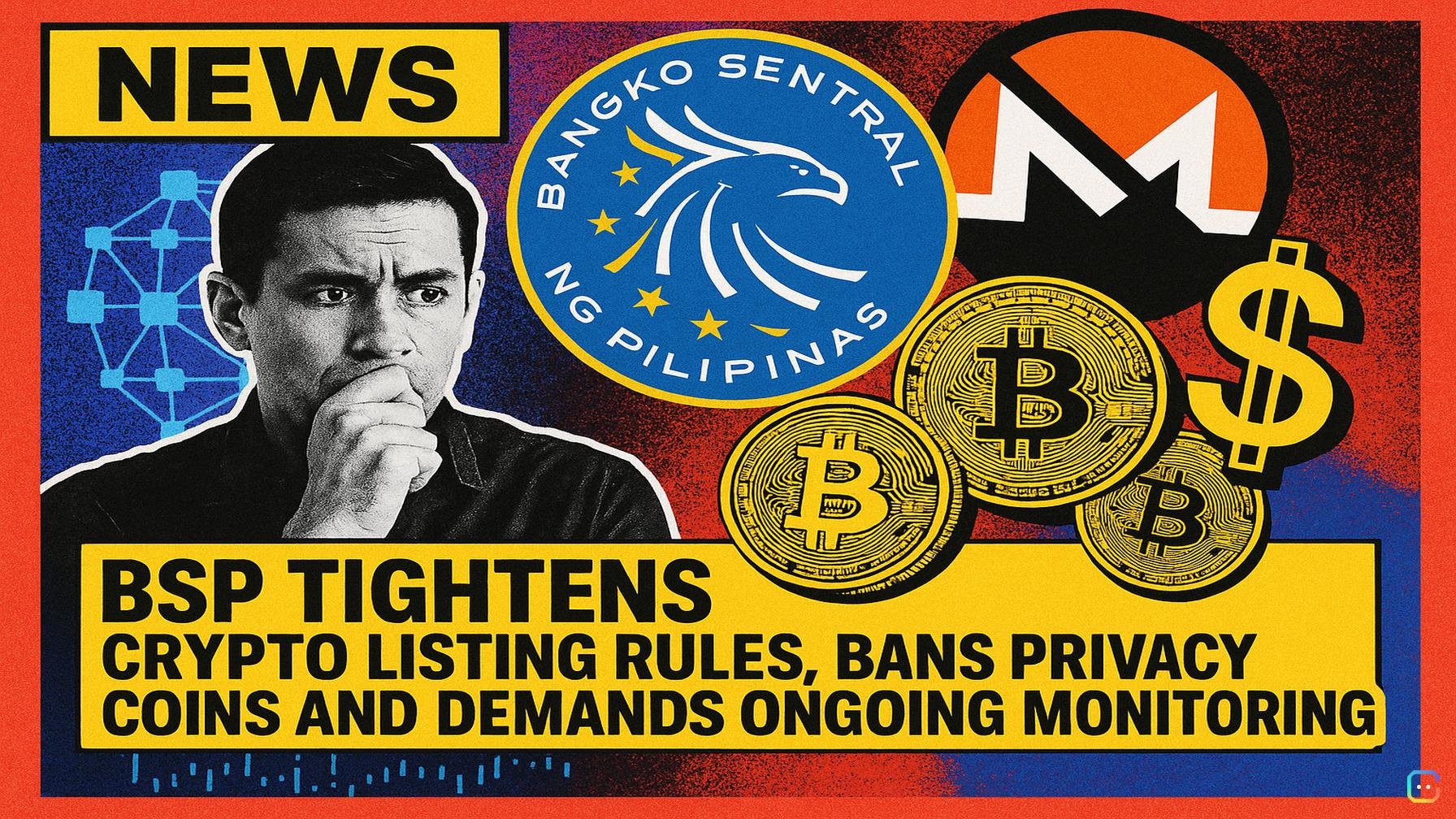
BSP tightens listing rules for crypto tokens, ramps up continuous monitoring
The Bangko Sentral ng Pilipinas (BSP) has rolled out tougher rules for virtual asset service providers (VASPs), forcing exchanges to perform deeper screening, ongoing monitoring, and clear delisting procedures for tokens offered to Filipino customers. The move, set out in a memorandum from BSP Deputy Governor Lyn Javier, is part of a broader push by Philippine regulators to strengthen oversight of the country’s digital-asset market.
Stricter pre-listing checks
Under the new guidance, VASPs must implement a “robust due diligence and accreditation process” before listing any virtual asset. Exchanges are directed to evaluate tokens across six key dimensions: issuer background, market maturity, use cases, transparency and security, redemption and liquidity, and legal compliance.
To satisfy issuer-background checks, platforms should collect corporate documents, ownership structures, audited financial statements, beneficial ownership data, and carry out fitness assessments of directors and officers. Reviews should also flag potential conflicts of interest involving issuers, regulators, public officials, or related parties.
Measuring market maturity and use case credibility
For market maturity, the BSP recommends assessing market capitalization, trading volume, operational history, support from other exchanges, and the number of on-chain holders—metrics that help determine real activity and liquidity. Use-case evaluation is required to ensure a token’s economic rationale and utility are credible and not merely speculative.
Greater scrutiny for stablecoins and asset-backed tokens
The central bank places particular emphasis on asset-backed and fiat-backed tokens. VASPs must examine issuance and redemption mechanics (minting/burning), the methods used to maintain price stability, reserve composition, and whether backing assets can reliably support redemption requests. The BSP highlighted liquidity, reserve quality, and withdrawal rights as critical to market confidence and orderly trading.
Transparency obligations and risk disclosures
Project whitepapers must be accessible to users and include tokenomics, supported blockchains, project goals, methods of acquisition, and explicit disclosures of risks—covering money laundering, cybersecurity, governance, liquidity, and consumer protection. Transparency and verifiable documentation are core expectations before and after listing.
Continuous monitoring and clear delisting triggers
Beyond initial approvals, exchanges are required to continuously monitor listed assets and define thresholds that trigger suspension or delisting. Tokens may be removed or suspended for reasons including adverse market events, cybersecurity incidents, legal violations, misleading disclosures, consumer-protection concerns, market manipulation, or abnormal price behavior. The BSP urged VASPs to act immediately when significant risks emerge.
Privacy coins still banned
The memorandum reiterates that anonymity-enhancing cryptocurrencies—privacy coins—remain explicitly prohibited from being listed or supported by BSP-licensed VASPs.
Regulatory context and market implications
These measures build on the Philippines’ ongoing effort to formalize regulatory standards for digital-asset businesses. The guidance arrives shortly after Binance signaled plans to test regulated operations in the Philippines via a partnership with BlockShoals Technologies under the Securities and Exchange Commission’s StratBox sandbox. The BSP stressed, however, that participation in the SEC sandbox does not substitute for a BSP-issued VASP license; reports indicate neither Binance nor BlockShoals currently holds such a license.
What this means for exchanges and users
Exchanges operating in the Philippines will need to beef up compliance teams, revamp listing protocols, and maintain stronger on-chain and off-chain surveillance. For users, the rules aim to improve protections and reduce exposure to poorly backed tokens, but could also slow the pace at which new projects reach local markets.
The memorandum from Deputy Governor Lyn Javier signals a clear regulatory direction: greater documentation, transparency, and ongoing oversight are now prerequisites for participating in the Philippine crypto ecosystem.
Read more AI-generated news on: undefined/news