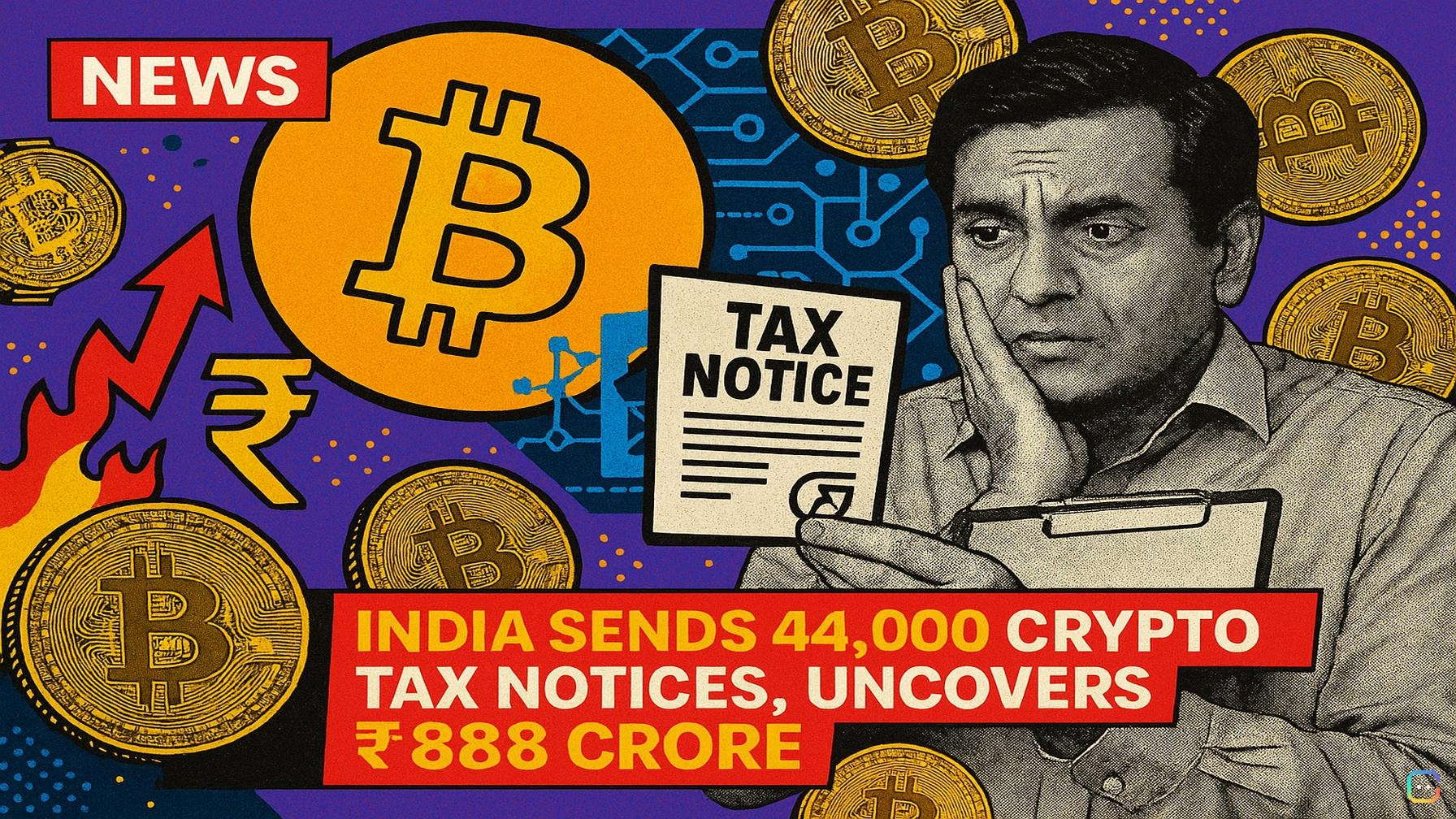
India’s tax authorities have stepped up crypto enforcement, issuing more than 44,000 tax notices tied to virtual digital asset (VDA) filings and uncovering roughly Rs 888 crore (about $104 million) in undisclosed VDA income, The Economic Times reports.
What the numbers show
- The Income Tax Department is increasingly using exchange data, TDS filings and investor returns to spot mismatches and gaps in reporting.
- Despite the enforcement push, India’s core crypto tax rules remain unchanged for FY 2025–26: gains from VDAs are taxed at a flat 30%, and eligible transfers are subject to a 1% tax deducted at source (TDS).
Key filing rules investors must know
- VDA gains are taxable with no deductions except cost of acquisition; losses from one crypto asset cannot be offset against gains from another.
- Investors reporting crypto as capital gains should use ITR-2; those treating crypto trading as business income must use ITR-3. Both forms include Schedule VDA for detailed transaction reporting.
- Schedule VDA requires reporting each trade, swap, disposal and taxable transfer separately — net-only reporting is not permitted. Even crypto-to-crypto swaps can trigger taxable events.
Why notices are rising
- Budget 2026 imposed expanded reporting duties on exchanges, custodians and wallet providers, forcing them to send user-level transaction data to the Income Tax Department.
- That data enables cross-checks between Schedule VDA, Form 26AS, TDS records and exchange reports. Any mismatch can prompt a notice.
- India is also moving toward alignment with the OECD’s Crypto-Asset Reporting Framework, paving the way for cross-border crypto-account data sharing from 2027 — a step likely to widen the compliance net further.
Practical implications
- Filing is no longer just self-reporting: investors who used multiple exchanges, DeFi platforms or overseas accounts face a higher burden to maintain full records.
- Notices can arise from seemingly small oversights: unreported staking income, airdrops, wallet transfers, or failure to reconcile TDS can all attract scrutiny.
- The department’s message is clear: accurate, transaction-level reporting is essential to avoid enforcement action.
Bottom line
Crypto investors in India should keep detailed, consolidated records of every trade and transfer, reconcile TDS and exchange reports, and use the correct ITR form and Schedule VDA entries. With tighter reporting rules and international data-sharing on the horizon, compliance will only become more important.
Read more AI-generated news on: undefined/news