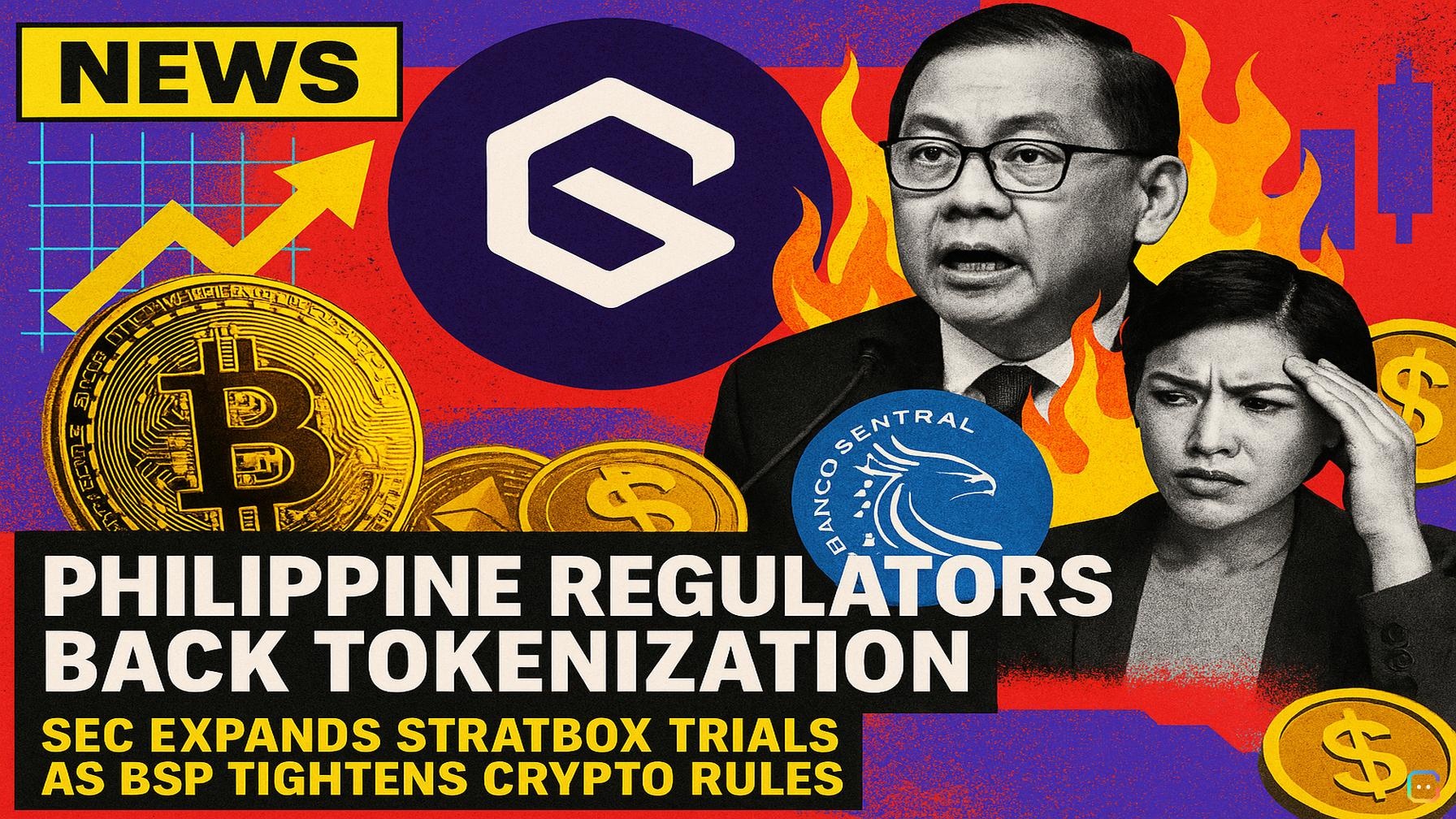
The Philippine SEC is moving from curiosity to conviction on tokenization — and it’s doing so while expanding live tests of digital-asset products.
Speaking at Philippine Blockchain Week 2026, SEC Commissioner Rogelio Quevedo said the agency now believes existing laws and its regulatory framework can accommodate tokenized real-world assets. The regulator sees tokenization not just as a fintech novelty but as a potential catalyst for new capital-market activity that could change how securities are issued and traded. Quevedo said the SEC is “comfortable” supervising tokenized products inside the current legal structure and expects tokenization to spur financial innovation and broaden opportunities for investors.
That confidence is being put into practice through StratBox, the SEC’s regulatory sandbox that lets fintech firms trial products under direct regulator supervision. StratBox allows temporary adjustments or waivers of certain regulatory requirements while experiments run — but the SEC stresses sandbox participation does not exempt firms from laws or give permission to evade rules.
In November 2025 the SEC revealed four firms had been admitted to StratBox:
- One is piloting a tokenized real estate offering.
- Two are testing products that aim to give Filipinos access to U.S. equities.
- BlockShoals Technologies received in-principle approval to trial crypto-related products and services in the sandbox.
Quevedo also highlighted the social potential of tokenized investment products, suggesting they could help overseas Filipino workers (OFWs) channel savings into regulated investments. He noted many OFWs have capital but limited safe, legitimate investment options, leaving them exposed to fraud.
On enforcement, the SEC has sharpened its toolkit as digital-asset activity grows. Quevedo said regulators are deploying artificial intelligence to detect investment scams and collaborating with major online platforms — including Google and TikTok — to remove illegal offerings aimed at Filipino investors.
Regulatory tightening is not limited to the SEC. The central bank, Bangko Sentral ng Pilipinas (BSP), has issued tougher guidance for virtual asset service providers (VASPs). Under new rules, exchanges must conduct deeper due diligence before listing tokens — assessing issuer background, market maturity, use case, transparency and security standards, liquidity, and legal compliance. Licensing remains a focal point: reporting from BitPinas noted the BSP recently stated that neither Binance nor BlockShoals currently holds a VASP license, which is required for firms offering crypto payment and transaction services in the Philippines.
Bottom line: Philippine regulators are taking a two-track approach — enabling innovation through supervised sandboxes while tightening due diligence, licensing, and enforcement to protect investors as tokenization gains traction.
Read more AI-generated news on: undefined/news