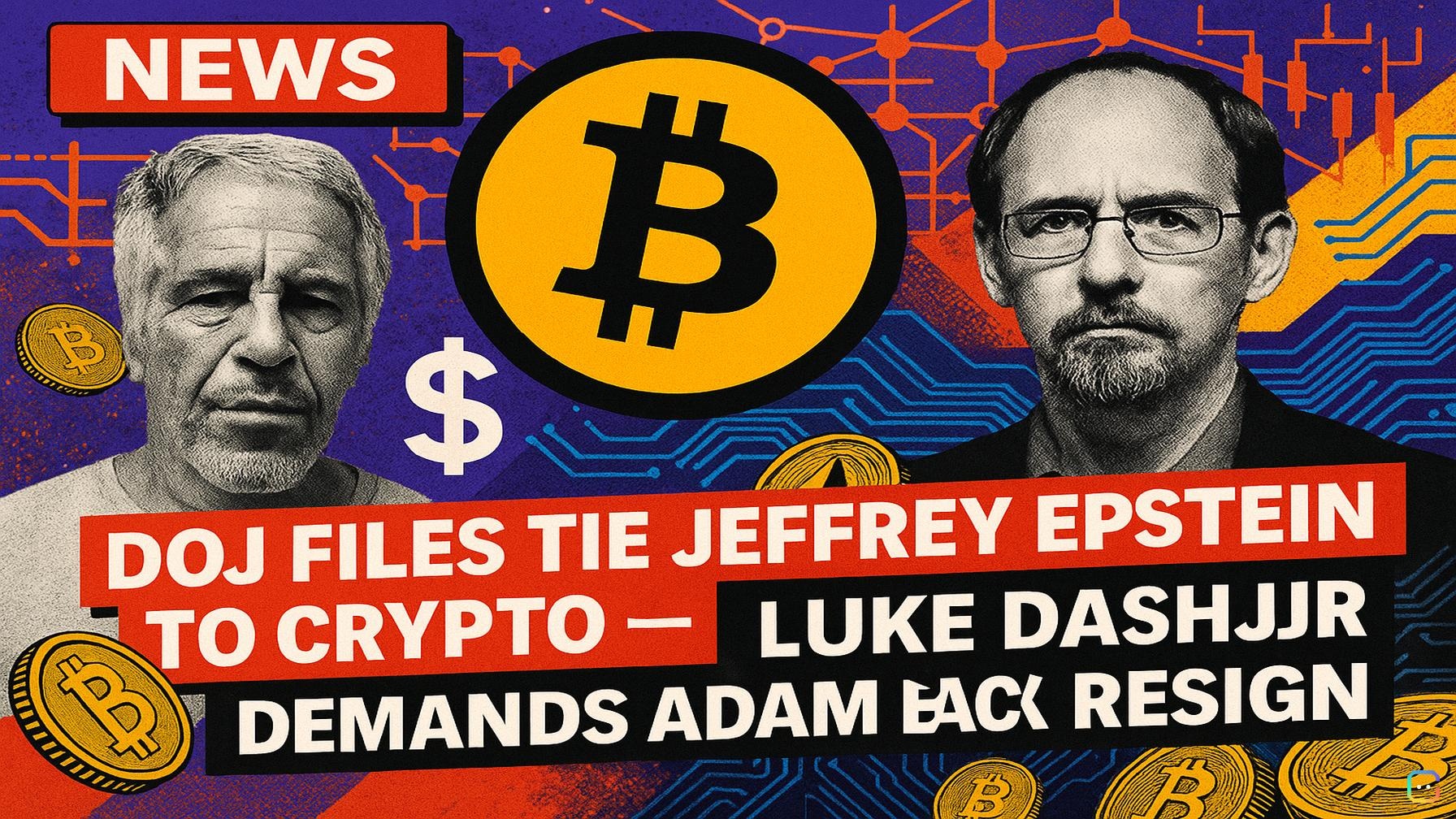
A fresh tranche of U.S. Department of Justice documents tying Jeffrey Epstein to figures across the crypto world has reignited old feuds and prompted calls for accountability — including from one of Bitcoin’s earliest developers.
Luke Dashjr, an early Bitcoin developer and one of Blockstream’s initial contributors, publicly urged Blockstream co-founder and CEO Adam Back to resign after the newly released files revealed multiple references linking Epstein to people and companies in the sector. In a Tuesday tweet, Dashjr said the revelations “help shed light” on what he described as Back’s past hostility toward him and argued Back “should consider resigning from all positions of authority and apologize to all the developers, investors, and Bitcoiners he’s misled along the way.” Dashjr also reminded followers of a long-running dispute in which he says Back promised to list him as a Blockstream co-founder but later cut him out.
The DOJ release, published last Friday, contains millions of pages and includes extensive cryptocurrency-related references. A simple tally of mentions in the documents shows Brock Pierce appearing 1,801 times, “Bitcoin” 1,522 times, “Coinbase” 266 times, and Adam Back 19 times. The files recount multiple interactions between Epstein and people tied to Blockstream during the company’s early years.
Key items in the records include:
- July 2014 email threads discussing Epstein’s possible travel to Montreal; a Blockstream co-founder, Austin Hill, later wrote that the “Blockstream crew were well entertained” at a comedy event.
- Correspondence in 2014 in which Epstein replied to an inquiry about Back with the short reply, “like him.”
- Emails showing Epstein communicating with Austin Hill about potential meetings and a proposed visit to Little Saint James, Epstein’s private Caribbean island. One 2014 email to early developer Amir Taaki claimed Epstein had recently hosted “Andy Back” on the island — a reference that remains ambiguous and unverified.
The documents do not, on their face, prove criminal wrongdoing by those named. Decrypt reported that Adam Back and Blockstream did not respond to requests for comment; Back has posted publicly that any Epstein connection to Blockstream was indirect, via a fund associated with then–MIT Media Lab director Joi Ito. According to Back, that fund — which he says described Epstein as a limited partner at the time — took a minority stake in Blockstream’s 2014 seed round and later divested. Back has stated Blockstream has “no direct nor indirect financial connection with Jeffrey Epstein, or his estate,” and has not addressed the island-visit references in the released emails.
Beyond Blockstream, the files highlight Epstein’s wider interactions with the crypto ecosystem. They show Epstein invested $3 million in Coinbase in 2014 when the exchange was roughly valued at $400 million; Coinbase is now a publicly traded company valued at tens of billions. The records are also replete with mentions of Brock Pierce — an early investor, Tether co-founder and former Bitcoin Foundation chair — including investor updates and meeting arrangements involving Epstein.
Little Saint James has become emblematic of Epstein’s abuse network; prosecutors and survivors describe the island as a center for trafficking and sexual abuse that underpinned later criminal and civil cases. The newly unsealed documents have prompted renewed scrutiny of the relationships between Epstein and prominent players in tech and crypto, and have reopened longstanding disputes within the Bitcoin developer community over influence and governance.
Blockstream, Austin Hill, Brock Pierce, Blockchain Capital, Coinbase and the Bitcoin Foundation have been approached for comment. As the community digests the documents, calls for transparency and answers from industry leaders are likely to grow louder.
Read more AI-generated news on: undefined/news