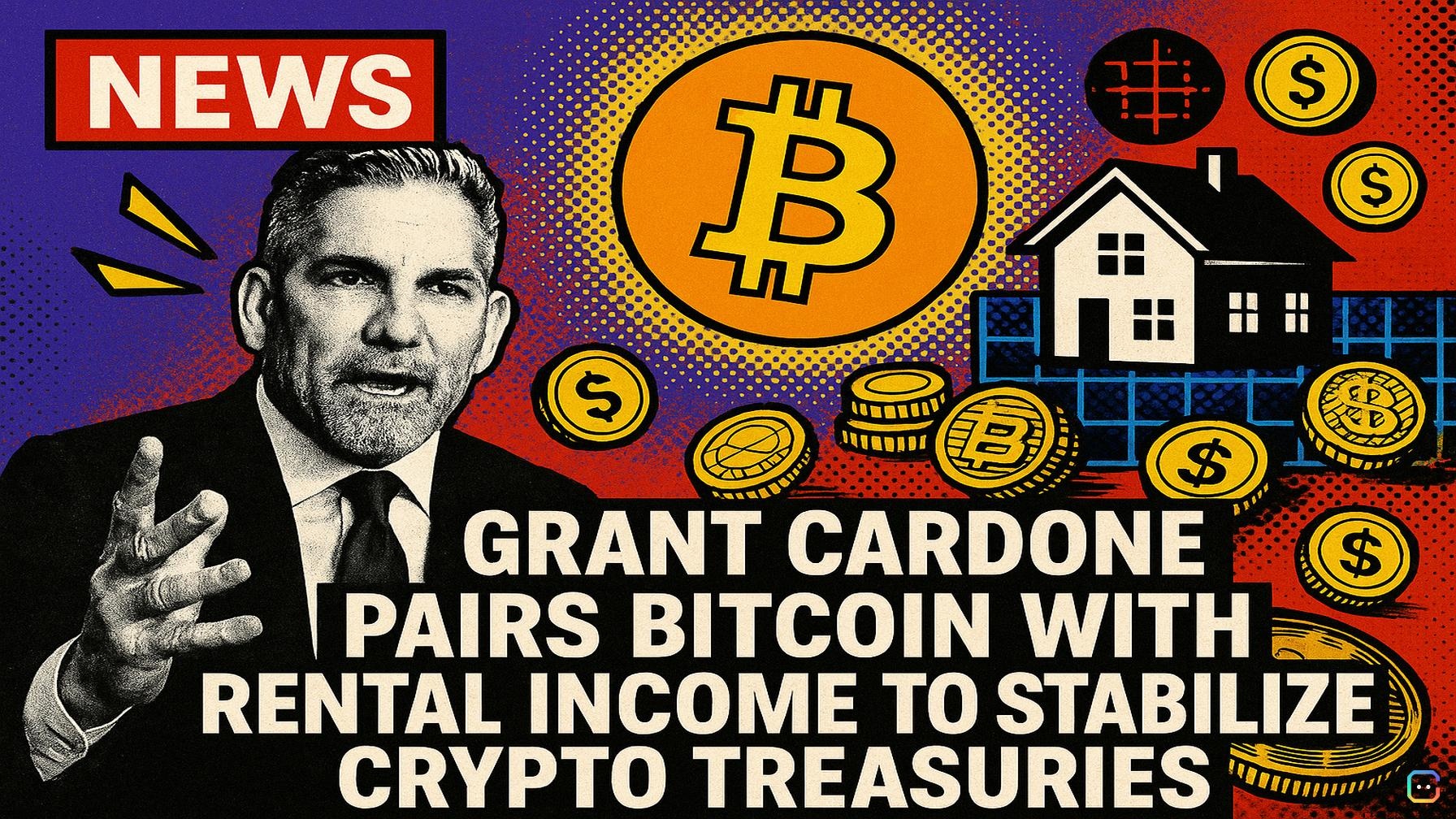
Real estate investor Grant Cardone is pitching a simple but striking fix for a struggling corner of crypto: pair Bitcoin with rental income.
Cardone’s fund buys multifamily housing, collects rent, and uses those cash flows to buy more Bitcoin. The structure gives investors two engines of return — property appreciation and rental cash flow on one side, and exposure to Bitcoin’s price moves on the other — instead of relying solely on passive BTC accumulation.
Why now? The broader digital-asset treasury space has cooled sharply. According to DefiLlama, monthly inflows into digital asset treasury companies (DATs) fell to about $555 million in February 2026, the weakest level since October 2024. That’s a long way down from the extremes seen around the 2024 U.S. election cycle: inflows plunged to roughly $32 million in the run-up to the vote, then surged past $12 billion after a crypto-friendly turn in policy following the election. But much of that momentum evaporated through 2025 and into 2026 as a prolonged bear market pushed crypto prices back to pre-election levels, shrinking treasury valuations and drying up fresh capital.
Industry veterans say the era of “warehouse-and-hold” treasuries is fading. Patrick Ngan, CIO at Zeta Network Group, argues that firms that merely hoard Bitcoin without an active yield strategy risk being left behind. Treasury managers are increasingly looking beyond buy-and-hold: staking on proof-of-stake networks, running mining operations on proof-of-work chains, or deploying capital in decentralized lending — all ways to generate returns that don’t depend solely on BTC appreciating.
Cardone’s hybrid model takes that concept a step further by anchoring crypto exposure with a real, cash-flowing business: rental properties. That approach can smooth volatility (rents tend to be steadier than crypto prices), provide ongoing capital to buy more Bitcoin, and deliver traditional tax benefits tied to real estate ownership — potentially improving risk-adjusted returns for investors.
This isn’t a guaranteed fix. Real estate brings operational costs, market risk, and liquidity constraints, and crypto exposure still carries price volatility and regulatory uncertainty. But for treasury managers and investors scrambling for yield and resilience, pairing Bitcoin with rental income is emerging as a compelling, pragmatic experiment — one that blends fiat cash flow with digital-asset upside.
Read more AI-generated news on: undefined/news