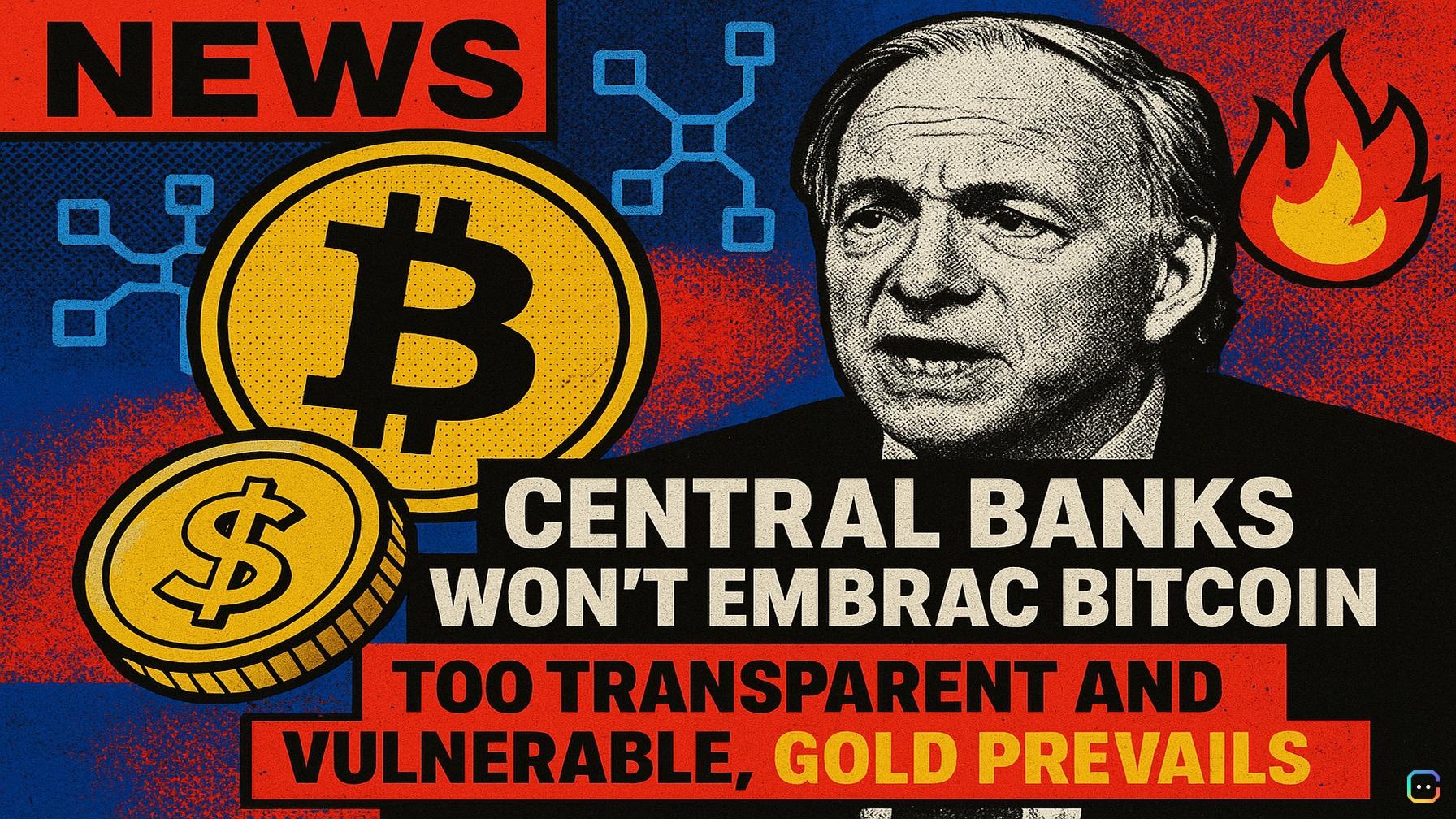
Headline: Ray Dalio Says Central Banks Won’t Embrace Bitcoin — Calls It Too Transparent, Vulnerable Compared With Gold
Former Bridgewater CEO Ray Dalio told Zerodha founder Nitin Kamath on a recent podcast that, despite Bitcoin’s growing role as a digital store of value, central banks are unlikely to adopt it as a reserve asset. Dalio argued BTC carries intrinsic “flaws” that make it a poor fit for official holdings.
Key takeaways from Dalio’s comments:
- Bitcoin’s transparency is a liability for central banks: “Transactions could all be followed in Bitcoin. One can monitor what the transactions are. Governments can monitor what the transactions are, and governments can interfere with those transactions,” he said, arguing that on-chain traceability invites monitoring and control.
- Limited flow and other structural limits: Dalio said Bitcoin lacks the “flow” needed to function as a major currency alternative and that these constraints reduce its appeal to large institutional holders.
- Vulnerability to control or “being cracked”: He raised the possibility that Bitcoin could be “cracked, broken, and controlled,” likening risks to creating synthetic versions of other assets — a scenario he sees as undermining its reliability.
- Gold remains the preferred safe asset: Dalio reiterated his long-standing view that gold is the one asset central authorities can’t easily manipulate or control, and therefore remains superior as a reserve.
Context and implications
Dalio’s critique echoes a core debate in macro and policy circles: whether decentralized digital assets can replace or complement traditional reserve assets. While Bitcoin proponents point to limited supply and censorship resistance, Dalio highlights practical concerns — transparency, regulatory friction, and potential technical or governance vulnerabilities — that could prevent central banks from allocating significant reserves to BTC.
What this means for investors and policymakers
- For investors: Dalio’s stance underscores the distinction between private speculative or reserve-lite institutional holdings and the demands of national reserve management, suggesting BTC may remain more of a private store of value than a central-bank asset.
- For policymakers: The argument reinforces why regulators and central banks consider transparency, controllability, and systemic risk when assessing crypto’s role in national finance.
Dalio’s comments follow previous warnings that Bitcoin “isn’t built for major reserve status,” and continue to fuel the conversation about where digital assets fit in the global financial system.
Read more AI-generated news on: undefined/news