Today's Cryptocurrency Prices by Market Caps
The global cryptocurrency market cap today i $2.46T
Market Cap
$2.46T
24h Trading Volume
$103.21B
BTC Dominance
56.70%
|
#
|
Name
|
Price
|
1h %
|
24h %
|
7d %
|
Market Cap
|
Volume (24h)
|
Chart (7d) |
|---|---|---|---|---|---|---|---|---|
|
|
—
|
|||||||
|
No cryptocurrencies found Try adjusting your search query |
||||||||
Latest Crypto News
View All News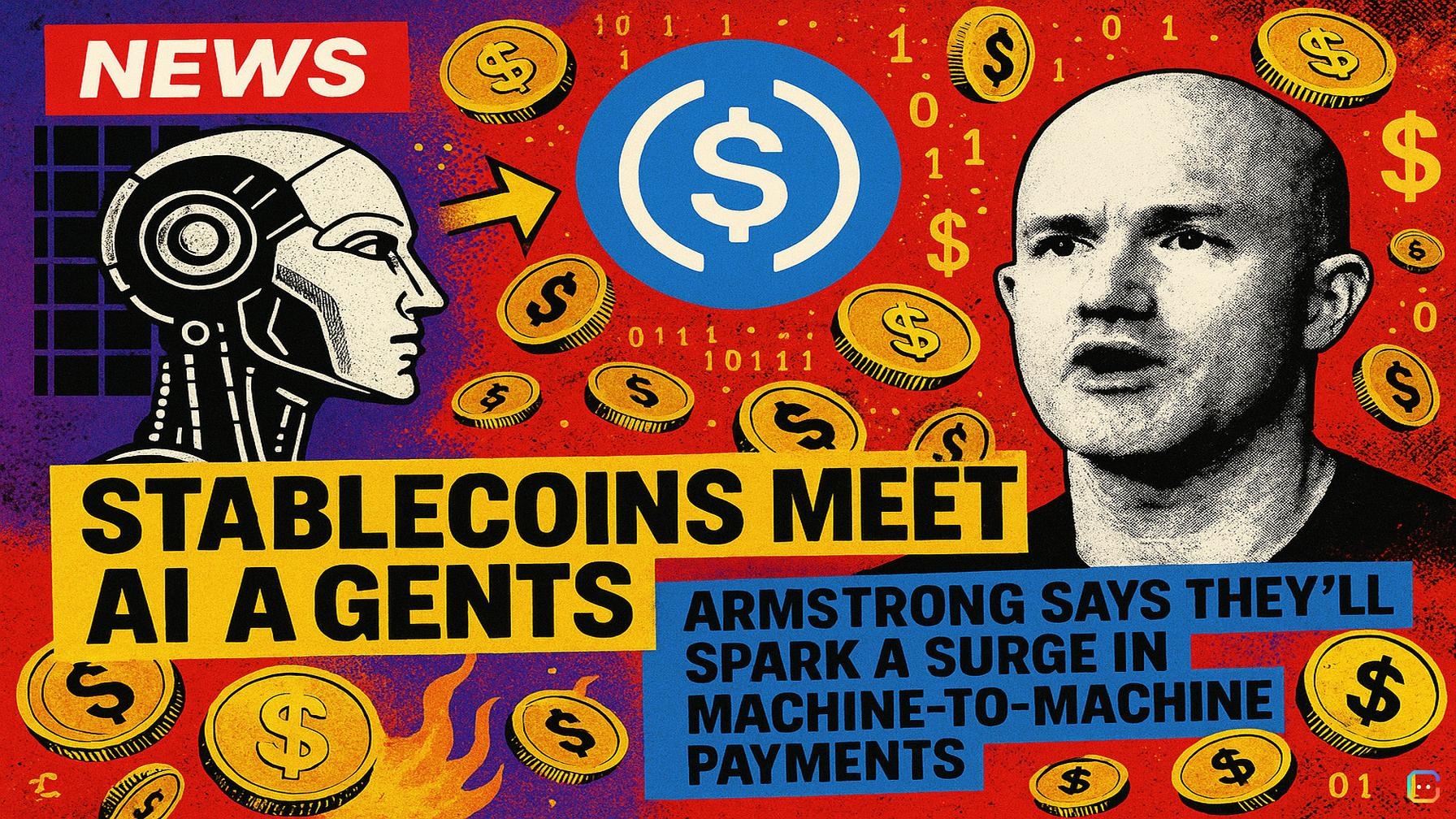
Stablecoins Meet AI Agents — Armstrong Says They’ll Spark a Surge in Machine-to-Machine Payments
Headline: AI Agents Meet Stablecoins — Coinbase’s Brian Armstrong Sees a New Era of Machine-to-Machine Payments Artificial intelligence is moving fast across industries, and finance is no exception. As corporates race to embed AI, a new trend is emerging at the intersection of AI and crypto: autonomous AI agents using stablecoins to transact. Coinbase CEO Brian Armstrong says this “agentic commerce” could reshape how value moves online. Why stablecoins? Stablecoins — cryptocurrencies pegged to fiat currencies like the US dollar — were designed to provide steadiness in a volatile market. Their defining attributes (speed, low fees, and global reach) make them a natural fit for automated, high-frequency payments that AI agents might execute on behalf of humans. What Armstrong is predicting In a recent interview and social posts, Armstrong outlined the case: unlike humans, AI agents can’t open bank accounts because that process requires KYC tied to a government ID. But AI agents can be given stablecoin wallets. Coinbase has been developing infrastructure that lets agents spin up their own stablecoin wallets so they can transact autonomously — booking services, paying for work, or managing routine purchases. Armstrong argued that if AI agents proliferate (he’s suggested there could eventually be more agents than people), machine-to-machine payments will explode. Because stablecoin transfers are fast, cheap, and borderless, he expects “several orders of magnitude more transactions every day,” albeit often for smaller dollar amounts. That uptick in transaction volume could substantially increase demand and activity in the stablecoin space. What this could mean for crypto If AI agents begin transacting at scale, stablecoins may move from niche crypto utilities to core plumbing for automated commerce. Greater transaction volumes could spur new business models, tooling, and revenue opportunities across exchanges, wallets, and payment rails — but also heightened regulatory scrutiny and operational challenges. A reminder on risk Armstrong acknowledges the opportunity but also the caveats: increased activity could create new investment avenues, but those come with market risk. As always, do your own research before making investment decisions. Bottom line The fusion of AI agents and stablecoins could unlock a new layer of machine-to-machine commerce, turning stablecoins into the on-ramps and settlement rails for autonomous economic activity. Whether that vision becomes reality will depend on tech adoption, regulatory responses, and how reliably these systems can be governed. Read more AI-generated news on: undefined/news
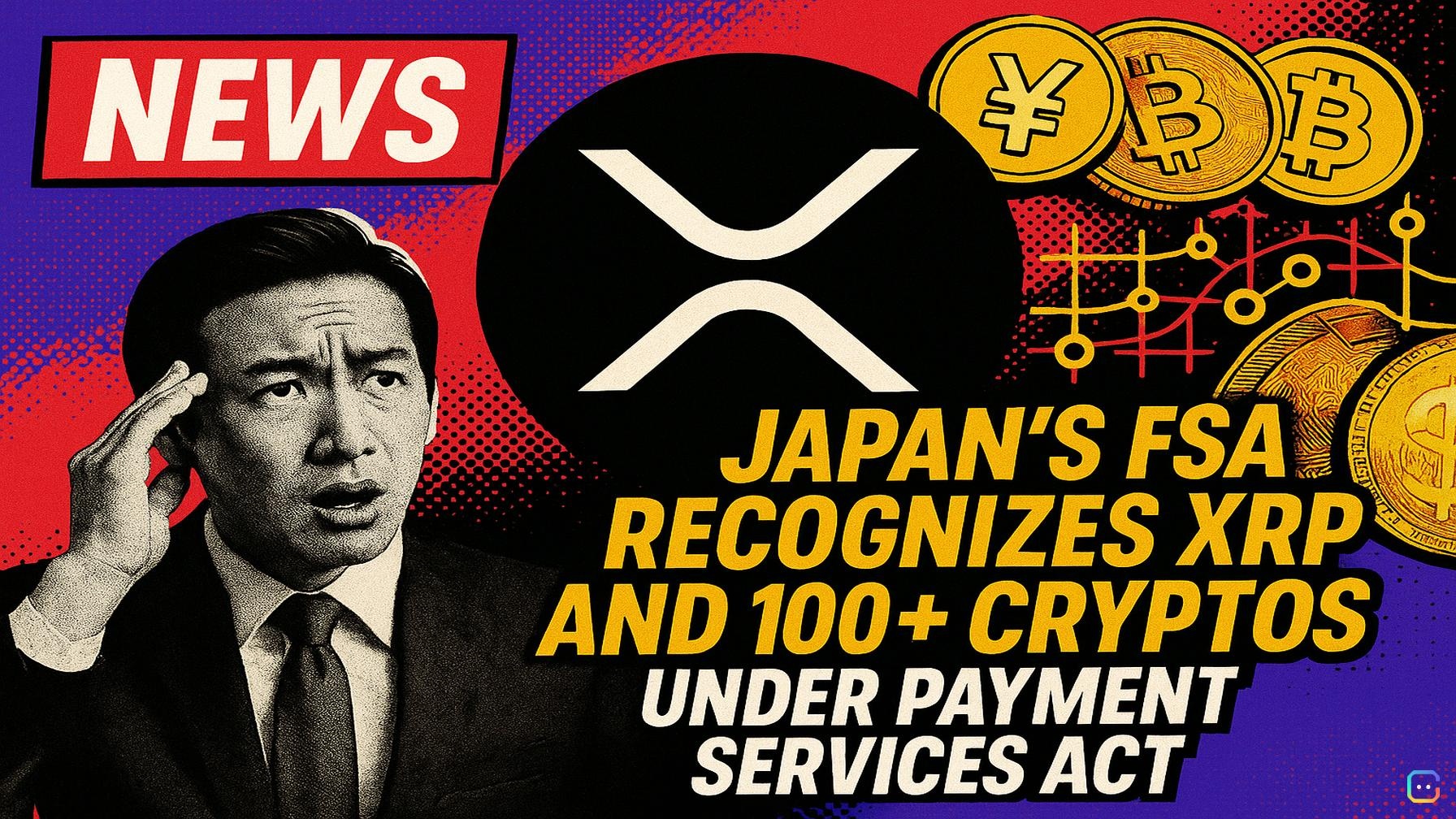
Japan’s FSA Recognizes XRP and 100+ Cryptos Under Payment Services Act
Japan’s Financial Services Agency (FSA) has added Ripple’s XRP to a newly published framework that recognizes more than 100 cryptocurrencies as falling under Japan’s Payment Services Act — a move that clarifies which tokens can be legally listed and traded on platforms operating in the country. What the recognition means - The FSA doesn’t “endorse” these assets; it confirms they meet the legal definition of crypto assets under Japan’s Payment Services Act. In its statement the regulator said: “The crypto assets handled by the Crypto Asset Exchange Service Providers listed in this list are merely confirmed to fall under the definition under the Payment Services Act, considering the explanation of the Crypto Asset Exchange Service Providers.” - Exchanges that operate in Japan — including major global players such as Binance and Coinbase — must register with the FSA and get each cryptocurrency they plan to list approved before the token can go live for trading. - Roughly 28 cryptocurrency trading platforms are currently registered under the FSA to provide services to users in Japan. Notable inclusions Among the 100+ recognized assets are major names across categories: Bitcoin (BTC), Ethereum (ETH), Ripple’s XRP, Cardano (ADA), Solana (SOL), and popular meme tokens like Dogecoin (DOGE) and Shiba Inu (SHIB). While recognition does not equal regulatory endorsement, being listed in the FSA’s framework is a key step for market access in Japan and signals formal regulatory clarity for those assets within the country. Full list of crypto assets recognized by Japan’s FSA: ADA, ALGO, APE, APT, ARB, ASTR, ATOM, AVAX, AXS, BAT, BC, BCH, BNB, BOBA, BORA, BRIL, BSV, BTC, CHZ, CICC, COMSA, COT, CRTS, CYBER, DAI, DEP, DOGE, DOT, EFI, ELF, ENJ, ETC, ETH, FCR, FCT, FET, FIL, FLR, FNCT, FPL, FSCC, FTT, GALA, GRT, HBAR, IMX, IOST, IOTX, JASMY, JOC, KAIA, LINK, LPT, LSK, LTC, MANA, MASK, MBX, MEME, MONA, NAC, NCXC, NEAR, NEIRO, NEO, NIDT, OAS, OKB, OMG, ONT, OP, OSHI, PEPE, PLT, POL, QASH, QTUM, RENDER, RYO, SAND, SEI, SHIB, SKEB, SKY, SNPT, SOL, SUI, SXP, TAO, THETA, TON, TRUMP, TRX, UPC, XCP, XDC, XEM, XLM, XRP, XTZ, XYM, ZAIF, ZIL, ZPG, ZPGAG, ZPGPT. Why it matters For issuers and exchanges, FSA recognition is a practical gateway to Japan’s onshore market and investor base. For traders and institutional participants, it provides clearer regulatory footing for many tokens — even as the regulator stops short of recommending specific assets. The list also underscores Japan’s ongoing effort to bring transparency and legal clarity to crypto markets after years of regulatory evolution. Read more AI-generated news on: undefined/news
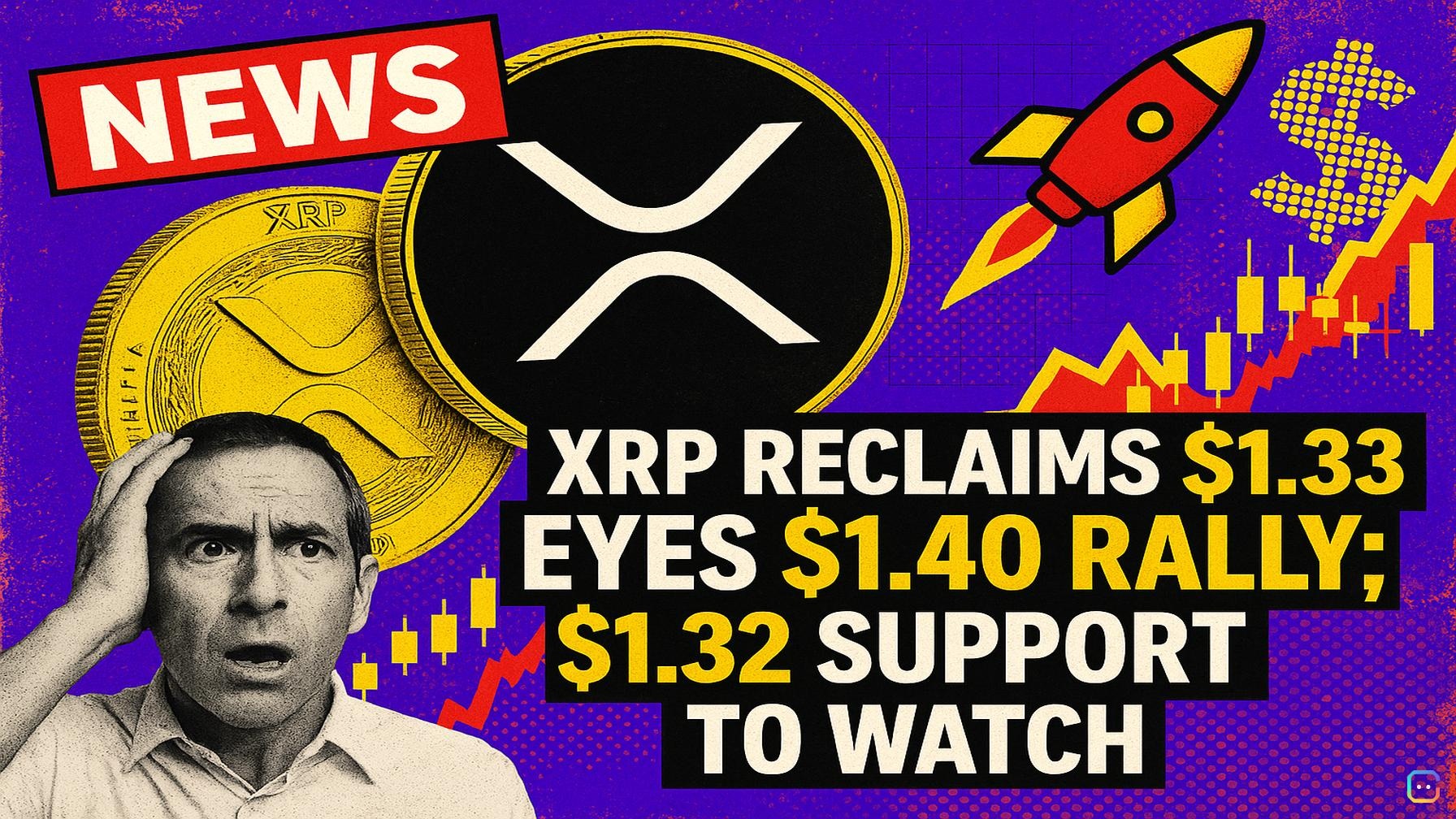
XRP Reclaims $1.33, Eyes $1.40 Rally; $1.32 Support to Watch
XRP has staged a short-term recovery, climbing back above key intraday thresholds and now consolidating with upside potential if bulls can build on recent momentum. What happened - After finding support near $1.280, XRP began a recovery alongside Bitcoin and Ethereum, pushing above $1.3120, $1.3200 and $1.3220 (Kraken data). - Price is trading above $1.3300 and the 100-hour Simple Moving Average, and the hourly chart shows a break above a bearish trend line that had resistance at $1.3085. - XRP faces immediate resistance around $1.3480 and is consolidating below that level, but a decisive move higher could trigger a fresh leg up. Upside roadmap - Short-term resistance cluster: $1.3480 (also the 76.4% Fib of the drop from $1.3678 to $1.2801). - A close above $1.350 could target $1.40, with further hurdles at $1.4120, $1.4250 and $1.4450 on continued strength. Downside risks - If XRP fails to clear $1.350, it could roll over. Initial support sits near $1.3240, then $1.320. - A break and close below $1.320 would open the path to $1.3120, with major support around $1.280 and a deeper target near $1.2650 if selling intensifies. Technical snapshot - Hourly MACD: gaining pace in the bullish zone. - Hourly RSI: above 50, signaling short-term bullish momentum. - Key support levels: $1.3240, $1.3120. - Key resistance levels: $1.3500, $1.4000. Bottom line: XRP has regained some footing and looks poised to attempt a push above $1.350, but traders should watch the $1.324–$1.320 support area for signs of renewed weakness. Read more AI-generated news on: undefined/news
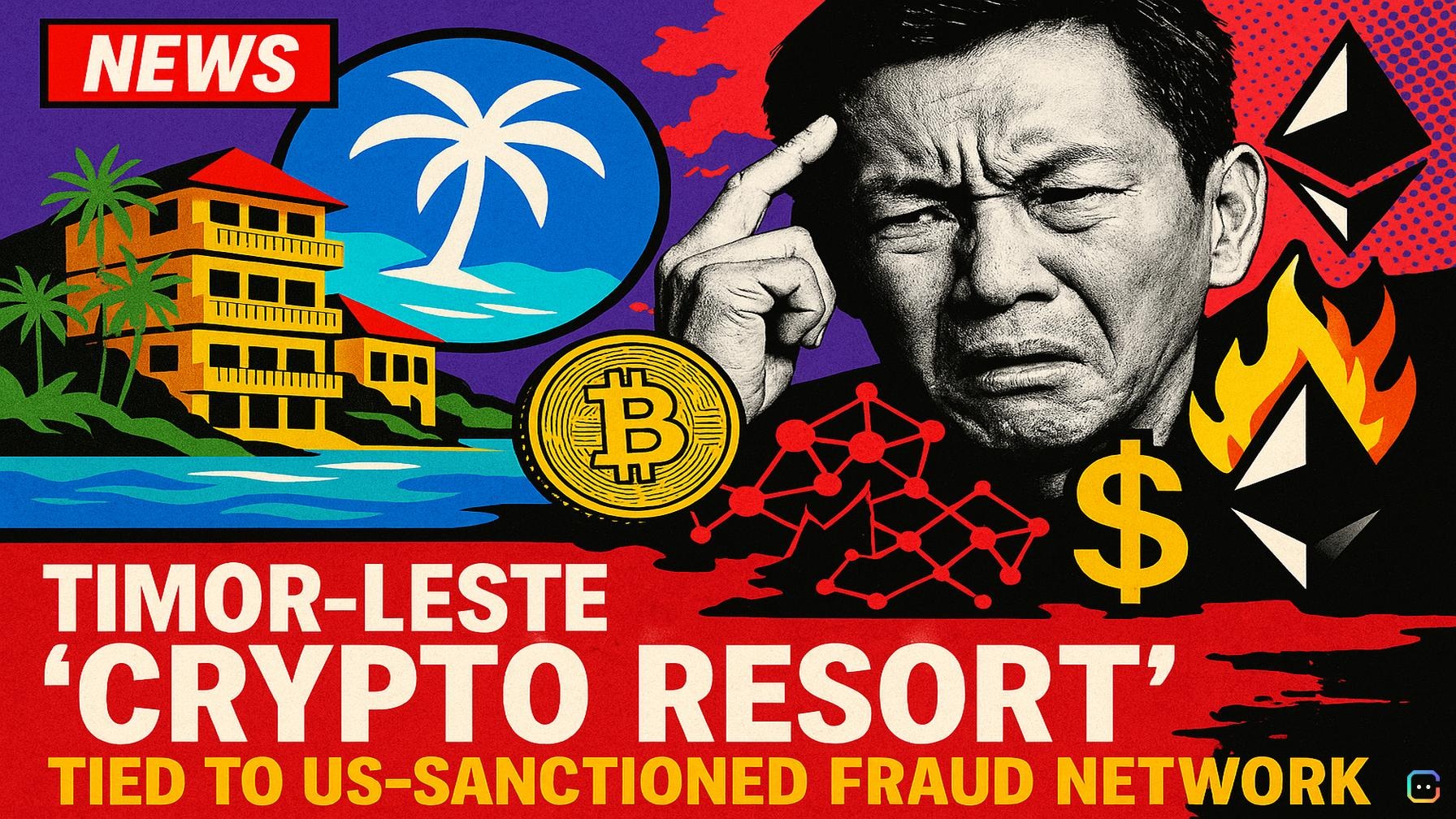
Timor-Leste 'crypto resort' tied to US‑sanctioned fraud network, investigation finds
A flashy promise of beachfront villas, private jets and a world‑first “crypto resort” in Timor‑Leste has collapsed into questions about links to a sanctioned fraud network — and why emerging crypto projects can become vehicles for risk in fragile states. What was pitched - Promotional material released last year billed the AB Digital Technology Resort as a futuristic coastal development in Timor‑Leste that would host tech elites, showcase blockchain innovation and donate a portion of profits to charity. - When investigators visited the proposed site in February, they found an empty, scrubby plot of land behind a barbed‑wire fence — not the luxury complex advertised. The investigation - A joint probe by the Guardian and the Organised Crime and Corruption Reporting Project (OCCRP) into the AB blockchain ecosystem traced ties between people involved with the Timor‑Leste project and the Cambodia‑based Prince Holding Group (aka Prince Group), a sprawling conglomerate sanctioned by the US Treasury amid allegations of large‑scale online fraud and money‑laundering. - The AB network itself is not accused of criminality. However, three people connected to the resort — Yang Jian, Yang Yanming and Shih Ting‑yu — were sanctioned by US authorities in October for their roles in a separate Prince Group‑linked real estate project, and were subsequently removed from the Timor‑Leste development. What US authorities say about Prince Group - US prosecutors allege Prince Group ran “scam compounds” across south‑east Asia that used forced labour and industrial‑scale online fraud to target victims worldwide, part of a multi‑billion‑dollar illicit industry. The group’s founder, Chen Zhi, was indicted on wire‑fraud and money‑laundering charges and billions of dollars of bitcoin were seized. Chen was later extradited and escorted off a plane by armed officers; China says it is cooperating to combat cross‑border telecom fraud. Prince Group denies the allegations. Why this matters for Timor‑Leste - Timor‑Leste, one of the world’s poorest nations and newly opening to foreign investors (including legalisation of some offshore online gambling), has been repeatedly warned by the UN and local politicians about attempts by transnational criminal groups to infiltrate the country through investments. - Ágio Pereira, a senior Timorese minister, warned publicly that the country risked becoming “an amusement park for transnational crime syndicates,” and civil society groups have urged a review of diplomatic and work passports issued to non‑citizens. Key figures in the resort saga - Lin Xiaofan (known locally as “Frank”) emerged as the public face of the AB resort. He presented himself as a blockchain entrepreneur and representative of an AB charity, and cultivated relationships with senior Timorese figures, including President José Ramos‑Horta. Lin denies any criminal ties and says he dismissed the sanctioned individuals as soon as the US actions came down. - President Ramos‑Horta acknowledged receiving donations attributed to the AB charity (laptops, medical supplies and a reported US$500,000 pledge for scholarships) and granted Lin a diplomatic passport and the title of special adviser on commercial and humanitarian issues — a move critics called “highly unusual.” The president says the passport could be revoked if evidence of criminal links emerges. - Bertie Ahern, the former Irish taoiseach, is listed as co‑director and chair of an AB foundation registered in Ireland; he told investigators he did not author or recognise a quote used in promotional material and said the organisation had not carried out payments. Other named participants have denied formal roles or knowledge of the Timor‑Leste plans. The opaque AB ecosystem - The AB network is made up of multiple similarly named entities — AB DAO (a decentralised, non‑legal community), AB Chain (an open‑source blockchain), an AB Foundation registered in Ireland and another in the Cayman Islands. Promotional pages, team profiles and a social‑media post quoting a former Balkan president were removed from AB’s website after inquiries began. - A memorandum of understanding between AB DAO, the Irish foundation and the Timorese resort company — which would have directed 5–10% of profits to the Irish foundation — was signed and later terminated, according to people involved. Sanctions and consequences - After US sanctions were announced, the majority shareholder listed at registration (Yang Jian) was removed from the resort company’s records within days. Other team members tied to the Palau project and to Prince Group were dismissed. - Individuals named in the reporting have denied wrongdoing or knowledge of Prince Group’s alleged activities and said they were inadvertently drawn into the matter. Broader scam context: pig‑butchering and scam compounds - Investigators and law‑enforcement agencies have highlighted the growth of “pig‑butchering” scams — long‑con games using fake identities and fabricated online investment platforms to groom victims into sending cryptocurrency — and the rise of scam compounds in south‑east Asia where such operations are run at scale. - Experts warn that operators are looking beyond traditional hotspots and targeting vulnerable jurisdictions with relaxed oversight and eager investors. On the ground in Dili - Dili’s planned resort site remains undeveloped. Locals pass the beach where children play football on a dirt pitch; promotional timelines that promised phase one by the end of next year have evaporated. The president told investigators he never saw serious business plans or feasibility studies and has grown sceptical about the project’s real purpose: “Is it really a resort, or just talk?” Responses and next steps - Prince Group has denied the US allegations and says it will be exonerated when facts emerge. The individuals removed from the Timor‑Leste project have not been charged; several deny links to Prince Group. AB representatives say their core focus is blockchain infrastructure, not resort development, and that the MoU with the resort was preliminary and terminated. - Timorese civil society and some politicians are calling for stronger controls, independent probes and cancellation of questionable passports as the country weighs foreign investment against the risk of becoming a haven for organised crime. Why crypto watchers should care - The episode underscores how crypto‑branded projects can be used to attract glamour and legitimacy while obscuring opaque ownership and cross‑border financial flows. For regulators, investors and the crypto community, it’s a cautionary example of due diligence gaps in nascent markets and how quickly reputations can be dragged into global enforcement actions. The story is ongoing. If you have verifiable information related to the AB network, the Timor‑Leste resort or links to sanctioned networks, share it securely with investigative journalists working on the case. Read more AI-generated news on: undefined/news
Trump Threatens Iran Power Plants — Polymarket Invasion Odds Hit 63%, Crypto Reacts
Headline: Geopolitical Risk Spikes as Trump Threatens Iranian Power Plants — Polymarket invasion odds hit 63%, markets and crypto react U.S. President Donald Trump escalated rhetoric against Iran again, warning over the weekend that the U.S. military would begin striking Iranian infrastructure — including power plants — unless Tehran reopens the Strait of Hormuz by April 7. The statement follows last week’s U.S. attack on Iran’s Ghadir Bridge and comes amid a shutdown of the vital shipping lane that has lasted more than three weeks. On Truth Social, Trump said “Tuesday will be Power Plant Day, and Bridge Day, all wrapped up in one, in Iran,” and demanded the strait be reopened. During a subsequent media appearance he said there was a “good chance” of a deal on Monday but also warned he was considering “blowing everything up and taking over the oil” if negotiations fail. Why it matters - The Strait of Hormuz is a chokepoint for global energy flows, handling roughly 20–30% of the world’s oil shipments. Its closure has already driven oil prices sharply higher. - Disruption of the strait is feeding broad risk-on/risk-off moves across financial markets, including cryptocurrencies. Iran’s response Iranian officials have rejected the ultimatum and vowed retaliation. Foreign Ministry spokesperson Esmail Baghaei warned Tehran would “react in kind” to any attacks on its infrastructure, saying Iranian forces would target infrastructure “owned or in any way or manner related to the United States.” A spokesman for Iran’s presidential office, Mahdi Tabatabaei, said Tehran intends to keep the strait closed and may impose transit tolls to compensate for infrastructure damage, adding the waterway would only reopen once toll payments cover the damage. Gen. Ali Abdollahi Aliabadi of Iran’s central military command called Trump’s threat “helpless, nervous, unbalanced and stupid,” and warned of severe consequences. Market and crypto impact The increased odds of military escalation were also reflected in prediction markets: Polymarket showed the probability of a U.S. invasion jumping to roughly 63%. That rising geopolitical risk is already pressuring energy and risk assets: - Brent crude closed Thursday above $109 per barrel and could be pushed higher if tensions persist when trading resumes. - Crypto markets showed sensitivity but some resilience: Bitcoin recovered from lows near $66,000 and was trading just under $69,200 at press time. The total crypto market capitalization was up about 2.2% over the same period. Bottom line With deadlines set and both sides signaling readiness to escalate, the situation around the Strait of Hormuz remains fluid. Traders across oil, equity and crypto markets will be watching diplomatic developments closely — any further military action or firming of transit tolls could extend price volatility and test crypto’s short-term recovery. Read more AI-generated news on: undefined/news
Ripple Links XRP to $13T in Global Payments via $1B SWIFT-Compatible Buy
Ripple is back in the headlines after a strategic integration that connects it to trillions in global payment flows — a move that could change how XRP is used in real-world finance. What happened - In 2025 Ripple spent $1 billion to acquire a treasury management platform that has been part of the SWIFT-certified ecosystem since 2014. That purchase gave Ripple compatibility with SWIFT infrastructure, including messaging systems, Alliance Lite2 connectivity and SWIFTRef data, letting the treasury solution sit alongside traditional banking rails without requiring direct SWIFT membership. - The acquired platform already processes roughly $13 trillion in annual payment flows, putting it within striking distance of SWIFT’s estimated $150 trillion yearly volume and connecting Ripple to a significant slice of global fiat movement. How the integration works - Corporates and institutions using the platform can manage payments, liquidity and accounts across fiat and digital assets in one place. - Multiple connectivity options (APIs, SFTP, EBICS) and real-time validation tools such as IBAN and ABA lookups improve accuracy for cross-border transactions. - Crucially, the system offers a dual settlement model: institutions can push payments through traditional SWIFT rails or settle via blockchain using XRP or RLUSD, which promises much faster execution. What it means for XRP’s utility and price - This integration gives XRP a practical path into large-scale payment flows. The catch: exposure to $13 trillion in processed value is meaningful only if institutions opt for blockchain settlement over conventional rails. - A rule that went into effect April 1 expands operational possibilities for certain financial institutions, helping hybrid treasury solutions like Ripple’s function more efficiently (the article does not specify the year for this rule). - Institutional access is further bolstered by a recent BBB issuer rating from KBRA for Ripple Prime (the prime brokerage arm, acquired late 2025 for $1.25 billion and formerly known as Hidden Road). KBRA cited a strong capital position: nearly $5 billion in cash reserves, over 40 billion XRP tokens, and an expected $500 million capital injection in 2026. That standing could open doors to pension funds, insurers and other large counterparties. Network signals and scale readiness - The XRP Ledger surpassed 8.19 million addresses in early 2026, showing steady network growth and an increased capacity to handle higher transaction volumes. - Combined with the treasury platform’s $13 trillion throughput, XRP now has potential exposure to a substantial financial ecosystem — but exposure is not the same as adoption. Bottom line Ripple’s moves strengthen its ties to global banking infrastructure and create a credible avenue for XRP to be used in high-value, real-world transactions. However, any meaningful effect on XRP’s price will depend on actual institutional uptake of blockchain settlement — not just on newly available access. Read more AI-generated news on: undefined/news