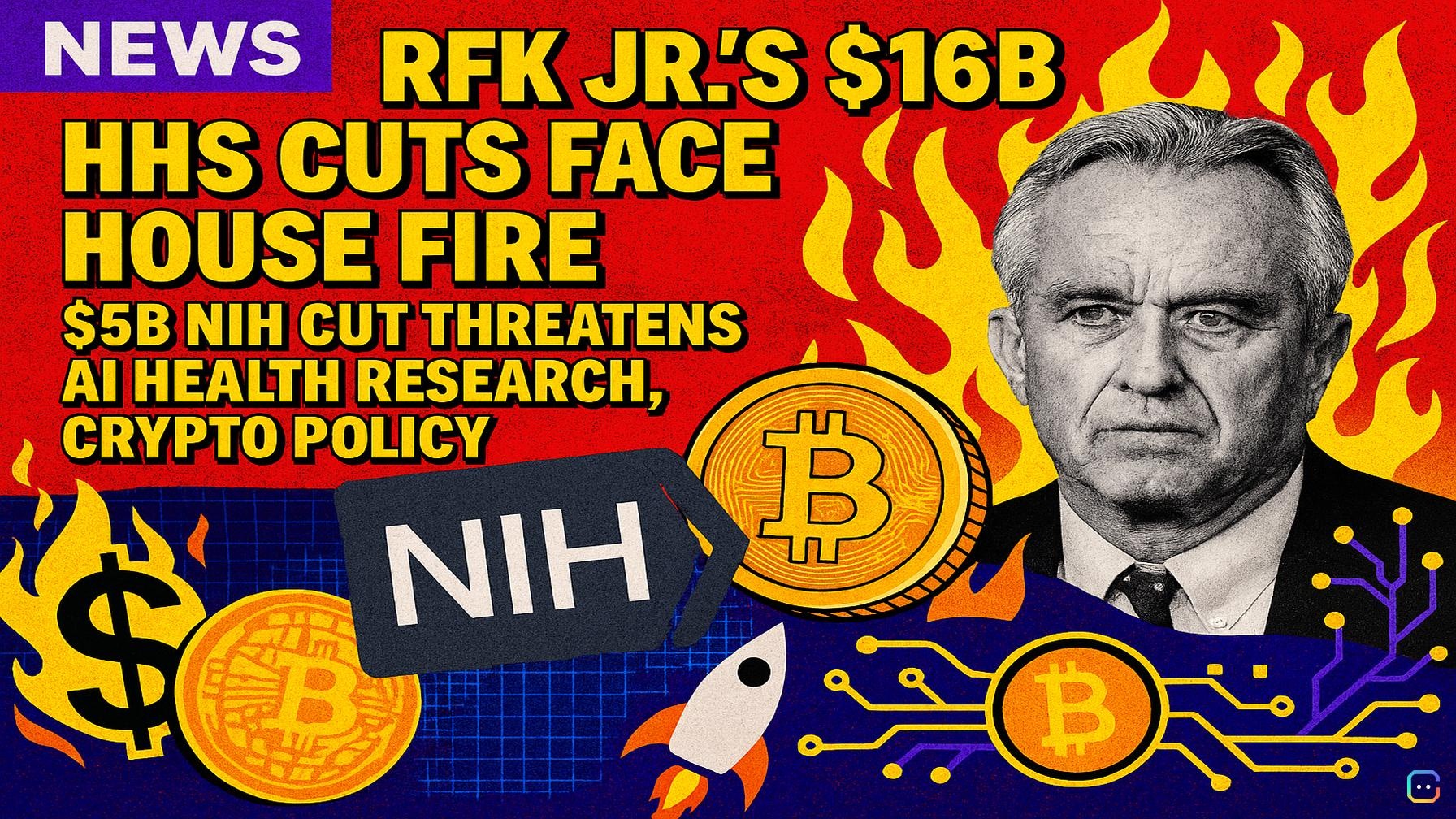
Health Secretary Robert F. Kennedy Jr.’s proposed HHS cuts—about $16 billion—faced a bruising first test on Thursday as he made his Capitol Hill debut of the year before the House Ways and Means Committee. His appearance, full of sharp questioning on vaccine policy, was the opening salvo in a marathon week of at least seven committee appearances that will determine how aggressively Congress pushes back on the administration’s budget and priorities.
What’s at stake
- The White House’s 2027 budget requests $111.1 billion in HHS discretionary spending, a 12.5% decline from 2026. That reduction equates to roughly $16 billion in cuts.
- The most contentious single cut: a $5 billion reduction to the National Institutes of Health, which funds basic medical science at universities and supports research pipelines—many of them now using AI tools for drug discovery and diagnostics.
Kennedy’s defense—and cracks in the message
Kennedy framed the reductions as a deliberate “structural shift” away from what he called policies that helped fuel the chronic disease epidemic. “We’re ending the era of federal policies that fueled the chronic disease epidemic and replacing them with policies that put the health of Americans first,” he said in prepared remarks.
But his testimony revealed friction with the broader Trump budget. He admitted he was “not happy” about proposed cuts to WIC and SNAP—an unusually candid break from the administration line—after Rep. Gwen Moore pressed him on how trimming those programs would square with his stated goal of reducing childhood chronic disease. Kennedy offered no concrete fix during the hearing.
Vaccine politics in the spotlight
Vaccine policy drew pointed, sometimes theatrical, questioning. Kennedy largely sidestepped policy specifics; Republicans used the hearing to attack former NIAID Director Anthony Fauci, while Rep. Linda Sánchez delivered a sharp rebuke over Kennedy’s decision to halt a pro-vaccine messaging campaign even as HHS funded a promotional video showing him shirtless in a hot tub with Kid Rock—an image that drew bipartisan criticism.
Political calculus and internal friction
The hearings come as the MAHA coalition and parts of the administration show signs of strain. White House advisers have reportedly instructed Kennedy and other HHS officials to avoid publicly advancing controversial vaccine reforms until after November’s midterms, signaling that some of his positions are viewed as potential electoral liabilities.
Kennedy’s performance carries career risk. Administration officials have been dismissed in the past after poor committee showings—examples cited by observers include former AG Pam Bondi and ex-DHS Secretary Kristi Noem—so Thursday’s session was watched as an early gauge of whether he can withstand sustained bipartisan scrutiny.
The wider legislative squeeze
Kennedy’s appearances are being scheduled into an already crowded congressional calendar. Lawmakers are juggling FISA reauthorization, budget reconciliation, and a Senate markup on the CLARITY Act—competing priorities that consume limited legislative bandwidth in an election year. Kennedy is also set to testify before the Senate Finance and HELP Committees on April 22.
Why this matters to crypto and tech watchers
Beyond political optics, the proposed NIH cuts could slow federally funded AI-driven medical research that has expanded under recent funding rounds. The same midterm-driven caution shaping HHS communications is informing the broader administration’s posture on issues from crypto regulation to healthcare reform—meaning decisions made this spring could ripple into how Congress and regulators approach crypto policy later in the year.
Bottom line: Kennedy’s budget and his first major congressional outing have put him and his agency at the center of a high-stakes fight over spending priorities, science funding, vaccine messaging, and political optics—one that will unfold across multiple hearings and intersect with other major policy debates, including those affecting crypto and AI.
Read more AI-generated news on: undefined/news