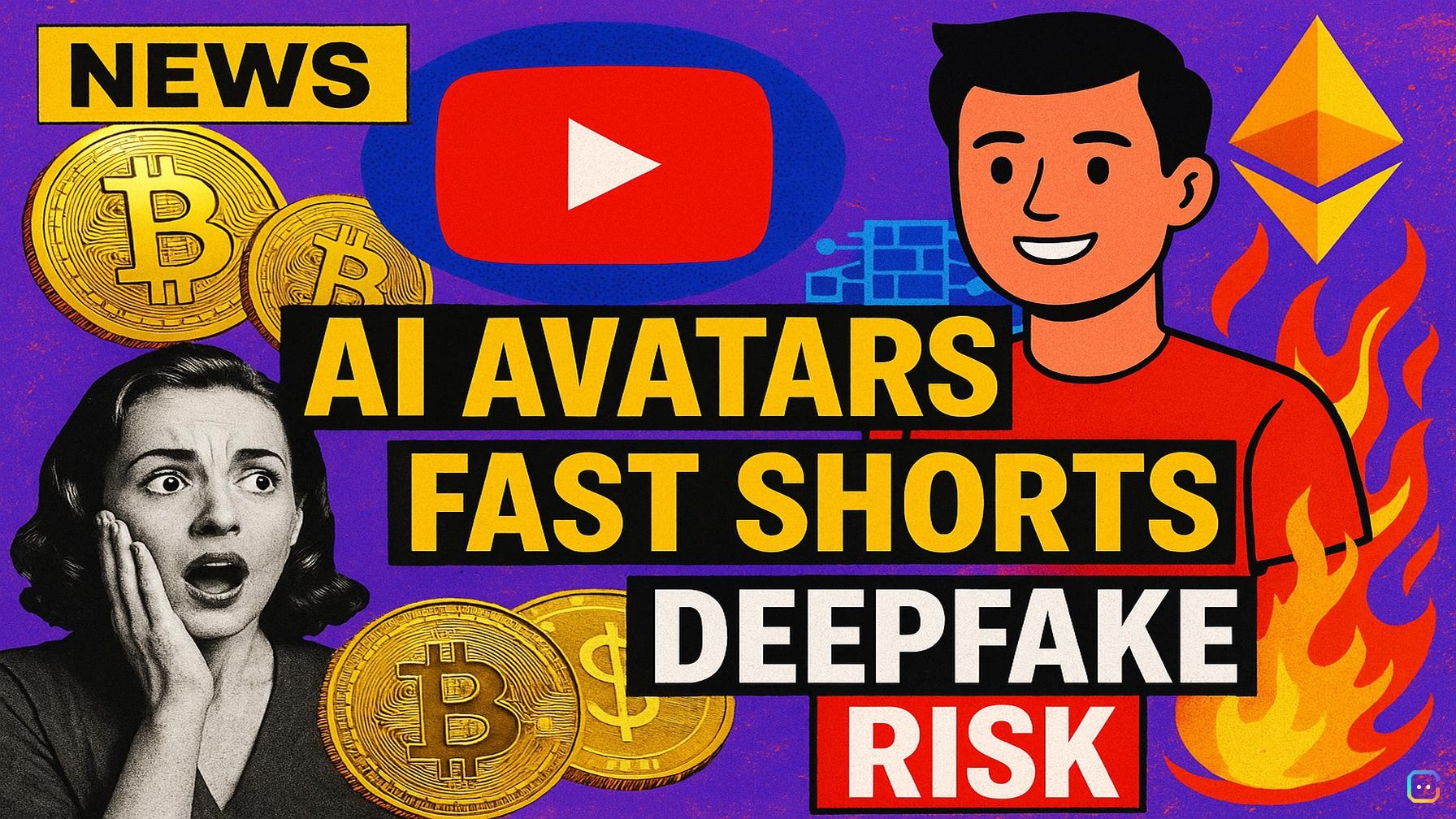
YouTube is introducing a new AI avatar tool that could change how creators — including those in crypto and Web3 — produce short video content. The feature, called “Make a video with my avatar,” lets channel owners generate short, prompt-driven clips of a digital version of themselves inside YouTube Shorts and the YouTube Create app.
What’s being released
- The avatar tool is powered by Google’s Veo 3.1 video model and began rolling out on Wednesday. It will reach most eligible users in the coming days.
- It’s currently available only in Shorts and the YouTube Create app on mobile, and only to channel owners aged 18 or older. At launch it’s rolling out globally outside Europe, with broader availability expected later.
- Each AI-generated clip runs for about eight seconds, but creators can stitch multiple clips together to make longer videos. Only the account holder can use their avatar to create content, and avatars can be deleted by the owner (though previously generated videos remain online unless removed manually).
- YouTube says clips will carry AI disclosures and digital watermarks to indicate they were generated with AI.
Why crypto and Web3 creators should care
AI-generated avatars could be a fast, inexpensive way for NFT projects, DAOs, and crypto influencers to scale content — for product teasers, community updates, or token launches — without staging new shoots. They also open doors to novel uses like rapid avatar-based marketing, on-chain/off-chain content integration, or gated Shorts for token holders.
Risks and the broader context
The release arrives as generative video tools spread across the tech landscape — startups and vendors such as Synthesia, ElevenLabs, and HeyGen already let customers create AI presenters. That realism has accelerated concerns about deepfakes, misinformation, and impersonation, which is why platforms are increasingly adding labels and watermarks.
The economics of video AI are also nontrivial. OpenAI shut down its Sora video app in March after six months, reportedly because it was extremely expensive to operate — the app reportedly cost roughly $15 million per day to run. That example underscores the heavy compute and business costs behind high-quality generative video.
YouTube’s strategy
This rollout fits into YouTube’s larger AI push. In a January letter outlining priorities for 2026, CEO Neal Mohan emphasized expanding AI-powered creation tools and specifically noted features that let creators produce Shorts using their own likeness. “AI will act as a bridge between curiosity and understanding,” Mohan wrote, adding the company aims to ensure AI serves creators, artists, partners, and viewers.
Practical advice for the crypto community
- Treat avatar videos with the same suspicion you’d apply to any social message about funds or access: verify off-platform through official channels before acting.
- Encourage projects to publish provenance and verification metadata (e.g., on-chain receipts, signed messages) when avatar videos are used for token sales or governance calls.
- Use platform protections — require 2FA, monitor account access, and remove suspicious content promptly. Rely on watermarks and AI disclosures when making decisions about authenticity.
Bottom line
YouTube’s new avatar feature makes it easier for creators to appear on camera without a camera, accelerating the trend toward AI-native content. For crypto-native users, that’s an opportunity for fast creative output — but also a reminder that the community must beef up verification and provenance practices as realistic synthetic media becomes mainstream.
Read more AI-generated news on: undefined/news