EU proposes sweeping curb on foreign crypto services tied to Russian sanctions evasion
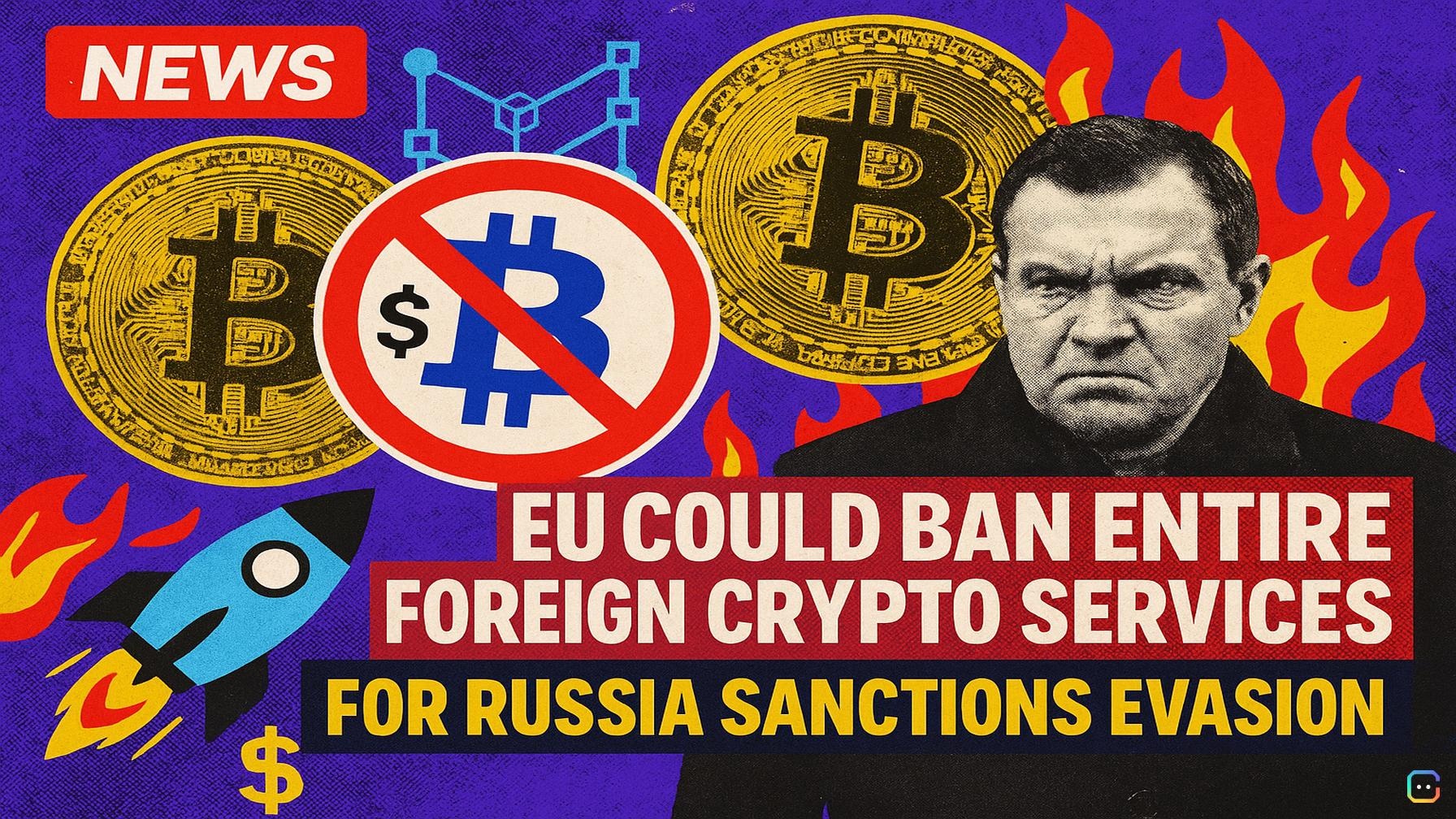
The European Commission has unveiled a new sanctions package that for the first time could allow the bloc to ban entire foreign crypto services and jurisdictions suspected of helping Russia evade sanctions. The proposed 21st package targets 20 non-EU entities — including banks, oil traders and cryptocurrency platforms — and would expand transaction bans to those listed actors.
European Commission President Ursula von der Leyen framed the move as closing “remaining channels used to bypass existing restrictions,” and said the new authority to block crypto services from whole non-EU jurisdictions “will act as a strong deterrent for the countries hosting platforms that help Russia evade our sanctions.”
Why this matters for crypto
- This proposal marks a potential shift from targeting individual entities to imposing country-level restrictions on crypto services — a tool that could force exchanges and custodians to cut off entire foreign markets or face penalties.
- Regulators on both sides of the Atlantic are increasingly focused on crypto infrastructure viewed as enabling sanctioned states or illicit finance, putting additional compliance and operational pressure on platforms that operate across borders.
Evidence cited by regulators
- Blockchain analytics firm Chainalysis reported illicit cryptocurrency addresses received $154 billion in 2025 and flagged significant Russia-linked activity: about $93.3 billion in transaction volume involving a ruble-backed stablecoin known as A7A5, which it said accounted for a large share of state-linked crypto flows.
- Research firm Elliptic earlier identified five exchanges it believes provided financial pathways used to bypass sanctions while operating outside traditional banking oversight.
Recent enforcement actions
- The UK sanctioned Huobi Global S.A. in May, linking it to HTX and alleging the exchange provided services to the Russia-connected A7 network. The UK measures included asset freezes, payment restrictions and internet service sanctions. Elliptic described this as the first use of Regulation 17A against a cryptoasset exchange, extending restrictions on correspondent banking and payment processing for designated entities.
- In June the U.S. Treasury designated four Iranian crypto exchanges — Nobitex, Wallex, Bitpin and Ramzinex — accusing them of helping sanctioned actors access the digital-asset ecosystem and evade traditional financial controls.
Russia’s regulatory response
As international scrutiny of crypto flows linked to Russia rises, Moscow is preparing its own comprehensive crypto regulatory framework set to be introduced in July. The rules would license domestic trading platforms and establish a regulated structure for local crypto activity — a contrast to the increasing external pressure on foreign platforms used by state-linked actors.
Wider sanctions beyond crypto
The Commission’s package also targets Russia’s energy and trade sectors with fresh restrictions on oil vessels and the bloc’s first sanctions aimed at Russian fisheries. “Our sanctions keep biting hard and cutting deep; they are weakening the economic foundations of Russia’s war effort,” von der Leyen said.
What’s next
The proposal must go through EU decision-making processes before becoming law, but if adopted it would give Brussels a powerful new lever to disrupt digital-asset channels used to circumvent sanctions. Crypto firms with cross-border operations will likely need to reassess compliance controls, geofencing and counterparty screening to avoid becoming entangled in a widening regulatory front against sanctions evasion.
Read more AI-generated news on: undefined/news