Today's Cryptocurrency Prices by Market Caps
The global cryptocurrency market cap today i $2.35T
Market Cap
$2.35T
24h Trading Volume
$141.09B
BTC Dominance
56.47%
|
#
|
Name
|
Price
|
1h %
|
24h %
|
7d %
|
Market Cap
|
Volume (24h)
|
Chart (7d) |
|---|---|---|---|---|---|---|---|---|
|
|
—
|
|||||||
|
No cryptocurrencies found Try adjusting your search query |
||||||||
Latest Crypto News
View All News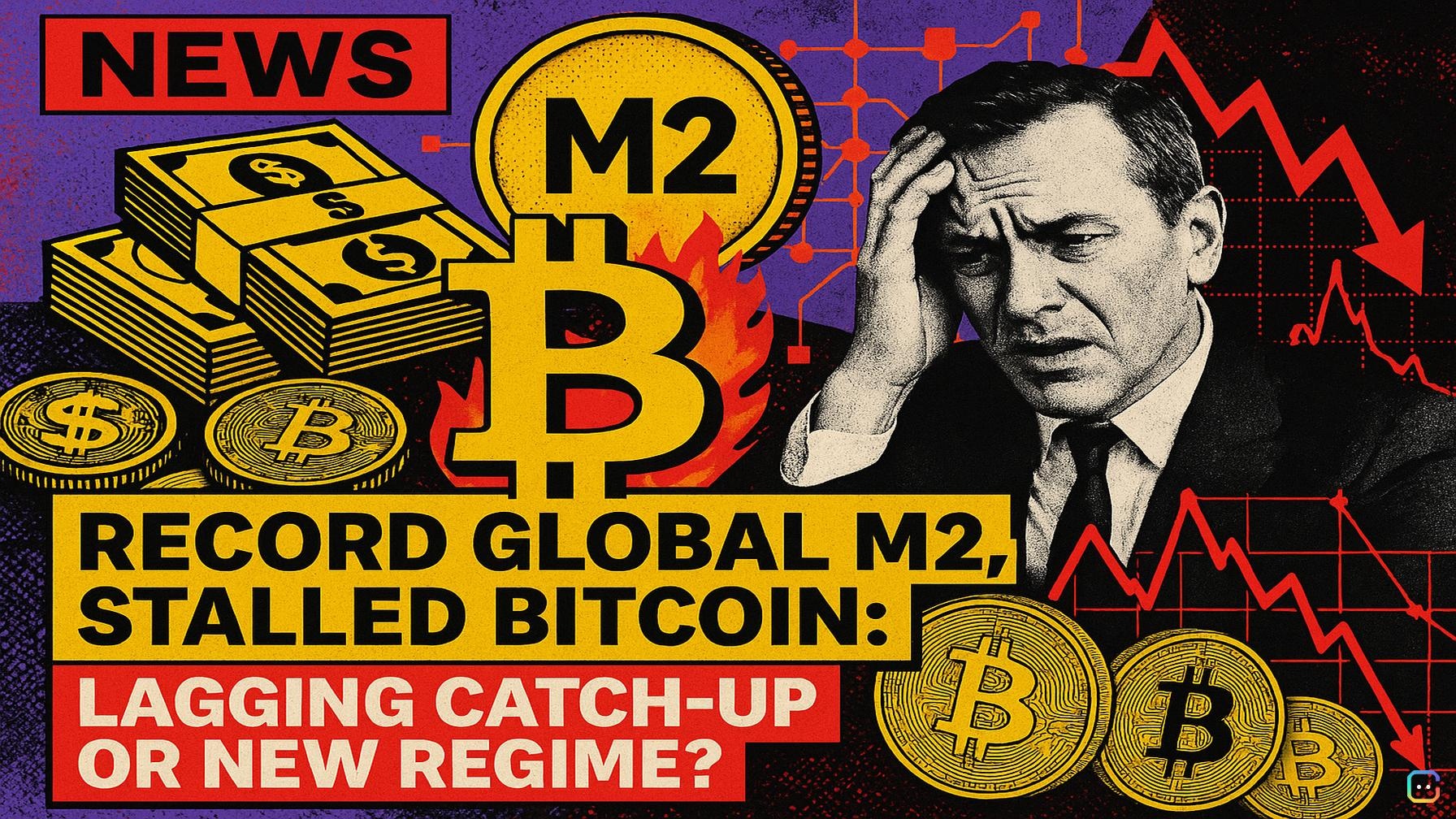
Record Global M2, Stalled Bitcoin: Lagging Catch-Up or New Regime?
Bitcoin is testing a long-standing macro assumption: that a rising global money supply eventually lifts risk assets — including BTC. As of the June 16 writing handoff, global M2 liquidity has topped a record $135 trillion, yet Bitcoin sits well below its October 2025 peak, trading in the mid-$60,000s. That gap is getting attention because prior cycles often showed a close link between expanding money supply and higher Bitcoin prices. This time, the relationship looks less direct. Two competing stories have emerged. Bullish — “lagging, not broken” - The classic view: liquidity is a powerful tailwind, but it takes time to flow from central banks and banks into higher-beta assets. - Historically, Bitcoin has tended to “catch up” once liquidity reaches parts of the market willing to take greater risk. - Traders who model global M2 see the current divergence as a potential setup: BTC may simply be running behind a liquidity wave that has yet to reach crypto. Cautious — “a new regime?” - Market structure has changed. Spot Bitcoin ETFs, larger institutional flows, portfolio allocation rules, and new structured products may alter how BTC reacts to broad liquidity moves. - A stronger U.S. dollar and capital rotating into areas like AI equities could be siphoning risk flows away from crypto. - That suggests liquidity still matters, but it may be only one of several inputs rather than the dominant driver it once was. What traders should do Treat the gap as an open question, not a foregone conclusion. The divergence frames a clear, testable hypothesis: - If global M2 remains elevated and BTC starts reclaiming key resistance levels, the “delayed catch-up” thesis gains credibility. - If liquidity keeps growing while Bitcoin continues to lag, the idea of a structural regime change becomes more convincing. Key items to monitor - Primary liquidity prints (global M2 updates) and how markets react. - Spot ETF flows and institutional allocation signals. - Dollar strength and flows into non-crypto risk assets (e.g., AI stocks). - Bitcoin’s price action around major resistance and support levels. - Any regulatory or risk-management developments that could change capital access to crypto. Bottom line: this is a live macro debate with clear invalidation rules. Watch the interaction between fresh liquidity data and BTC price action to decide which narrative is winning. This article was written by the News Desk and edited by Samuel Rae. Read more AI-generated news on: undefined/news

June 19 US-Iran Memorandum: A Macro Event That Could Move Bitcoin
Switzerland will host a US–Iran memorandum signing on June 19, 2026, giving Bitcoin traders a fresh macro event to monitor. The ceremony is scheduled at the Bürgenstock resort, with Qatar and Pakistan participating as mediators. While the MoU isn’t a crypto-specific development, its potential impact on geopolitics and energy markets could flow through to BTC via inflation expectations and risk appetite. What’s at stake - The memorandum reportedly targets military operations, sanctions, and the reopening of the Strait of Hormuz — a key maritime chokepoint for global energy flows. Any substantive progress there could relieve oil-market stress and ease a major source of macro uncertainty. - Those effects are not guaranteed. A signing ceremony can be symbolic, and outcomes depend on follow-through and implementation. Why crypto traders should care - Bitcoin behaves like a high-beta macro asset during geopolitical episodes. Rising oil-risk or renewed sanctions can push up inflation expectations, make central banks less inclined to ease policy, and reduce appetite for speculative assets — all of which can weigh on BTC. - Conversely, a credible diplomatic breakthrough that calms energy markets could lift risk-on sentiment and indirectly support Bitcoin as investors rotate back into risk assets. How the market will likely test the news - Expect the first visible reactions in oil prices, the dollar, and equity futures rather than an immediate on-chain signal. Crypto moves will more often follow shifts in liquidity and investor psychology than protocol-level changes. - Traders should watch: oil futures and shipping-risk indicators, USD strength, equity risk premia, and primary-source confirmations of any agreed terms. Whether the initial market move holds will be telling for BTC’s next leg. A cautious framing - Treat June 19 as an important macro calendar date, not a standalone Bitcoin catalyst. The event belongs in the same category as inflation prints, central-bank decisions, and war-risk headlines: it matters through broad market channels rather than on-chain metrics. - If negotiations stall or terms disappoint, any crypto upside could evaporate quickly. If they deliver tangible reductions in energy-market stress and uncertainty, crypto could benefit as part of a broader risk-on rotation. Bottom line Mark June 19 on your macro calendar. The signing could change inflation and risk-appetite assumptions enough to matter for BTC — but only if markets see durable progress in energy and sanctions outcomes. Watch primary sources, early oil and equity moves, and whether the reaction persists before treating this as a meaningful crypto catalyst. This article was written by the News Desk and edited by Samuel Rae. Read more AI-generated news on: undefined/news
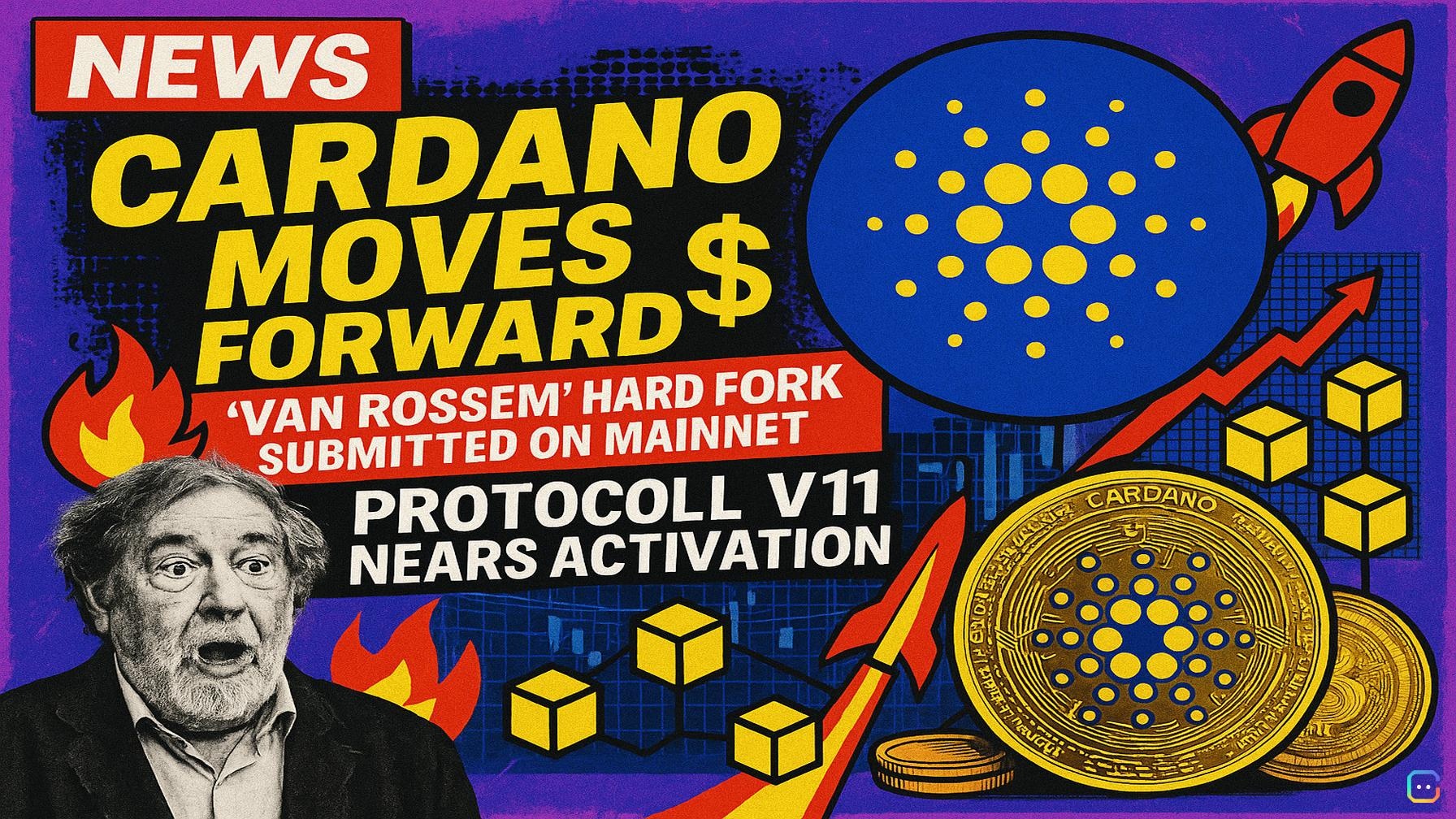
Cardano Moves Forward: 'van Rossem' Hard Fork Submitted on Mainnet, Protocol v11 Nears Activation
Cardano has taken a key step toward its next network upgrade: the van Rossem hard fork initiation governance action was formally submitted on mainnet, moving Protocol Version 11 closer to activation. What the proposal is - The submission, recorded June 16 (Epoch 637) and visible on gov.tools, is an intra-era hard fork that targets Protocol Version 11 — nicknamed “van Rossem.” Unlike an era change, an intra-era hard fork can introduce new features and fixes with less disruption to wallets, exchanges, stake pool operators, and dApps. - Protocol Version 11 is designed to add functionality now while laying groundwork for Cardano’s next major era, Dijkstra, which in turn is expected to prepare the network for Leios, a scaling design aimed at higher throughput. Testing and prior updates - The upgrade follows weeks of testing and infrastructure prep across Cardano’s Preview and Preprod networks. Preview moved to Protocol Version 11 in May, and Preprod followed its own governance steps afterward. - A related Plutus Cost Model parameter update (submitted May 26) was ratified and scheduled to take effect June 18 at 21:45 UTC, part of the same readiness workstream aimed at improving Plutus performance, ledger consistency, and node-level security. - Cardano’s Lace wallet also received updates ahead of the van Rossem fork to help ensure ecosystem components are prepared. Naming and community context - The hard fork is named for Max van Rossem, a community developer, stake pool operator, DRep, Constitutional Convention delegate and builder who died in October 2025. Intersect and the proposal metadata include a dedication to him; an earlier naming governance action won 83.62% DRep support with roughly 4.44 billion ADA backing. - The name embeds a community tribute into Cardano’s on-chain governance history, tying a technical upgrade to the ecosystem’s social fabric. Next steps and timing - The submitted governance action now awaits ratification. Potential ratification windows cited include June 23, June 28, July 3, July 8, July 13 and July 18. If ratified quickly, enactment could occur as early as June 28; other possible enactment slots extend into late July. - The governance action expires on July 18, so DReps, stake pool operators and the Constitutional Committee have a limited window to complete approvals. Why it matters - The van Rossem upgrade is both an incremental technical improvement and a preparatory step for larger roadmap milestones (Dijkstra and Leios). Successful passage will test Cardano’s on-chain governance machinery at a time when the community has faced disputes over research funding and treasury spending, making this process a high-profile test of governance resilience. Sources: Intersect announcements and gov.tools proposal records. Read more AI-generated news on: undefined/news

Bitget EU Files MiCAR Authorisation with Austria’s FMA, Eyes EU-wide Service
Bitget’s European arm has formally entered the MiCAR approval process, filing for EU crypto-asset service provider authorisation with Austria’s Financial Market Authority (FMA), the exchange said in a June 17 update. Key points - Bitget EU submitted its authorisation request under Regulation (EU) 2023/1114 — the Markets in Crypto-Assets regulation (MiCAR) — and the filing is now under review by Austria’s FMA. - The company stressed the filing is an active application, not a licence or endorsement from the regulator; the timing, scope and outcome remain subject to the FMA’s assessment. - If authorised and all regulatory steps are completed, Bitget EU plans to offer crypto-asset services across the EU within the approved scope. - Bitget reminded users that current access to Bitget Global products remains governed by existing contractual and legal arrangements published online, and said user funds remain safe — users can verify assets via Bitget’s proof-of-reserves page. - The firm noted the announcement does not constitute an offer to provide services in jurisdictions where prior authorisation is required. Leadership and EU footprint - In January Bitget named Oliver Stauber — formerly with KuCoin EU and Bitpanda — CEO of Bitget EU and said it would base its MiCAR-ready European headquarters in Vienna. The Vienna office was intended to coordinate compliance, governance and supervisory engagement across the EEA; the MiCAR filing shows that plan has now reached the formal review stage. Regulatory context and market moves - MiCAR requires crypto-asset service providers to obtain authorisation (CASP authorisation under Article 62) before offering covered services across the EU. As the regime tightens and transitional windows close, firms lacking proper authorisation may face limits on serving EU customers. - The application arrives amid wider market activity around MiCAR compliance: today’s news follows BitGo launching MiCA-compliant custody and wallet infrastructure for European firms seeking regulatory-safe tooling while they pursue their own authorisations. - Bitget has also pushed into regulated and tokenised products recently — for example, launching Reality, a platform offering tokenised U.S. stocks and ETFs backed 1:1 through regulated brokers. Bitget’s CEO Gracy Chen shared the update on X, reiterating that the application is under regulatory review. The filing gives users and the market clearer visibility on Bitget EU’s regulatory trajectory, but it does not confirm approval. Read more AI-generated news on: undefined/news

China pays closer attention to stablecoins as cross-border role expands
A senior PBOC official called for closer monitoring, stronger regulation and international coordination as stablecoins gain importance in global payments.

Bitcoin is setting up 'meaningful floors' in $60K–$70K range: Analyst
Bitcoin’s $6000–$70,000 cost-basis cluster hints at a bottom, but a bearish daily flag keeps BTC exposed to a deeper selloff toward $50,000.